
Contents
Overview
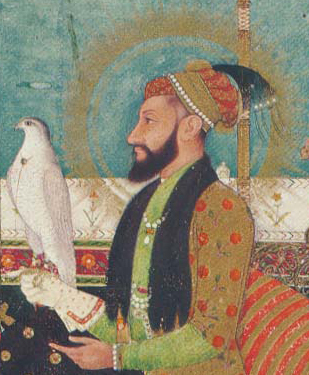
Aurangzeb, born Muhi-ud-din Muhammad, was the third son of Shah Jahan and ascended the Mughal Empire throne in 1658 after a brutal war of succession against his brothers. Known by his regnal title Alamgir I ('Conqueror of the Universe'), he ruled for nearly half a century, transforming the empire into a vast, centralized state that stretched across most of the Indian subcontinent. His reign is often seen as the zenith of Mughal power, but also a period of significant internal strain and external conflict. Understanding Aurangzeb requires grappling with a figure who is simultaneously lauded as a devout ruler and condemned as a religious bigot, a complex duality that continues to fuel historical debate.
🗺️ The Mughal Empire Under Aurangzeb
Under Aurangzeb's rule, the Mughal Empire reached its absolute territorial peak, encompassing almost the entire Indian subcontinent, from modern-day Afghanistan in the northwest to parts of South India. This vast expanse was managed through a sophisticated, albeit increasingly strained, administrative system. His military campaigns were relentless, pushing the boundaries of the empire further than any of his predecessors. However, maintaining control over such a sprawling territory proved to be a monumental challenge, leading to constant warfare and draining the imperial treasury. The sheer scale of the empire under Alamgir I is a testament to both his ambition and the logistical complexities of governing such a diverse region.
⚖️ Aurangzeb's Policies & Legacy
Aurangzeb's policies are a major point of contention among historians. He implemented significant administrative reforms, including a more rigorous system of revenue collection and a crackdown on corruption within the bureaucracy. He also sought to enforce Islamic law more strictly across the empire, a move that alienated many non-Muslim subjects and contributed to growing dissent. His legacy is thus a deeply divided one: some view him as a pious Muslim ruler who sought to uphold religious principles, while others see him as a tyrannical figure whose policies sowed the seeds of the empire's eventual decline. The Controversy Spectrum for Aurangzeb is exceptionally high.
⚔️ Military Campaigns & Expansion
The latter half of Aurangzeb's reign was dominated by protracted military campaigns, particularly in the Deccan region against the Maratha Empire and the Sultanates of the Deccan. These wars, while expanding Mughal territory, were incredibly costly in terms of both human lives and financial resources. His military prowess was undeniable, but the constant state of warfare prevented him from consolidating his gains effectively. The sheer duration and intensity of these campaigns, stretching over two decades, significantly weakened the empire's foundations, a point often overlooked when focusing solely on territorial expansion.
🕌 Religious Stance & Controversy
Aurangzeb's religious policies are perhaps the most debated aspect of his rule. A devout Sunni Muslim, he sought to govern according to Islamic principles, which led to the re-imposition of the Jizya tax on non-Muslims in 1679, a move that reversed the more tolerant policies of his predecessors like Akbar the Great. He also ordered the destruction of several Hindu temples, though the extent and motivation behind these actions are subjects of ongoing scholarly discussion. His religious fervor, while central to his self-perception, alienated significant segments of the population and fueled resistance movements, most notably the Sikh Empire and the Marathas.
💰 Economic & Administrative Reforms
Beyond his military and religious policies, Aurangzeb was also an administrator focused on efficiency and order. He reformed the revenue system, aiming for more equitable collection and reducing the burden on peasants where possible, though the demands of constant warfare often undermined these efforts. He also attempted to curb extravagance and corruption within the imperial court, setting a personal example of austerity. His administrative acumen is often overshadowed by the controversies surrounding his religious and military policies, but these reforms were crucial in managing the vast Mughal Empire for decades.
📚 Key Texts & Sources
Understanding Aurangzeb necessitates engaging with primary and secondary sources that offer diverse perspectives. Key contemporary accounts include the writings of Saqi Mustaid Khan in the Ma'asir-i-Alamgiri, which offers a generally favorable view, and the more critical observations found in Niccolao Manucci's Storia do Mogor. Modern scholarship is vast, with works by historians like Jadunath Sarkar providing a foundational, albeit often critical, analysis, while others like Audrey Truschke offer more nuanced interpretations of his religious policies and their impact. Examining these varied accounts is crucial for forming a comprehensive understanding of his reign.
🤔 Aurangzeb in Modern Discourse
In contemporary India and Pakistan, Aurangzeb remains a potent symbol, invoked in political discourse and historical debates. His legacy is often weaponized, with different groups emphasizing his piety and administrative strength or his religious intolerance and authoritarianism. The Vibe Score for Aurangzeb in public discourse is highly polarized, reflecting deep-seated historical narratives and contemporary political agendas. Debates about secularism, religious identity, and national history often circle back to his reign, making him a figure whose historical impact continues to resonate powerfully in the present day.
Key Facts
- Year
- 1618
- Origin
- Mughal Empire
- Category
- Historical Figures
- Type
- Person
Frequently Asked Questions
When did Aurangzeb rule?
Aurangzeb, also known as Alamgir I, reigned as the sixth Mughal emperor from 1658 until his death in 1707. This period of nearly 50 years marked the longest reign of any Mughal emperor and saw the empire reach its greatest territorial extent.
What were Aurangzeb's major accomplishments?
His primary accomplishment was expanding the Mughal Empire to its largest territorial size, covering almost the entire Indian subcontinent. He also implemented administrative and revenue reforms and sought to enforce Islamic law more strictly, though these latter actions are highly controversial.
Why is Aurangzeb so controversial?
Aurangzeb is controversial due to his religious policies, particularly the re-imposition of the Jizya tax on non-Muslims and the destruction of some Hindu temples. These actions are seen by critics as evidence of religious intolerance, while supporters view them as attempts to govern according to Islamic principles.
Who were Aurangzeb's main adversaries?
His most significant adversaries included the Maratha Empire under leaders like Shivaji Maharaj and Sambhaji, the Sikh Empire in the Punjab, and various Deccan Sultanates. His prolonged military campaigns against these powers significantly drained the empire's resources.
What was the impact of Aurangzeb's reign on the Mughal Empire?
Aurangzeb's reign saw the Mughal Empire reach its peak in terms of territory but also sowed seeds of its decline. The constant warfare, immense expenditure, and alienation of non-Muslim populations weakened the empire's administrative and economic foundations, contributing to its fragmentation after his death.
What is the significance of the title 'Alamgir'?
The title 'Alamgir' translates to 'Conqueror of the Universe' or 'World-Enlarger.' Aurangzeb adopted this title, reflecting his ambition and the vast territorial expansion achieved during his reign, symbolizing the zenith of Mughal imperial power.