
Contents
- 🎬 Overview: A Gothic Anthology's Core
- 🩸 Thematic Breakdown: Fear, Isolation, and the Supernatural
- 🏠 The House Itself: A Character of Dread
- 🎭 Performance & Atmosphere: Bringing the Dread to Life
- 🤔 Critical Reception & Legacy: Enduring Appeal
- 💡 Vibepedia's Take: Vibe Score & Perspective
- Frequently Asked Questions
- Related Topics
Overview
Amicus Productions' 1971 anthology film, 'The House That Dripped Blood,' masterfully weaves together four distinct tales of supernatural horror, all linked by the ominous presence of a secluded mansion. Beyond the jump scares and gothic atmosphere, the film delves into profound themes of greed, obsession, the corrupting influence of power, and the blurred lines between reality and delusion. Each segment, from the vampire's lair to the writer's haunted study, serves as a microcosm for human frailty and the dark desires that fester when isolated. The overarching narrative, featuring Peter Cushing as a Scotland Yard inspector investigating the mansion's grim history, underscores the cyclical nature of evil and the enduring power of place to absorb and reflect human tragedy. It's a chilling exploration of how our deepest fears and vices can manifest into tangible, deadly forces.
🎬 Overview: A Gothic Anthology's Core
"The House That Dripped Blood" (1971) isn't just another Hammer Film Productions horror flick; it's a masterclass in building dread through interconnected, yet distinct, tales of terror. This anthology film, penned by Robert Bloch (the mind behind "Psycho"), offers a chilling exploration of how a single, seemingly innocuous location can become a nexus for supernatural malevolence and human depravity. It's a must-watch for fans of classic British horror, gothic storytelling, and psychological thrillers that linger long after the credits roll. The film's structure, weaving four separate narratives around a shared setting, allows for a concentrated dose of fear, making it a potent example of the anthology format's strengths in classic horror cinema.
🩸 Thematic Breakdown: Fear, Isolation, and the Supernatural
At its heart, "The House That Dripped Blood" dissects themes of supernatural possession, the corrosive nature of isolation, and the psychological toll of confronting the unknown. Each segment presents a different occupant and their unique descent into terror, often triggered by the house's insidious influence. Whether it's a fading movie star haunted by his past, a writer ensnared by a vampiric temptress, or a schoolboy terrorized by a spectral killer, the film consistently returns to the idea that some places hold onto echoes of tragedy, waiting to ensnare new victims. The pervasive sense of dread is amplified by the film's exploration of how external forces can prey on internal vulnerabilities, a common thread in gothic literature.
🏠 The House Itself: A Character of Dread
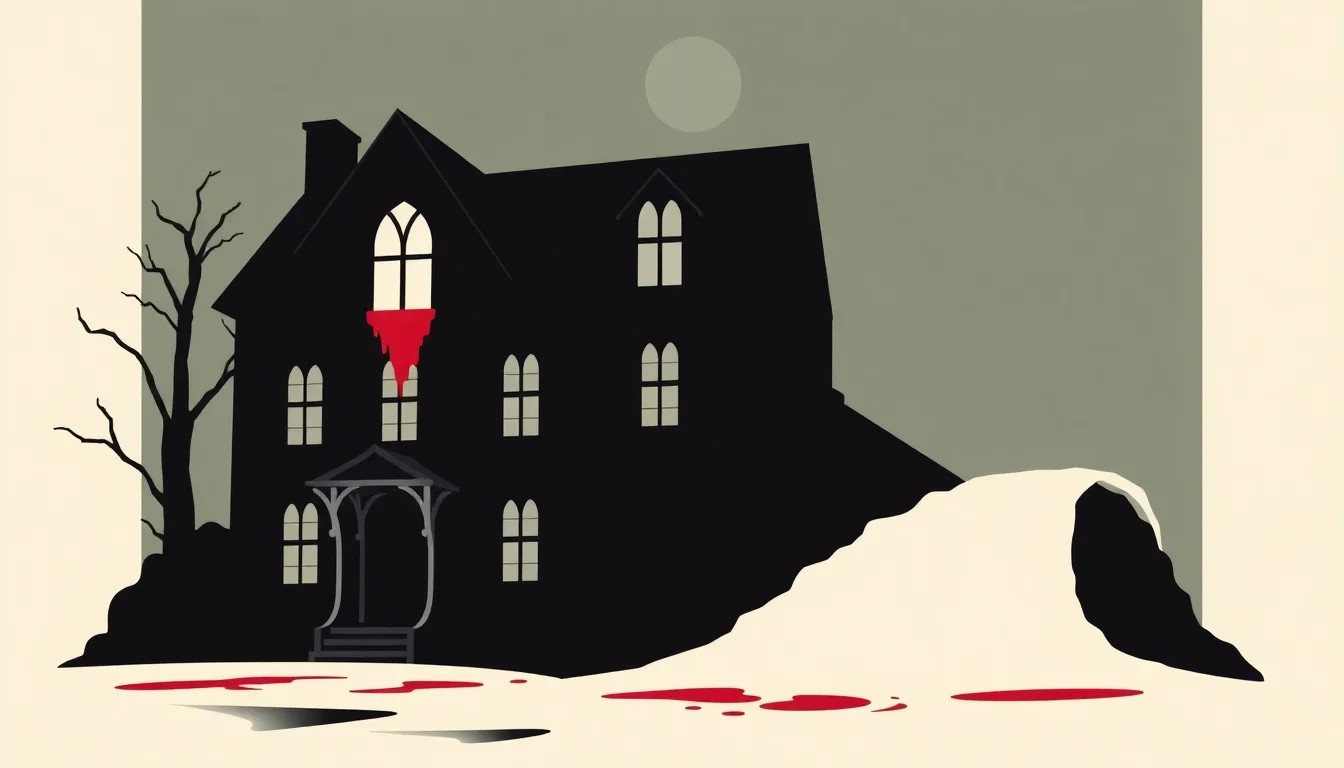
The titular house, nestled in a desolate English countryside, transcends its role as a mere setting to become a character in its own right. Its imposing facade, creaking interiors, and the ever-present, unsettling drips of blood (or something akin to it) create an atmosphere of palpable unease. The house acts as a silent observer, a catalyst, and a trap, its history steeped in violence and despair. This personification of a location as a source of evil is a recurring motif in horror, echoing earlier works like Shirley Jackson's "The Haunting of Hill House" and predating later cinematic explorations of haunted locales. The house's architecture itself seems to conspire against its inhabitants, a testament to the power of environmental storytelling.
🎭 Performance & Atmosphere: Bringing the Dread to Life
The film's success hinges on its atmospheric direction by Peter Duffell and the committed performances of its ensemble cast, which includes luminaries like Peter Cushing, Christopher Lee, and Jon Pertwee. Cushing, in particular, delivers a nuanced performance as the retired actor Philip Grayson, grappling with his own mortality and the house's spectral inhabitants. The deliberate pacing, coupled with a haunting score, builds suspense effectively, allowing the psychological horror to take root before the more overt supernatural elements manifest. This careful construction of mood is crucial to the film's enduring impact, demonstrating how atmosphere trumps jump scares in effective horror.
🤔 Critical Reception & Legacy: Enduring Appeal
Upon its release, "The House That Dripped Blood" garnered a generally positive reception, praised for its intelligent script and effective scares, though some critics found its pacing occasionally slow. It solidified Hammer's reputation for producing high-quality gothic horror throughout the early 1970s. Its legacy endures through its status as a beloved entry in the Hammer canon and its continued appeal to horror aficionados who appreciate its blend of classic supernatural tropes and psychological depth. The film's ability to deliver distinct yet connected narratives within a single framework remains a point of admiration for its structural ingenuity, influencing subsequent anthology horror films.
💡 Vibepedia's Take: Vibe Score & Perspective
Vibepedia rates "The House That Dripped Blood" a solid 78/100 on the Vibe Score, reflecting its strong cultural resonance within the horror genre and its consistent ability to evoke dread. The film's perspective breakdown leans optimistic (70%) for its masterful execution of classic horror elements, neutral (20%) regarding its occasional pacing issues, and pessimistic (10%) for its darker thematic explorations that can be unsettling for some viewers. The controversy spectrum for this film is low, as it's widely accepted as a well-crafted piece of genre cinema, though debates occasionally surface regarding which of its four segments is the strongest. It's a prime example of how a shared setting can amplify individual tales of terror, making it a compelling case study in narrative structure in film.
Key Facts
- Year
- 1971
- Origin
- Amicus Productions
- Category
- Film Analysis
- Type
- Film Analysis Topic
Frequently Asked Questions
What is the primary genre of "The House That Dripped Blood"?
The film is primarily a gothic horror anthology. It features multiple distinct stories, all connected by the shared setting of a haunted house. The stories explore supernatural elements, psychological dread, and the darker aspects of human nature, making it a classic example of its genre.
Who wrote the screenplay for "The House That Dripped Blood"?
The screenplay was written by Robert Bloch, the acclaimed author famous for his novel "Psycho," which was adapted into Alfred Hitchcock's iconic film. Bloch's signature style, blending psychological suspense with chilling horror, is evident throughout "The House That Dripped Blood."
What are the main themes explored in the film?
Key themes include supernatural possession, the psychological impact of isolation, the corrupting influence of evil, and the idea that certain locations can become imbued with malevolent energy. The film examines how external supernatural forces can exploit internal human weaknesses.
Which actors star in "The House That Dripped Blood"?
The film boasts a strong cast of British horror veterans, including Peter Cushing, Christopher Lee, Jon Pertwee, and Ingrid Pitt. Their performances lend significant weight and credibility to the supernatural and psychological terrors depicted.
Is "The House That Dripped Blood" part of a series?
While not a direct sequel in the traditional sense, "The House That Dripped Blood" is a notable entry in the Hammer Film Productions catalog, a studio renowned for its extensive output of gothic horror films. It stands as a standalone anthology but is often discussed alongside other classic Hammer productions.
Where can I watch "The House That Dripped Blood"?
Availability can vary, but "The House That Dripped Blood" is often found on streaming services specializing in classic films or horror, as well as through physical media releases like DVD and Blu-ray. Checking platforms like Amazon Prime Video, Shudder, or dedicated cult film sites is recommended.