
Contents
Overview
The ancient Greek symposium was far more than just a drinking party; it was a cornerstone of aristocratic social and intellectual life. Entertainment at symposia included music, poetry recitation, philosophical debate, and erotic performances. Plato's Symposium and Xenophon's Symposium offer glimpses into these gatherings, showcasing their complex rituals and the intellectual ferment they fostered. The symposium's influence extended to the Roman convivium, shaping later Roman social practices and leaving an indelible mark on Western notions of intellectual discourse and social gathering.
🎵 Origins & History
The practice was deeply intertwined with the concept of xenia (guest-friendship), as hosts would invite guests to share wine and conversation, solidifying social bonds and political alliances. The rise of the polis and the development of democratic ideals in cities like Athens further shaped the symposium, transforming it into a space where citizens could engage in civic discourse, albeit within a select, male-dominated circle. The practice was so ingrained that it was often depicted in funerary art, suggesting its importance in commemorating the lives of the elite.
⚙️ How It Works
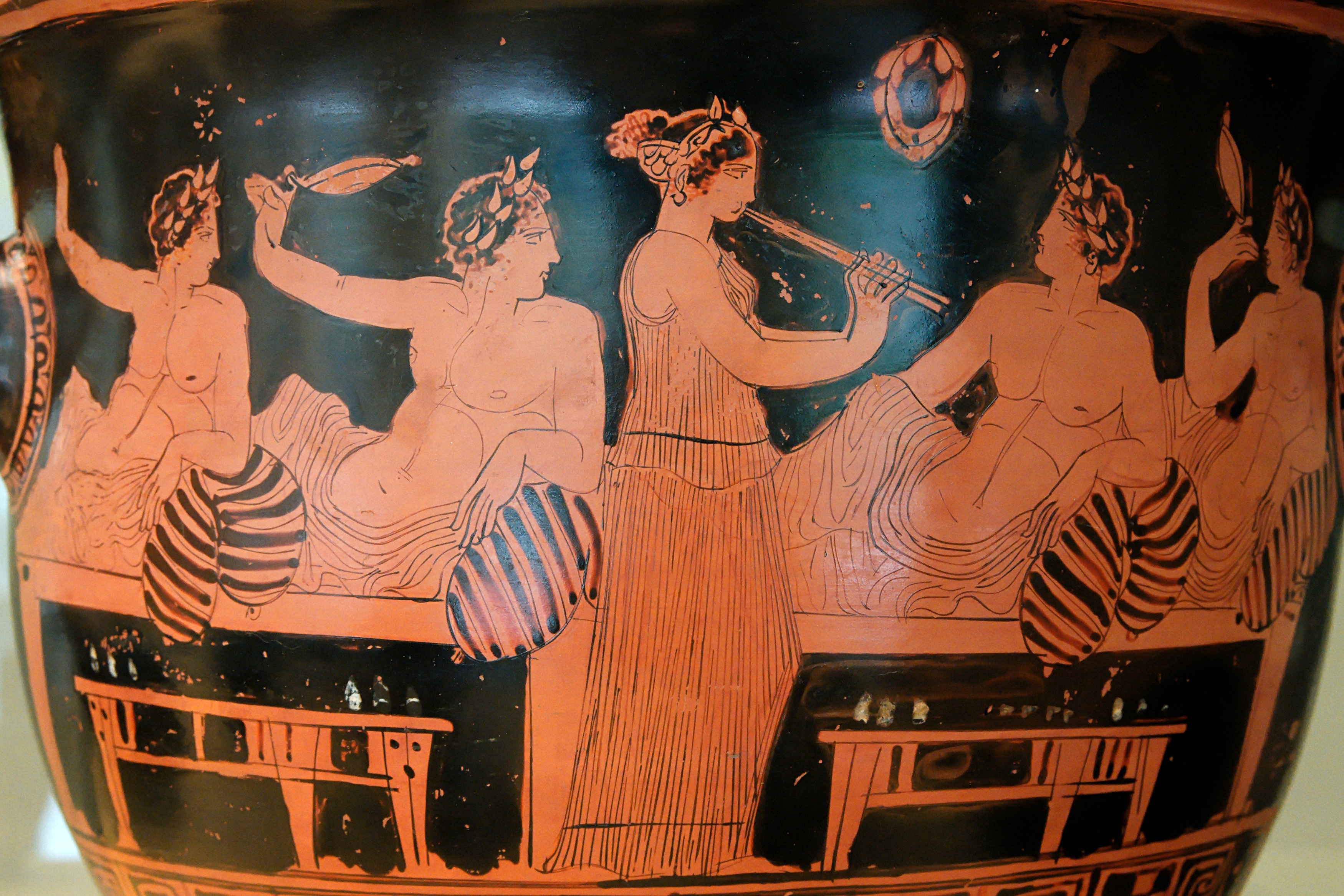
A typical symposium began after the main meal, with guests reclining on couches (klinai) arranged around a central table. A symposiarch, or master of the symposium, was often appointed to regulate the drinking, decide the ratio of wine to water (mixed in a large krater), and guide the evening's proceedings. Entertainment was paramount: professional musicians (aulos players, lyre players) and dancers would perform, while guests might engage in competitive recitations of poetry or engage in philosophical dialogues. The conversation itself was a key element, often revolving around themes of love, politics, ethics, and the nature of the gods. Games of kottabos, a skill-based drinking game involving flicking wine dregs at a target, provided a more boisterous form of amusement. The entire event was a carefully orchestrated performance of social status, intellectual prowess, and masculine camaraderie.
📊 Key Facts & Numbers
Estimates suggest that symposia could involve anywhere from a dozen to over fifty participants, primarily adult male citizens of the polis. Wine, the central beverage, was typically consumed diluted; a common ratio was three parts water to two parts wine, though this could vary. The average consumption per person could range from 1 to 3 choes (about 3 to 9 liters) of wine over the course of an evening. These gatherings were predominantly held in the andron, the men's quarters, which were typically decorated with elaborate mosaics and frescoes depicting mythological scenes or daily life. The symposium was a practice that spanned centuries, flourishing from the Archaic period (c. 800-480 BCE) through the Classical (480-323 BCE) and Hellenistic (323-31 BCE) periods, with variations in custom and emphasis across different city-states and eras.
👥 Key People & Organizations
Key figures associated with the symposium include philosophers like Socrates, Plato, and Aristotle, whose dialogues often feature symposia as their setting or subject matter. Xenophon, a historian and military leader, also penned a dialogue detailing a symposium. Poets such as Theognis of Megara used the symposium as a venue for their elegies, often reflecting on themes of social decay and aristocratic values. The symposiarch, a crucial role, was responsible for the order and flow of the event, ensuring that the drinking and conversation remained within socially acceptable bounds. While specific organizers are rarely named in surviving texts, the practice was integral to the social fabric of aristocratic families and their networks of influence, including prominent Athenian families like the Alcmaeonids.
🌍 Cultural Impact & Influence
The symposium profoundly shaped Western intellectual and social traditions. The practice of organized, intellectual conversation among peers became a model for later academic gatherings and salons. Artistic depictions of symposia in vase painting, relief sculpture, and frescoes offered a visual language for elite male identity, showcasing ideals of arete (excellence), sophrosyne (moderation), and paideia (education). The Roman convivium directly borrowed many elements from the Greek symposium, adapting them to Roman social structures. Even today, the concept of a 'symposium' as an academic conference or a gathering for intellectual exchange owes its name and spirit to these ancient Greek assemblies.
⚡ Current State & Latest Developments
While the ancient Greek symposium as a specific socio-cultural practice ceased with the decline of the classical world, its legacy endures. The term 'symposium' is now universally recognized as a formal academic conference or a meeting for discussion on a particular subject, particularly in scientific and scholarly fields. Modern universities and research institutions frequently host symposia, often featuring panel discussions and keynote speeches that echo the conversational and intellectual spirit of their ancient predecessors. The concept of a structured gathering for the exchange of ideas, often accompanied by refreshments and a convivial atmosphere, remains a vital component of academic and professional life globally. The enduring popularity of the term itself, adopted into numerous languages, speaks to the lasting impact of this ancient Greek institution on how we organize and conduct intellectual discourse.
🤔 Controversies & Debates
The most significant controversy surrounding the ancient Greek symposium is its inherent exclusivity and the exclusion of women from full participation. While hetairai (high-class courtesans) and female musicians or dancers might be present for entertainment, citizen women were largely absent from these intellectual and social arenas. This has led to critiques that the symposium reinforced patriarchal structures and presented a limited, male-centric view of Hellenic society. Furthermore, the idealized portrayals in philosophical dialogues, particularly Plato's Symposium, may mask the more mundane or even brutish realities of some gatherings, potentially sanitizing the historical record. The extent to which philosophical debate was genuine versus performative is also debated among scholars, with some arguing that intellectual discourse often served as a veneer for social posturing and political maneuvering.
🔮 Future Outlook & Predictions
The future of the 'symposium' as a concept is likely to see continued evolution, adapting to new technologies and social dynamics. While physical gatherings will persist, the integration of virtual and hybrid formats, already accelerated by recent global events, will become more commonplace. This could democratize access, allowing broader participation beyond geographical limitations, potentially challenging the historical exclusivity of the original symposium. There's also a growing interest in reviving aspects of the ancient symposium's focus on holistic well-being, integrating mindful consumption and deeper philosophical reflection into modern gatherings. The challenge will be to retain the intellectual rigor and social bonding aspects while ensuring inclusivity and addressing contemporary ethical considerations, moving beyond the male-dominated model of antiquity.
💡 Practical Applications
The most direct practical application of the ancient Greek symposium is its namesake: the modern academic or scientific symposium. These events are structured gatherings where experts present research, share findings, and engage in discussions, mirroring the intellectual exchange that defined the ancient practice. Beyond this, the symposium's emphasis on structured conversation and debate has influenced pedagogical methods in education, encouraging critical thinking and active participation. The concept of a shared meal followed by discussion also informs modern business retreats, think tank meetings, and even informal social gatherings aimed at fostering connection and idea generation. The enduring model of bringing people together to share knowledge and build community remains a powerful tool in various professional and social contexts
Key Facts
- Category
- culture
- Type
- topic