
Contents
Overview
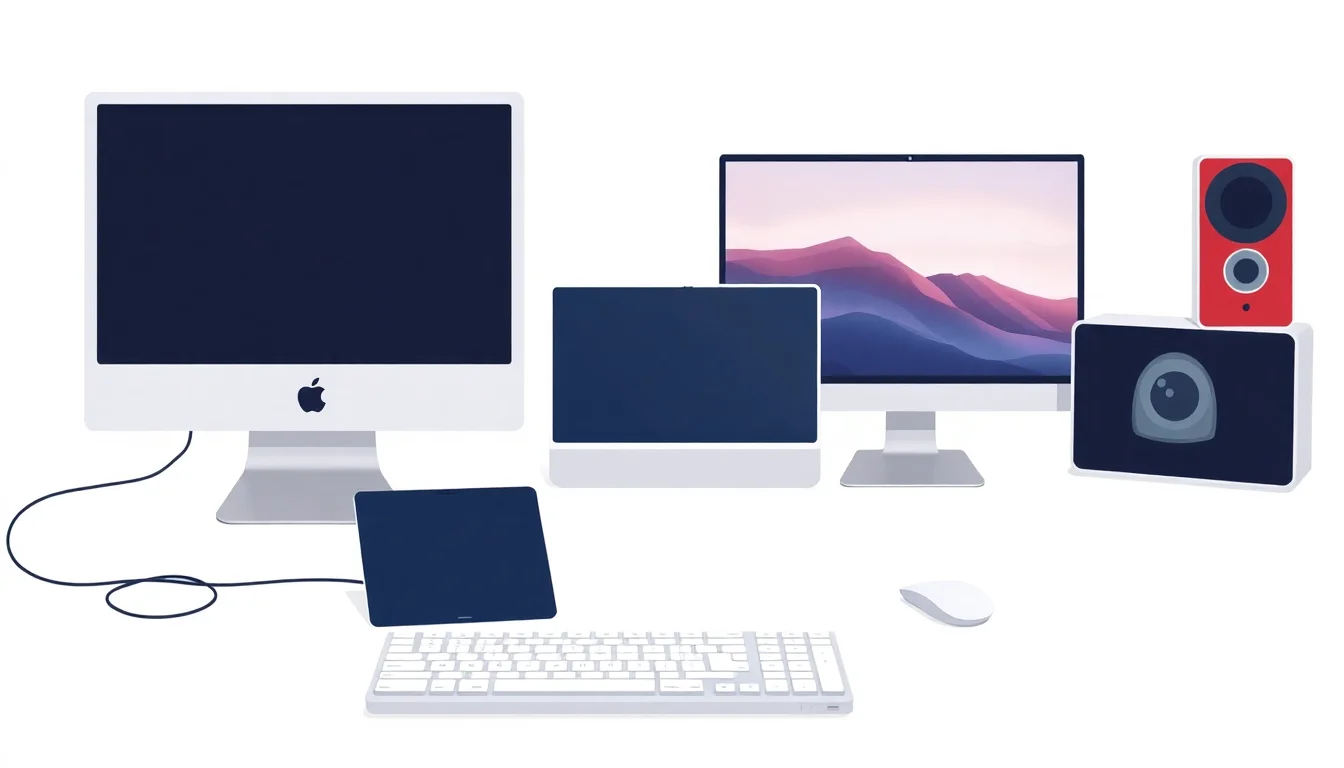
Apple devices represent an influential ecosystem of hardware products designed, manufactured, and marketed by Apple Inc. Since the introduction of the Apple I in 1976, the company has consistently pushed boundaries in personal computing, mobile technology, and wearable tech. This lineage includes iconic product lines like the Macintosh computers, the revolutionary iPhone, the ubiquitous iPad, and the increasingly sophisticated Apple Watch. Each iteration has not only defined categories but also cultivated a fervent user base, driven by a design philosophy emphasizing simplicity, integration, and performance. Apple's hardware strategy is inextricably linked to its software ecosystem, creating a powerful, albeit sometimes restrictive, user experience that has profoundly impacted global technology trends and consumer expectations.
🎵 Origins & History
The genesis of Apple devices traces back to the garage of Steve Jobs and Steve Wozniak in 1976 with the Apple I. The Apple II followed in 1977. The Macintosh arrived in 1984, introducing the graphical user interface (GUI) and the mouse to a mass audience, a paradigm shift pioneered by Xerox PARC researchers. After Steve Jobs' return in 1997, Apple embarked on a relentless product reinvention, launching the iMac G3 in 1998, which revitalized the brand with its distinctive colorful design. The 21st century saw the explosion of mobile computing with the iPod in 2001, the iPhone in 2007, and the iPad in 2010, each device fundamentally altering its respective industry and consumer behavior.
⚙️ How It Works
Apple devices are characterized by their tight integration of proprietary hardware and software. The Apple Silicon chips, designed in-house by Apple, are central to this, offering industry-leading power efficiency and performance for Macs, iPads, and even the Apple Watch. The iOS and macOS operating systems, along with watchOS and tvOS, are meticulously crafted to work in concert with the hardware, enabling features like Handoff and iCloud synchronization across devices. This vertical integration extends to components like custom modems and display technologies, ensuring a level of control over the product lifecycle that few competitors can match. The manufacturing process, largely outsourced to partners like Foxconn, still adheres to Apple's stringent design and quality control standards, often involving complex supply chain management across dozens of countries.
📊 Key Facts & Numbers
Apple's hardware division is a colossal economic force. In fiscal year 2023, iPhone sales alone generated $200.6 billion, accounting for over half of Apple's total revenue. The Mac line brought in $29.4 billion, while iPad sales contributed $28.3 billion. Apple Watch and other wearables, home, and accessories generated $38.1 billion. Apple has sold over 2.3 billion iPhones since its 2007 debut. The company's market capitalization consistently places it among the world's most valuable corporations, often exceeding $2 trillion, a testament to the commercial success of its device portfolio. As of early 2024, Apple holds a significant share of the premium smartphone market, estimated at around 20-25% globally, and dominates the smartwatch segment with over 30% market share.
👥 Key People & Organizations
The vision for Apple devices is inextricably linked to Steve Jobs, whose relentless pursuit of elegant design and user-centric innovation defined the company's hardware trajectory for decades. Steve Wozniak was the engineering genius behind the early Apple machines. Tim Cook, as CEO since 2011, has overseen the expansion and diversification of the product line, particularly in wearables and services, while maintaining Apple's financial dominance. Jony Ive, former Chief Design Officer, was instrumental in shaping the aesthetic of iconic products like the iMac G3, iPod, and iPhone. Apple Inc. itself, as the overarching organization, orchestrates the research, development, marketing, and sales of these devices, employing tens of thousands of engineers and designers globally.
🌍 Cultural Impact & Influence
Apple devices have fundamentally reshaped cultural norms and industries. The iPhone didn't just create the modern smartphone market; it birthed the App Store economy, enabling millions of developers and creating entirely new forms of entertainment, communication, and commerce. The iPad redefined portable computing for many, becoming a staple in education and creative fields. Apple Watch has normalized wearable technology, shifting it from a niche gadget to a health and fitness companion for millions, even influencing medical research with its data-gathering capabilities. The aesthetic of Apple products, characterized by minimalism and premium materials, has influenced industrial design across countless sectors, from automotive interiors to home appliances. The concept of a 'digital ecosystem,' where devices seamlessly interact, is largely a product of Apple's hardware and software integration.
⚡ Current State & Latest Developments
The current generation of Apple devices continues to push performance boundaries with the Apple Silicon chips, such as the M3 series for Macs and the A17 Pro for iPhones. The Apple Vision Pro marks Apple's ambitious entry into spatial computing, blending digital content with the physical world through its mixed-reality headset. Apple Watch Series 9 and Apple Watch Ultra 2 introduced new health sensors and gesture controls. Apple is reportedly investing heavily in AI integration across its device lineup, aiming to enhance Siri and introduce new intelligent features in upcoming software updates for iOS 18 and macOS 15. The company continues to refine its supply chain for greater sustainability, with increasing use of recycled materials in its products.
🤔 Controversies & Debates
The closed nature of Apple's ecosystem is a perennial point of contention. Critics argue that Apple's control over hardware, software, and app distribution stifles competition and limits consumer choice, particularly concerning app store policies and repairability. The Right to Repair movement has frequently targeted Apple for its practices, which often make third-party repairs difficult and expensive. Furthermore, the environmental impact of manufacturing and disposing of millions of electronic devices annually, despite Apple's sustainability initiatives, remains a significant concern. Debates also arise over data privacy, with Apple positioning itself as a privacy champion while still collecting vast amounts of user data to improve its services and personalize experiences, a balance that many find precarious.
🔮 Future Outlook & Predictions
The future of Apple devices likely involves deeper integration of AI and machine learning, potentially transforming Siri into a more capable conversational assistant and enabling proactive, context-aware features across all devices. The Apple Vision Pro is poised to evolve, with future iterations potentially becoming lighter, more affordable, and more integrated into daily life, potentially challenging the dominance of the iPhone as the primary computing device for some users. Continued advancements in Apple Silicon will drive performance and efficiency, while innovations in battery technology and display capabilities remain critical areas of development. Apple's ongoing commitment to sustainability will likely see further integration of recycled materials and a focus on product longevity and repairability, driven by both consumer demand and regulatory pressure.
💡 Practical Applications
Apple devices serve a vast array of practical applications, underpinning daily life for hundreds of millions. The iPhone functions as a primary communication tool, camera, navigation device, and mobile wallet. iPads are widely used in education for interactive learning, in healthcare for patient records and diagnostics, and by artists and designers for digital creation. Macintosh computers remain powerful tools for professionals in creative industries like video editing, graphic design, and software development, as well as for academic research. Apple Watches are used for fitness tracking, health monitoring (including ECG and blood oxygen levels), and quick notifications. Even Apple TV ha
Key Facts
- Category
- technology
- Type
- topic