
Contents
- 🎵 Origins & History
- ⚙️ How It Works
- 📊 Key Facts & Numbers
- 👥 Key People & Organizations
- 🌍 Cultural Impact & Influence
- ⚡ Current State & Latest Developments
- 🤔 Controversies & Debates
- 🔮 Future Outlook & Predictions
- 💡 Practical Applications
- 📚 Related Topics & Deeper Reading
- Frequently Asked Questions
- References
- Related Topics
Overview
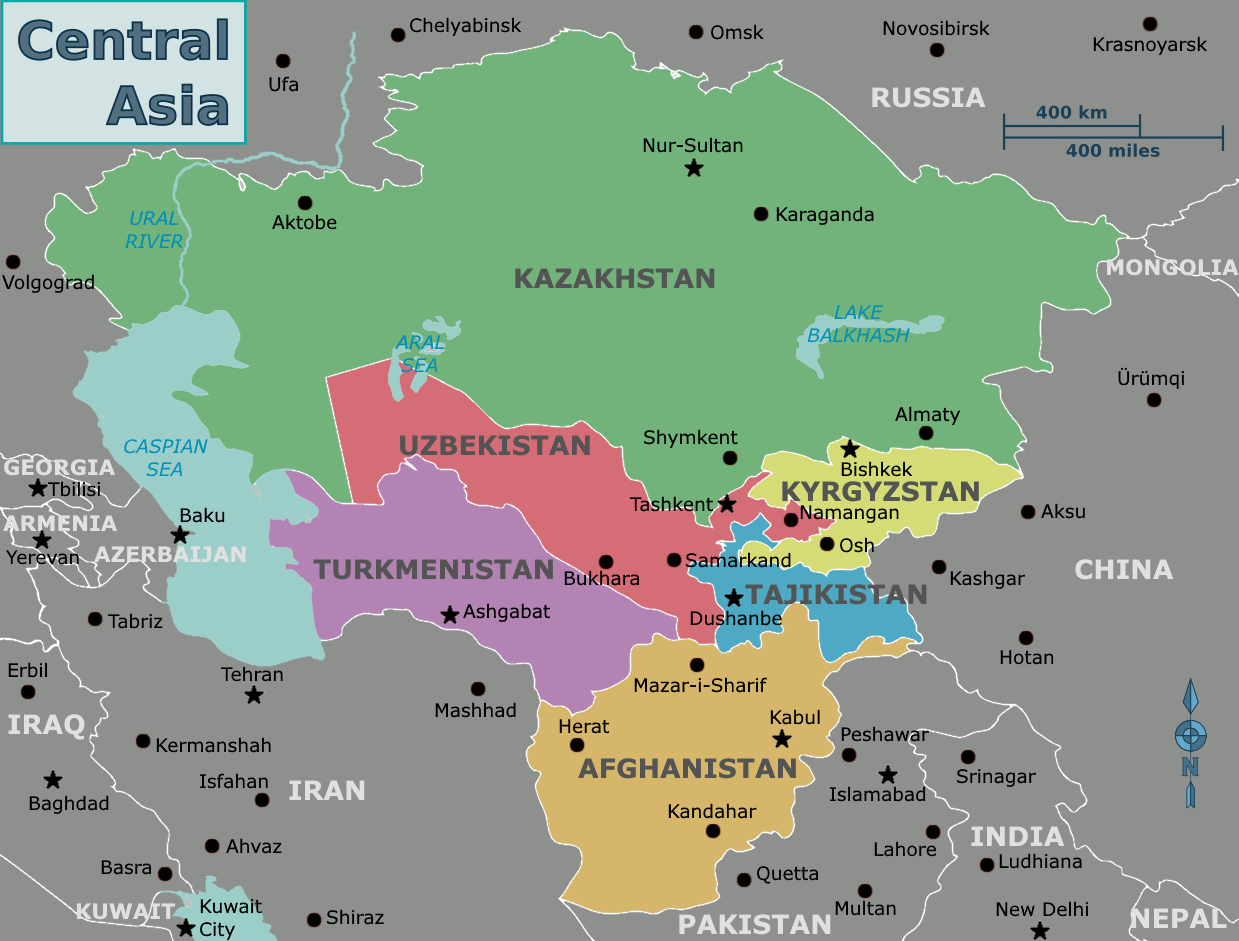
The archaeological narrative of Central Asia stretches back to the Neolithic period, with early evidence of settled agriculture appearing around the 7th millennium BCE in sites like Djeytun. The Bronze Age saw the rise of complex societies such as the Bactria-Margiana Archaeological Complex (BMAC) (c. 2300–1700 BCE), characterized by monumental architecture, sophisticated metallurgy, and extensive irrigation systems, as evidenced at sites like Gonur Depe. Later, the Iron Age witnessed the expansion of nomadic groups like the Scythians and Sakas, whose rich burial mounds, or kurgans, have yielded astonishing quantities of gold artifacts, such as the "Golden Man of Issyk" discovered in Kazakhstan in 1969. The subsequent flourishing of the Silk Road from the Han Dynasty period onwards brought new waves of cultural exchange, leaving behind magnificent Buddhist monasteries, Sogdian trading posts, and urban centers like Afrasiab (ancient Samarkand) and Merv. Early systematic archaeological work began in the Russian Imperial period, with figures like Vasily Radlov and Boris Litvinsky laying crucial groundwork, though often with a colonialist bent. Post-Soviet independence has seen a resurgence of national archaeological initiatives, reclaiming and reinterpreting this rich heritage.
⚙️ How It Works
The archaeology of Central Asia employs a diverse array of methodologies to reconstruct its past. Excavation remains central, with teams meticulously unearthing stratified layers of human activity, from ancient dwellings and workshops to burial sites and defensive fortifications. Techniques like radiocarbon dating are crucial for establishing chronologies, while paleobotanical and zooarchaeological analyses reveal ancient diets, agricultural practices, and environmental conditions. The study of material culture, including pottery, tools, weapons, and jewelry, provides insights into technological development, trade networks, and social stratification. Epigraphy, the study of ancient inscriptions, is vital for understanding languages, religious beliefs, and political structures, particularly for the Sogdian, Bactrian, and Turkic scripts found on various artifacts. Geophysical survey methods, such as ground-penetrating radar and magnetometry, are increasingly used to identify subsurface features before excavation, optimizing fieldwork and minimizing disturbance. The analysis of human remains through paleogenetics and bioarchaeology offers profound insights into population movements, health, and kinship structures.
📊 Key Facts & Numbers
Central Asia's archaeological record is staggering in its scale and significance. Over 100,000 archaeological sites have been identified across the region, with estimates suggesting that only a fraction have been systematically excavated. The Bactria-Margiana Archaeological Complex (BMAC) alone boasts over 1,000 known sites, indicating a highly developed Bronze Age civilization. The Silk Road era left behind numerous major urban centers, with Merv in Turkmenistan once housing over a million inhabitants at its peak, making it one of the largest cities in the world in the 11th century. The Scythian and Saka kurgans have yielded an estimated 500 kilograms of gold artifacts, showcasing immense wealth and artistic skill. Excavations at Afrasiab have uncovered over 100,000 artifacts, including the famous "Ambassadors' Painting" dating to the 7th century CE. The region contains at least 15 UNESCO World Heritage sites related to its archaeological and historical significance, including the ancient cities of Khiva, Bukhara, and Shakhrisabz.
👥 Key People & Organizations
Numerous individuals and institutions have shaped the field of Central Asian archaeology. Early pioneers include Vasily Radlov (1834–1918), a Russian ethnographer and archaeologist who conducted extensive fieldwork among Turkic peoples, and Boris Litvinsky (1923–2010), a Soviet scholar whose work on the Bactrian Kingdom and Sogdiana is foundational. More recently, figures like Fritz G. Klein have contributed significantly to understanding the BMAC, while Esther Boserup has explored early agricultural societies. International collaborations are increasingly vital, with organizations like the UNESCO supporting preservation efforts, and universities such as the University of Oxford and the University of Tokyo hosting research programs. National institutions like the Institute of Archaeology of the Academy of Sciences of Uzbekistan and the Institute of History, Archaeology, and Ethnography of the Academy of Sciences of Turkmenistan are crucial for local research and site management. The Hermitage Museum in St. Petersburg also holds vast collections of Central Asian artifacts, particularly from Scythian burials.
🌍 Cultural Impact & Influence
The archaeological discoveries in Central Asia have profoundly influenced our understanding of global history, particularly concerning the Silk Road's role as a conduit for ideas, technologies, and religions. The intricate Buddhist art found at sites like Bamiyan in Afghanistan and Karakol Lake in Kyrgyzstan demonstrate the eastward spread of Hellenistic artistic influences, while the discovery of Nestorian Christian artifacts and Manichaean texts reveals the diverse religious landscape. The material culture unearthed from Scythian and Saka burials has reshaped our views on early Eurasian steppe societies, highlighting their complex social structures, artistic sophistication, and extensive trade networks that reached as far as Ancient Greece and Persia. The urban planning and irrigation technologies of the BMAC challenge earlier notions of Bronze Age development, suggesting independent centers of innovation. Furthermore, the ongoing decipherment of Sogdian and other ancient scripts continues to unlock new narratives of trade, diplomacy, and cultural exchange across Eurasia.
⚡ Current State & Latest Developments
Current archaeological work in Central Asia is characterized by a surge in international collaboration and the application of advanced technologies. Following the dissolution of the Soviet Union, many countries have established their own archaeological institutes, leading to a re-evaluation and re-excavation of previously studied sites. Projects are increasingly focused on under-researched periods, such as the early medieval Turkic Khaganates and the Mongol Empire's impact. The use of remote sensing technologies, including satellite imagery and drone-based photogrammetry, is revolutionizing site discovery and mapping, particularly in vast and remote desert regions. Digital archaeology, including 3D modeling and virtual reconstructions, is making sites and artifacts more accessible to a global audience. There's also a growing emphasis on community archaeology and heritage management, aiming to involve local populations in the preservation and interpretation of their cultural heritage. Recent discoveries include new Scythian kurgans in Eastern Kazakhstan and significant Silk Road urban remains in Xinjiang, China, underscoring the interconnectedness of the region.
🤔 Controversies & Debates
The archaeology of Central Asia is not without its controversies and debates. One persistent issue is the legacy of Soviet-era archaeology, which sometimes prioritized ideological narratives or focused on specific cultural groups over others, leading to a need for reinterpretation. The ownership and repatriation of significant artifacts, particularly those discovered during the colonial period or held in foreign museums like the Hermitage Museum, remain a sensitive topic for some nations. Debates also exist regarding the precise dating and cultural affiliations of certain archaeological complexes, such as the exact origins and extent of the Bactria-Margiana Archaeological Complex (BMAC). The interpretation of nomadic cultures, particularly the Scythians and Sakas, often oscillates between portraying them as either barbaric raiders or sophisticated state-builders, reflecting ongoing scholarly and nationalistic narratives. Furthermore, the impact of rapid development and infrastructure projects on fragile archaeological sites, especially along the Belt and Road Initiative corridors, raises concerns about preservation versus progress.
🔮 Future Outlook & Predictions
The future of Central Asian archaeology holds immense promise, driven by technological advancements and a renewed global interest in the region's historical significance. We can anticipate further discoveries of previously unknown Silk Road cities and nomadic burial sites, potentially rewriting our understanding of early Eurasian connectivity. The application of paleogenetics will likely provide unprecedented insights into population movements and the genetic makeup of ancient Central Asian peoples, clarifying relationships between different groups. Advances in archaeometry will enable more precise analysis of artifact provenance, revealing intricate trade routes and exchange networks. There's also a growing focus on underwater archaeology in the region's ancient river systems and lakes. As geopolitical stability hopefully increases, more collaborative projects are expected, fostering a more comprehensive and nuanced understanding of Central Asia's layered past, potentially uncovering evidence of earlier, even more complex civilizations than currently known.
💡 Practical Applications
The practical applications of Central Asian archaeology extend beyond academic research, impacting cultural tourism, education, and even national identity. The preservation and presentation of archaeological sites like Khiva, Bukhara, and Afrasiab have transformed them into major tourist destinations, generating significant revenue for local economies. Museums across the region, such as the State Museum of History of Uzbekistan, utilize archaeological findings to educate the public and foster national pride. Understanding ancient irrigation techniques from sites like Gonur Depe can offer valuable lessons for modern water management in arid environments. Furthermore, the study of ancient trade routes and cultural exchange provides historical context for contemporary geopolitical initiatives like the Belt and Road Initiative, highlighting the long-standing interconnectedness of the region. The decipherment of ancient scripts also aids in linguistic and historical research, contributing to the broader humanities.
Key Facts
- Year
- Neolithic to present
- Origin
- Central Asia
- Category
- history
- Type
- concept
Frequently Asked Questions
What are the most significant archaeological discoveries in Central Asia?
Some of the most significant discoveries include the vast urban centers and sophisticated irrigation systems of the Bactria-Margiana Archaeological Complex (BMAC) from the Bronze Age, the opulent gold artifacts from Scythian and Saka kurgans like the "Golden Man of Issyk", and the well-preserved Buddhist art and Sogdian murals found in Silk Road cities such as Afrasiab and Bamiyan. These findings collectively illuminate complex societies, extensive trade networks, and rich cultural exchanges across Eurasia.
How has the archaeology of Central Asia evolved over time?
The field began with early explorations by Russian scholars in the Imperial era, often with a colonial perspective. Following the Soviet Union's formation, archaeology became more systematic but was also influenced by Marxist ideology and nationalistic narratives. Since the independence of Central Asian nations in 1991, there has been a resurgence of national archaeological initiatives, increased international collaboration, and the adoption of advanced technologies like remote sensing and paleogenetics, leading to a more nuanced and comprehensive understanding of the region's past.
What is the cultural significance of the Silk Road in Central Asian archaeology?
The Silk Road is paramount, as Central Asia was its historical heartland. Archaeological sites along these routes reveal the immense flow of goods, ideas, religions (like Buddhism and Manichaeism), technologies, and artistic styles between East and West. Cities like Merv, Samarkand, and Bukhara flourished as cosmopolitan centers, and their archaeological remains—from intricate murals to diverse coinage—testify to this vibrant intercultural exchange that shaped civilizations across Eurasia for over a millennium.
What challenges do archaeologists face in Central Asia today?
Archaeologists in Central Asia face several challenges, including the vastness and remoteness of many potential sites, limited funding, and the need for specialized equipment. Political instability in some neighboring regions can also pose security risks. Furthermore, the rapid pace of modern development, particularly infrastructure projects associated with the Belt and Road Initiative, can threaten undiscovered or poorly documented archaeological sites. There's also the ongoing debate and effort to balance heritage preservation with national development goals and the repatriation of artifacts held in foreign collections.
Are there any ongoing debates or controversies in the field?
Yes, several debates persist. One significant controversy revolves around the interpretation of Soviet-era archaeological findings, which sometimes reflected ideological biases. The precise origins and extent of the Bactria-Margiana Archaeological Complex (BMAC) are still debated, as are the exact cultural affiliations and migration patterns of early nomadic groups. The ethical considerations surrounding artifact repatriation from museums like the Hermitage Museum are also a point of contention. Finally, the impact of large-scale development projects on archaeological heritage is a constant source of concern and discussion.
How can I learn more about the archaeology of Central Asia?
To learn more, explore academic journals such as the Journal of Central Asian Studies and publications from institutions like the Institute of Archaeology of Uzbekistan. Visit major museums with significant Central Asian collections, such as the Hermitage Museum in St. Petersburg or the British Museum in London. Engaging with documentaries and reputable online resources that focus on Silk Road history and archaeology, such as those produced by National Geographic, can also provide valuable insights. Reading seminal works by scholars like Boris Litvinsky is highly recommended.
What does the future hold for Central Asian archaeology?
The future looks promising, with advancements in paleogenetics set to reveal more about ancient population movements and genetic histories. The increasing use of drones and remote sensing will accelerate site discovery and mapping. We can expect more collaborative projects between Central Asian nations and international researchers, leading to a deeper understanding of the region's complex past. There's also a growing focus on digital archaeology, making findings more accessible, and on community-based heritage management. Continued exploration of the Silk Road's less-studied branches and earlier periods is highly anticipated.