
Contents
Overview
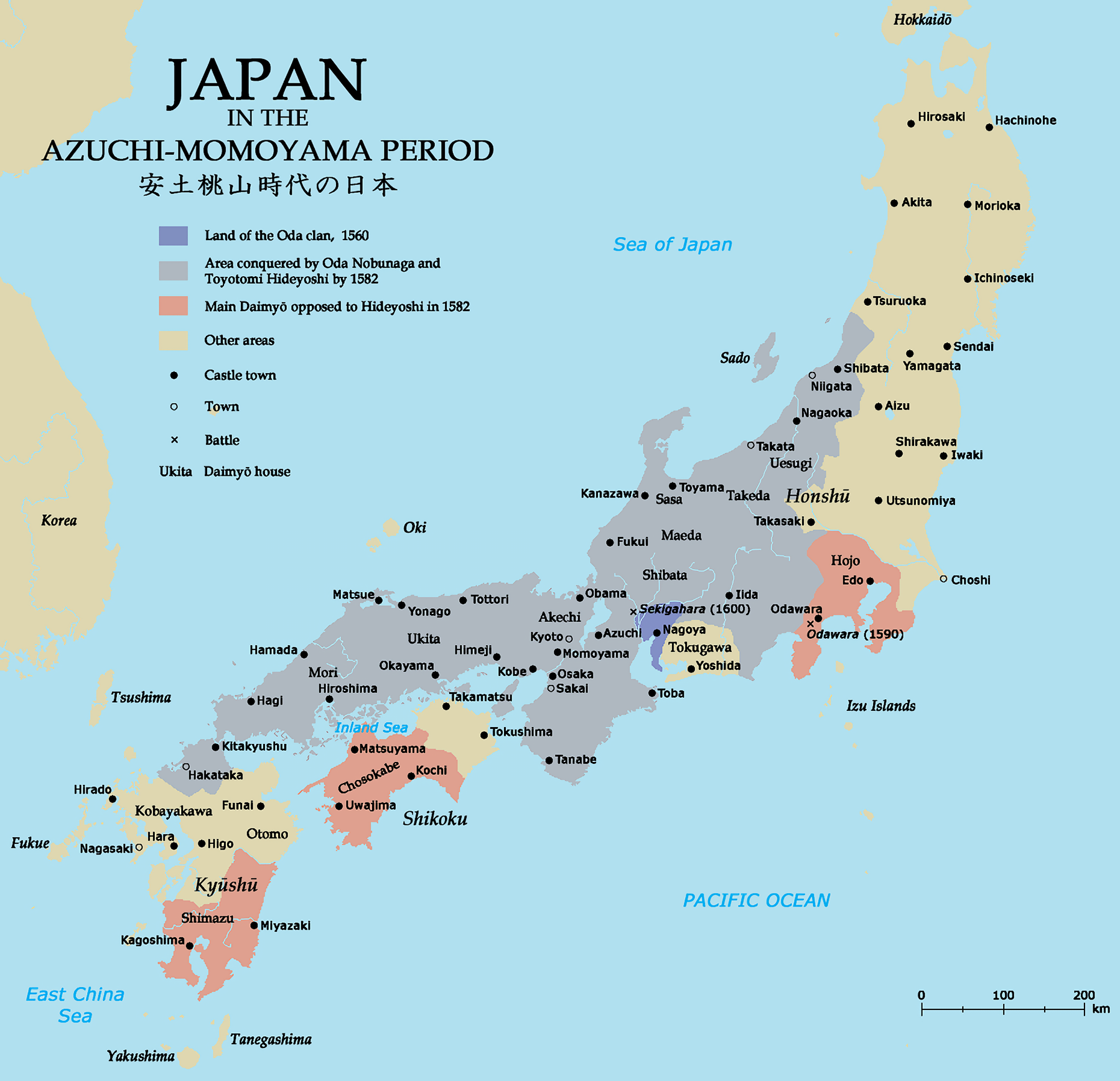
The Azuchi-Momoyama period, also known as the Oda-Toyotomi period or Shokuhō period, emerged from the ashes of the Ōnin War (1467-1477), which effectively shattered the authority of the Ashikaga Shogunate and plunged Japan into over a century of widespread conflict known as the Sengoku period. The period officially commences in 1568 when Oda Nobunaga, a formidable daimyo from Owari Province, marched into Kyoto with his army, ostensibly to support Ashikaga Yoshiaki as the 15th and final Ashikaga shogun. Nobunaga's ambition, however, extended far beyond mere patronage; he systematically dismantled the power of rival warlords and Buddhist monasteries, consolidating his own authority from his magnificent castle at Azuchi. This era of intense military campaigns and political maneuvering continued until Nobunaga's assassination in the Honnō-ji Incident in 1582, paving the way for his brilliant successor, Toyotomi Hideyoshi, to complete the unification of Japan, thus formally ending the Sengoku period.
⚙️ How It Works
The 'mechanics' of the Azuchi-Momoyama period were driven by a relentless pursuit of military and political dominance, characterized by the rise of powerful, centralized daimyo who commanded vast armies and implemented innovative administrative policies. Oda Nobunaga revolutionized warfare with his effective use of arquebuses and disciplined infantry, breaking the traditional dominance of samurai cavalry. His successor, Toyotomi Hideyoshi, continued this consolidation, implementing land surveys (like the Taikō Kenchi) to establish a stable tax base and issuing sword hunts (Katanagari) to disarm the peasantry and solidify the samurai class. The construction of imposing castles, such as Nobunaga's Azuchi Castle and Hideyoshi's Osaka Castle, served not only as military strongholds but also as centers of political power and burgeoning commerce, reflecting the era's shift towards a more centralized state.
📊 Key Facts & Numbers
The Azuchi-Momoyama period spanned 35 years, from 1568 to 1603. During this time, Japan transitioned from a fragmented land of warring states to a unified nation. Oda Nobunaga controlled approximately one-third of Japan's provinces by 1582. His successor, Toyotomi Hideyoshi, completed the unification by 1590, bringing an estimated 22 million people under his rule. Hideyoshi launched two massive invasions of Korea between 1592 and 1598, involving hundreds of thousands of soldiers. The period saw the construction of numerous castles, with some, like Himeji Castle, becoming UNESCO World Heritage sites. By the end of the period, Japan's population was estimated to be around 15 million.
👥 Key People & Organizations
The pivotal figures of this era were undoubtedly Oda Nobunaga (1534-1582) and Toyotomi Hideyoshi (1537-1598). Nobunaga, a ruthless and innovative military leader, initiated the unification process with his base at Azuchi Castle. His assassination led to the rise of Hideyoshi, a former sandal-bearer who proved to be a brilliant strategist and administrator, completing the unification and implementing sweeping reforms. Tokugawa Ieyasu, a key ally of Nobunaga and later Hideyoshi, ultimately emerged as the dominant power after Hideyoshi's death, establishing the Tokugawa Shogunate in 1603. Other significant figures include Ashikaga Yoshiaki, the last Ashikaga shogun, and Sen no Rikyū, the tea master who profoundly influenced the aesthetics of the period.
🌍 Cultural Impact & Influence
The Azuchi-Momoyama period was a golden age for Japanese arts and culture, marked by a bold, flamboyant aesthetic that contrasted sharply with the austerity of earlier periods. This era saw the development of Nanban art, depicting Europeans and their ships, reflecting the initial contact with Portuguese traders and missionaries. Grand castle architecture, exemplified by Azuchi Castle and Osaka Castle, showcased opulent interiors with elaborate fusuma paintings by artists like Kanō Eitoku and Kanō Sanraku. The Japanese tea ceremony, refined by Sen no Rikyū, became a central cultural practice, emphasizing rustic simplicity (wabi-sabi) amidst the era's grandeur. Noh theater continued to be patronized by the ruling elite, while new forms of popular entertainment began to emerge.
⚡ Current State & Latest Developments
While the Azuchi-Momoyama period officially concluded in 1603 with the establishment of the Tokugawa Shogunate, its legacy continues to shape Japan. The political unification achieved by Nobunaga and Hideyoshi provided the foundation for over 250 years of peace and stability under the Tokugawa. The cultural innovations, from castle architecture to the tea ceremony and ukiyo-e precursors, remain central to Japan's artistic heritage. Modern Japan still grapples with the interpretations of these powerful figures; Oda Nobunaga is often portrayed as a visionary modernizer, while Toyotomi Hideyoshi is seen as a complex figure whose ambition led to costly foreign wars. The ongoing demand for historical dramas and media set in this period, such as the popular Sengoku Basara franchise, demonstrates its enduring cultural resonance.
🤔 Controversies & Debates
A primary controversy surrounding the Azuchi-Momoyama period centers on the methods and motivations of its unifiers. Oda Nobunaga's brutal suppression of Buddhist monasteries, such as the Mount Hiei massacre in 1571, and his relentless military campaigns are viewed by some as necessary steps toward national stability, while others condemn them as acts of extreme violence and religious persecution. Similarly, Toyotomi Hideyoshi's invasions of Korea (1592-1598) are a source of deep historical contention, widely seen in Korea as a devastating act of aggression that caused immense suffering and destruction, while in Japan, they are sometimes framed as attempts to project power or even as a strategic misdirection of domestic military forces. The legacy of these figures is thus debated: were they nation-builders or ruthless conquerors?
🔮 Future Outlook & Predictions
The future outlook for understanding the Azuchi-Momoyama period lies in continued archaeological discoveries and interdisciplinary research. Ongoing excavations of castle sites, such as Azuchi Castle, promise to reveal more about the daily lives and technological advancements of the era. Comparative historical studies, examining the period's state-building efforts against contemporary developments in Ming Dynasty China and Joseon Dynasty Korea, will offer deeper insights into Japan's place in East Asia. Furthermore, advancements in digital humanities, including 3D reconstructions of castles and battlefields, will provide new ways for the public to engage with this pivotal era, potentially uncovering new perspectives on the socio-economic impacts of unification and foreign policy.
💡 Practical Applications
The practical applications of studying the Azuchi-Momoyama period are primarily found in understanding Japanese history, culture, and statecraft. The military strategies employed by Oda Nobunaga and Toyotomi Hideyoshi are still analyzed in military academies for their innovative tactics and logistical planning. The administrative reforms, such as land surveys and the establishment of centralized authority, offer case studies for political science and public administration. Furthermore, the aesthetic principles developed during this time, particularly in architecture, garden design, and the Japanese tea ceremony, continue to influence contemporary Japanese design and cultural practices, with many castles and tea houses preserved as national treasures and tourist attractions.
Key Facts
- Category
- history
- Type
- topic