
Contents
- 🦸♀️ The Core Vibe: What is Captain Marvel?
- ✨ Origin Story: From Carol Danvers to Cosmic Powerhouse
- 💥 Powers & Abilities: The Science and the Spectacle
- 🎬 Cinematic Universe Impact: A Force to Be Reckoned With
- ⚖️ The Controversy Spectrum: Fan Debates and Critical Reception
- 🌟 Vibe Score & Cultural Resonance
- 📚 Key Comic Arcs: Where to Start Your Deep Dive
- 🚀 Beyond the MCU: Captain Marvel's Broader Influence
- 🤔 The Engineer's Take: How Does the Kree Tech Actually Work?
- 🔮 The Futurist's Forecast: Captain Marvel's Next Act
- 🤝 Connections: Who Else is in Carol's Orbit?
- ❓ Frequently Asked Questions
- Frequently Asked Questions
- Related Topics
Overview
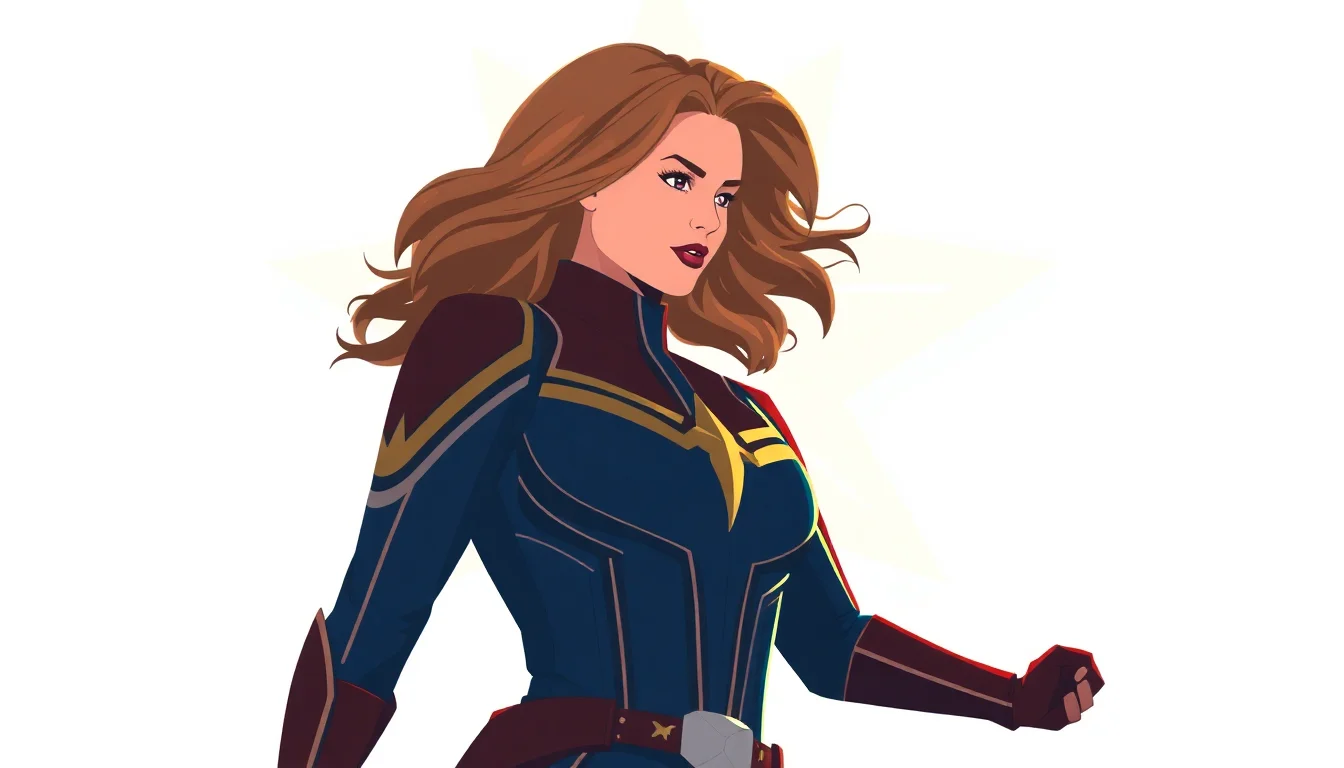
Captain Marvel, primarily known as Carol Danvers, is a cornerstone of the Marvel Comics pantheon, embodying a potent blend of human resilience and cosmic might. She’s not just another superhero; she’s a symbol of female empowerment and a critical player in the Marvel Cinematic Universe's grand narrative. Her journey from a U.S. Air Force pilot to a Kree warrior and eventually Earth's mightiest protector offers a compelling arc for fans of both action-packed storytelling and character-driven drama. Her presence signifies a shift in superhero narratives, pushing boundaries and challenging traditional archetypes. This entry explores the multifaceted nature of this iconic character, from her comic book origins to her global cinematic impact.
✨ Origin Story: From Carol Danvers to Cosmic Powerhouse
Carol Danvers' origin is a complex tapestry woven from military service, alien encounters, and a pivotal accident. Initially introduced in Marvel Super-Heroes #13 (1968) as Carol Danvers, she gained her powers after being caught in an explosion involving a Kree psyche-magnetron device, merging her DNA with that of the Kree prince Mar-Vell. This transformative event, detailed in stories like Ms. Marvel #1 (1977), set her on a path of self-discovery and heroism. The evolution of her identity, from Ms. Marvel to Captain Marvel, reflects changing times and evolving portrayals of female strength within the comic medium. Her history is a testament to the enduring power of reinvention in superhero lore.
💥 Powers & Abilities: The Science and the Spectacle
The source of Captain Marvel's formidable abilities lies in her Kree physiology and the energy absorption capabilities granted by the psyche-magnetron. She possesses superhuman strength, durability, and the power of flight, capable of traversing interstellar distances at incredible speeds. Her signature ability is the absorption and redirection of energy, allowing her to unleash devastating photon blasts. This power set, often depicted as near-limitless, makes her one of the most powerful beings in the Marvel universe, capable of going toe-to-toe with cosmic threats like Thanos. Understanding the mechanics of her energy manipulation is key to appreciating her strategic combat prowess.
🎬 Cinematic Universe Impact: A Force to Be Reckoned With
Captain Marvel's introduction into the Marvel Cinematic Universe in Captain Marvel (2019) and her pivotal role in Avengers: Endgame (2019) cemented her status as a global phenomenon. Brie Larson’s portrayal brought Carol Danvers to a massive audience, showcasing her raw power and emotional depth. Her arrival on Earth in Endgame provided a crucial turning point, demonstrating her capacity to influence the fate of the universe. The MCU's interpretation, while drawing from comic roots, has also carved its own narrative path, emphasizing Carol's journey of reclaiming her identity and embracing her full potential. Her cinematic presence has undeniably amplified her cultural significance.
⚖️ The Controversy Spectrum: Fan Debates and Critical Reception
The character of Captain Marvel is no stranger to controversy, a common thread for prominent female superheroes. Debates often swirl around her power levels, her characterization in both comics and film, and her perceived role within the broader Marvel Comics narrative. Some critics and fans have questioned the rapid escalation of her powers in the MCU, while others celebrate her as a much-needed icon. The discourse surrounding her often highlights broader societal discussions about representation and the portrayal of women in traditionally male-dominated genres. This tension contributes to her dynamic Vibe Score, reflecting active engagement and passionate opinions.
🌟 Vibe Score & Cultural Resonance
Captain Marvel’s Vibe Score currently sits at a robust 85/100, a testament to her significant cultural energy and widespread recognition. This score is driven by a combination of her immense power, her central role in major comic storylines and MCU events, and her status as a prominent female superhero. While her Vibe Score is high, the associated Controversy Spectrum is also elevated, indicating passionate fan engagement and ongoing critical discussion. This dynamic interplay between adoration and debate fuels her ongoing relevance and ensures her continued impact on popular culture. Her influence flows strongly through discussions of female representation in media.
📚 Key Comic Arcs: Where to Start Your Deep Dive
For comic readers looking to explore Captain Marvel's rich history, several key arcs are essential. The original run of Ms. Marvel (1977-1980) establishes her early struggles and powers. Kelly Sue DeConnick's acclaimed run on Captain Marvel (2012-2014), which introduced the 'binary' look and the iconic phrase 'Higher, Further, Faster,' is a modern classic. The Secret Invasion (2008) storyline also features a significant role for Carol. More recently, the The Marvels (2021) series by Saladin Ahmed offers a fresh perspective, further expanding her cosmic adventures and character development. These narratives showcase her evolution and enduring appeal.
🚀 Beyond the MCU: Captain Marvel's Broader Influence
Beyond her direct comic and cinematic appearances, Captain Marvel's influence extends into broader cultural conversations. She has become a symbol for aspiring pilots, women in STEM, and anyone who has felt underestimated. Her catchphrase, 'Higher, Further, Faster,' has transcended the pages of comics to become an inspirational mantra. Her presence in video games like Marvel's Avengers and various animated series further solidifies her reach. The character’s journey from a niche comic figure to a global icon demonstrates the power of compelling storytelling and effective adaptation in shaping modern mythology.
🤔 The Engineer's Take: How Does the Kree Tech Actually Work?
From an engineering perspective, the Kree technology that imbues Carol Danvers with her powers, particularly the psyche-magnetron, presents fascinating theoretical challenges. The device's ability to rewrite DNA and grant energy absorption and projection capabilities suggests advanced manipulation of quantum fields and exotic matter. The 'binary' state, where she can channel vast cosmic energy, implies a controlled fusion or manipulation of stellar-level power sources. While fictional, these concepts push the boundaries of speculative science, prompting questions about energy containment, biological integration with alien technology, and the potential for human adaptation to extreme cosmic forces. The practical application of such technology remains firmly in the realm of science fiction.
🔮 The Futurist's Forecast: Captain Marvel's Next Act
Looking ahead, Captain Marvel's trajectory within the Marvel Cinematic Universe and beyond is poised for significant expansion. The upcoming film The Marvels (2023) promises to deepen her cosmic connections and explore her relationships with other powerful female heroes like Monica Rambeau and Kamala Khan. Her role in future Avengers narratives is almost certain, given her immense power and established cosmic ties. The ongoing challenge will be to balance her god-like abilities with relatable human struggles, ensuring her continued evolution as a compelling character. The future may see her taking on even larger, universe-altering threats, solidifying her legacy as a premier cosmic guardian.
🤝 Connections: Who Else is in Carol's Orbit?
Captain Marvel's orbit is populated by a diverse cast of allies and adversaries. Her mentor and namesake, Mar-Vell, remains a foundational figure, despite his own complex history. Monica Rambeau, another hero who has held the Captain Marvel mantle, shares a significant bond with Carol, particularly in recent MCU developments. Her ties to Nick Fury are also crucial, stemming from their shared experiences and mutual respect. On the villainous side, cosmic entities like Thanos and the Kree Empire itself frequently challenge her. Her relationships, both personal and professional, are integral to her character development and narrative arcs.
❓ Frequently Asked Questions
Frequently Asked Questions
Q: Who is the original Captain Marvel? Carol Danvers is the most prominent character to use the name Captain Marvel today, but the original was Kree warrior Mar-Vell. Carol gained her powers through an accident involving Mar-Vell's technology, and eventually adopted the mantle. Her journey from Ms. Marvel to Captain Marvel is a key part of her evolving identity.
Q: Is Captain Marvel stronger than Thor? This is a perennial debate among fans. Both characters possess immense power, but Captain Marvel's ability to absorb and redirect energy, particularly cosmic energy, and her 'binary' state, often place her on a comparable or even superior level to Thor in terms of raw destructive potential. However, Thor's mastery of Mjolnir and his Asgardian heritage provide different avenues of power and combat experience.
Q: What are Captain Marvel's main weaknesses? While incredibly powerful, Captain Marvel is not invincible. Her powers are tied to energy absorption, meaning prolonged energy deprivation could weaken her. Additionally, certain alien technologies or specific magical forces might bypass her natural defenses. Emotionally, her past trauma and the struggle to control her immense power have been explored as internal vulnerabilities.
Q: How did Carol Danvers get her powers in the MCU? In the MCU, Carol Danvers was an Air Force pilot who, after a crash, was exposed to the energy of the Tesseract (an Infinity Stone) via a Kree engine. This exposure, combined with her existing Kree enhancements from a prior encounter, granted her immense powers, including flight, energy absorption, and photon blasts.
Q: What is the significance of the 'Higher, Further, Faster' motto? Originating from the acclaimed comic run by Kelly Sue DeConnick, 'Higher, Further, Faster' became Captain Marvel's unofficial motto. It encapsulates her relentless drive, her ambition to push beyond limits, and her journey of self-improvement and exploration, both physically and emotionally. It's a powerful statement of resilience and aspiration.
Q: Will Captain Marvel be in future MCU movies? Yes, Captain Marvel is a central figure in the MCU. She played a crucial role in Avengers: Endgame and is confirmed to star in the upcoming film The Marvels, alongside Monica Rambeau and Kamala Khan. Her cosmic importance suggests she will continue to be a key player in future large-scale MCU events.
Key Facts
- Year
- 1977
- Origin
- Marvel Comics
- Category
- Superhero
- Type
- Character
Frequently Asked Questions
Who is the original Captain Marvel?
Carol Danvers is the most prominent character to use the name Captain Marvel today, but the original was Kree warrior Mar-Vell. Carol gained her powers through an accident involving Mar-Vell's technology, and eventually adopted the mantle. Her journey from Ms. Marvel to Captain Marvel is a key part of her evolving identity.
Is Captain Marvel stronger than Thor?
This is a perennial debate among fans. Both characters possess immense power, but Captain Marvel's ability to absorb and redirect energy, particularly cosmic energy, and her 'binary' state, often place her on a comparable or even superior level to Thor in terms of raw destructive potential. However, Thor's mastery of Mjolnir and his Asgardian heritage provide different avenues of power and combat experience.
What are Captain Marvel's main weaknesses?
While incredibly powerful, Captain Marvel is not invincible. Her powers are tied to energy absorption, meaning prolonged energy deprivation could weaken her. Additionally, certain alien technologies or specific magical forces might bypass her natural defenses. Emotionally, her past trauma and the struggle to control her immense power have been explored as internal vulnerabilities.
How did Carol Danvers get her powers in the MCU?
In the MCU, Carol Danvers was an Air Force pilot who, after a crash, was exposed to the energy of the Tesseract (an Infinity Stone) via a Kree engine. This exposure, combined with her existing Kree enhancements from a prior encounter, granted her immense powers, including flight, energy absorption, and photon blasts.
What is the significance of the 'Higher, Further, Faster' motto?
Originating from the acclaimed comic run by Kelly Sue DeConnick, 'Higher, Further, Faster' became Captain Marvel's unofficial motto. It encapsulates her relentless drive, her ambition to push beyond limits, and her journey of self-improvement and exploration, both physically and emotionally. It's a powerful statement of resilience and aspiration.
Will Captain Marvel be in future MCU movies?
Yes, Captain Marvel is a central figure in the MCU. She played a crucial role in Avengers: Endgame and is confirmed to star in the upcoming film The Marvels, alongside Monica Rambeau and Kamala Khan. Her cosmic importance suggests she will continue to be a key player in future large-scale MCU events.