
Contents
Overview
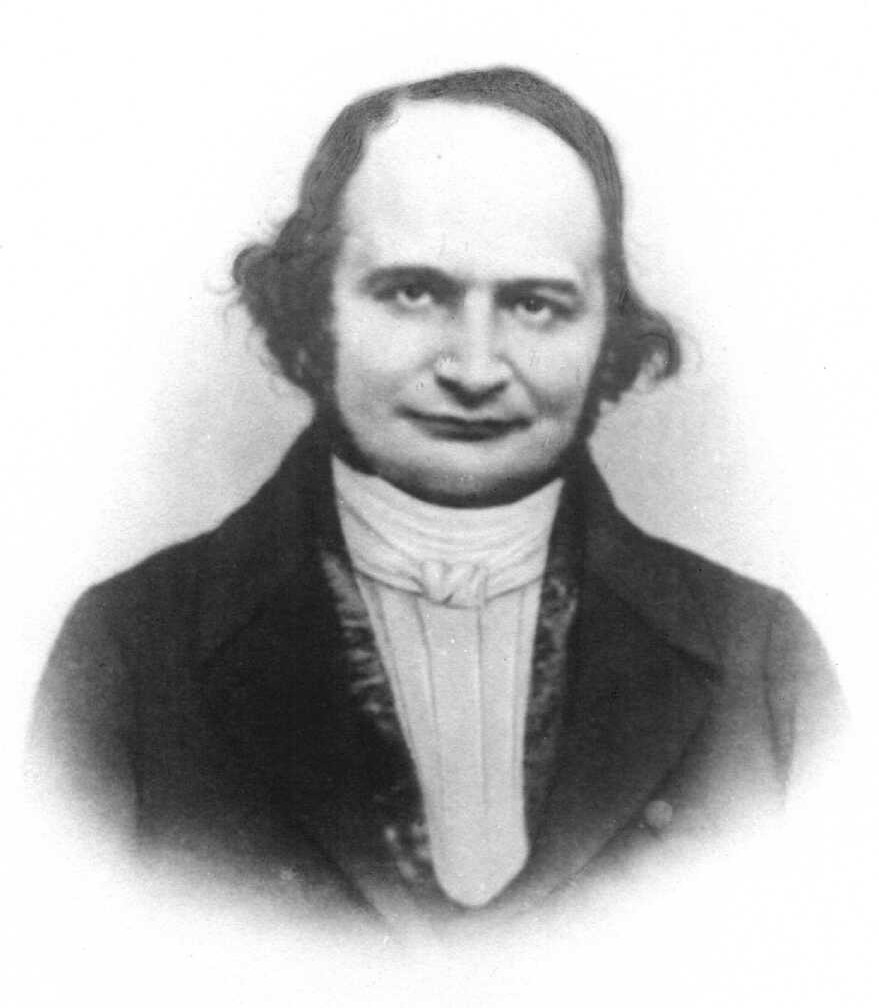
Carl Gustav Jacob Jacobi (1804-1851) was a towering figure in 19th-century German mathematics, leaving an indelible mark on fields ranging from elliptic functions and dynamics to differential equations and number theory. Born in Potsdam, Prussia, Jacobi was a prodigious talent who, despite facing antisemitic barriers, became the first Jewish professor at the University of Königsberg. His work on the transformation of elliptic functions, particularly his development of the Jacobi elliptic functions, revolutionized the study of periodic phenomena and provided essential tools for physics and engineering. He also made significant contributions to Hamiltonian mechanics, introducing the Jacobi method for solving differential equations, and his work on determinants, including the Jacobian determinant, remains fundamental in multivariable calculus and geometry. Jacobi's influence extended across Europe, fostering a generation of mathematicians and solidifying the rigorous, analytical approach that would define modern mathematics.
🎵 Origins & History
Carl Gustav Jacob Jacobi's intellectual journey began in Potsdam, Prussia. His early aptitude for mathematics was evident, but the prevailing antisemitism of the era presented significant obstacles to his academic advancement. Despite these challenges, Jacobi pursued his studies with relentless determination, eventually earning his doctorate from the University of Berlin. His groundbreaking work on elliptic functions, particularly his treatise 'Fundamenta nova theoriae functionum ellipticarum,' catapulted him to international recognition. This led to his appointment as a professor at the University of Königsberg, a historic achievement as he was the first Jewish scholar to hold a professorship at a Prussian university. He remained at Königsberg until his death, becoming a central figure in the European mathematical community.
⚙️ How It Works
Jacobi's work on elliptic functions provided a more comprehensive and elegant framework for understanding and solving problems involving elliptical integrals. He introduced a new set of functions, now known as the Jacobi elliptic functions, which are denoted as sn(x), cn(x), and dn(x). These functions are analogous to trigonometric functions but are defined in relation to the arc length of an ellipse. In dynamics, he developed the Jacobi method for solving systems of differential equations, a technique that significantly advanced the study of celestial mechanics and other physical systems. His work on determinants, particularly the Jacobian determinant, provides a crucial tool for understanding transformations of variables in multivariable calculus, essential for calculating volumes and areas under coordinate changes.
📊 Key Facts & Numbers
Jacobi published over 100 published papers and several influential books. His seminal work on elliptic functions, 'Fundamenta nova theoriae functionum ellipticarum,' fundamentally altered the landscape of complex analysis. By 1834, he had introduced the Jacobi elliptic functions, which are now standard in advanced mathematics and physics. He made contributions to number theory, including significant results on quadratic forms and the theory of partitions. In the realm of mechanics, his 'Vorlesungen über die Dynamik,' published posthumously, detailed his advancements in Hamiltonian mechanics. Jacobi's work on determinants, specifically the Jacobian, became a cornerstone of multivariable calculus, with its applications impacting fields from fluid dynamics to economics.
👥 Key People & Organizations
Jacobi's academic home was the University of Königsberg, where he held a professorship. He was a contemporary and correspondent of many leading mathematicians of his era, including Peter Gustav Lejeune Dirichlet, Carl Friedrich Gauss, and Bernhard Riemann, though his direct collaboration with Riemann was limited by their differing career stages. His work on elliptic functions was built upon the earlier foundations laid by mathematicians like Adrien-Marie Legendre and Niels Henrik Abel. The Prussian Academy of Sciences recognized his contributions, and he was elected a foreign member of the Royal Society of London. His students, such as Leopold Kronecker, would go on to become influential mathematicians in their own right.
🌍 Cultural Impact & Influence
The impact of Carl Gustav Jacob Jacobi on mathematics is profound and enduring. His development of the Jacobi elliptic functions provided a powerful new toolset for analyzing periodic phenomena, directly influencing fields like celestial mechanics, electromagnetism, and quantum mechanics. The Jacobian determinant, a concept he rigorously defined and explored, is indispensable in differential geometry, topology, and optimization theory. His work in dynamics, particularly his contributions to Hamiltonian mechanics, laid crucial groundwork for later developments in theoretical physics. The rigorous analytical methods he championed became a hallmark of 19th-century mathematics, shaping curricula and research directions for generations, and his legacy is evident in countless textbooks and research papers today.
⚡ Current State & Latest Developments
While Jacobi passed away in 1851, his mathematical contributions remain vibrantly alive. The Jacobi elliptic functions continue to be a fundamental topic in advanced undergraduate and graduate mathematics courses worldwide. Researchers in fields as diverse as signal processing, cryptography, and robotics still utilize the principles derived from his work on differential equations and determinants. The ongoing exploration of number theory and dynamical systems frequently revisits and builds upon Jacobi's foundational insights. Modern computational mathematics and symbolic computation software, such as Mathematica and Maple, incorporate algorithms directly stemming from his discoveries, ensuring his work remains at the forefront of mathematical application.
🤔 Controversies & Debates
One of the primary debates surrounding Jacobi's work, particularly in his time, was the complexity and perceived abstraction of his elliptic functions compared to the more established trigonometric functions. Some contemporaries found them difficult to grasp and apply. Furthermore, the historical context of antisemitism in Prussian academia meant that Jacobi's rise to prominence was an uphill battle, a struggle that highlights the systemic barriers faced by minority scholars. While not a controversy in the modern sense, the sheer breadth of his contributions across multiple, distinct mathematical fields has sometimes led to discussions about how to best categorize his legacy – was he primarily a number theorist, a geometer, or a physicist? This reflects the interdisciplinary nature of his genius.
🔮 Future Outlook & Predictions
The future outlook for Jacobi's mathematical legacy is one of continued relevance and expansion. As new scientific frontiers emerge, the analytical tools he forged are likely to find novel applications. For instance, his work on differential equations and dynamical systems could prove crucial in modeling complex phenomena in climate science or artificial intelligence. The ongoing quest to understand fundamental mathematical structures may lead to deeper insights into the properties of Jacobi elliptic functions and their connections to other areas of mathematics, such as algebraic geometry and string theory. His rigorous approach to problem-solving will undoubtedly continue to inspire mathematicians tackling the unsolved challenges of the 21st century.
💡 Practical Applications
Jacobi's work has a vast array of practical applications. The Jacobi elliptic functions are indispensable in the analysis of pendulums with large amplitudes, the study of rotating rigid bodies, and the design of electrical circuits involving nonlinear inductances. The Jacobian determinant is a fundamental tool in multivariable calculus for performing change of variables in multiple integrals, essential for calculating volumes and probabilities in fields like physics and statistics. In engineering, his methods for solving differential equations are applied in control systems, fluid dynamics, and mechanical engineering to model and predict the behavior of complex systems. His number theory contributions also underpin aspects of modern cryptography.
Key Facts
- Category
- science
- Type
- topic