
Contents
Overview
The story of the Catskills begins with the indigenous Lenape people who inhabited the region for centuries before European arrival. Dutch explorers, charting the Hudson River in the early 17th century, were the first Europeans to extensively document the area, bestowing the name "Catskill"—likely derived from the Dutch words for "wildcat" and "stream"—due to the abundance of bobcats. Early settlement was sparse, focused on logging and trapping, but the region’s dramatic scenery soon captured the imagination of artists. By the mid-19th century, the Hudson River School artists, including Thomas Cole and Frederic Church, established the Catskills as a subject of national artistic importance, immortalizing its peaks and valleys in iconic landscapes. This artistic recognition paved the way for its later development as a premier tourist destination, particularly for New Yorkers seeking respite from urban life.
⚙️ Geological Formation
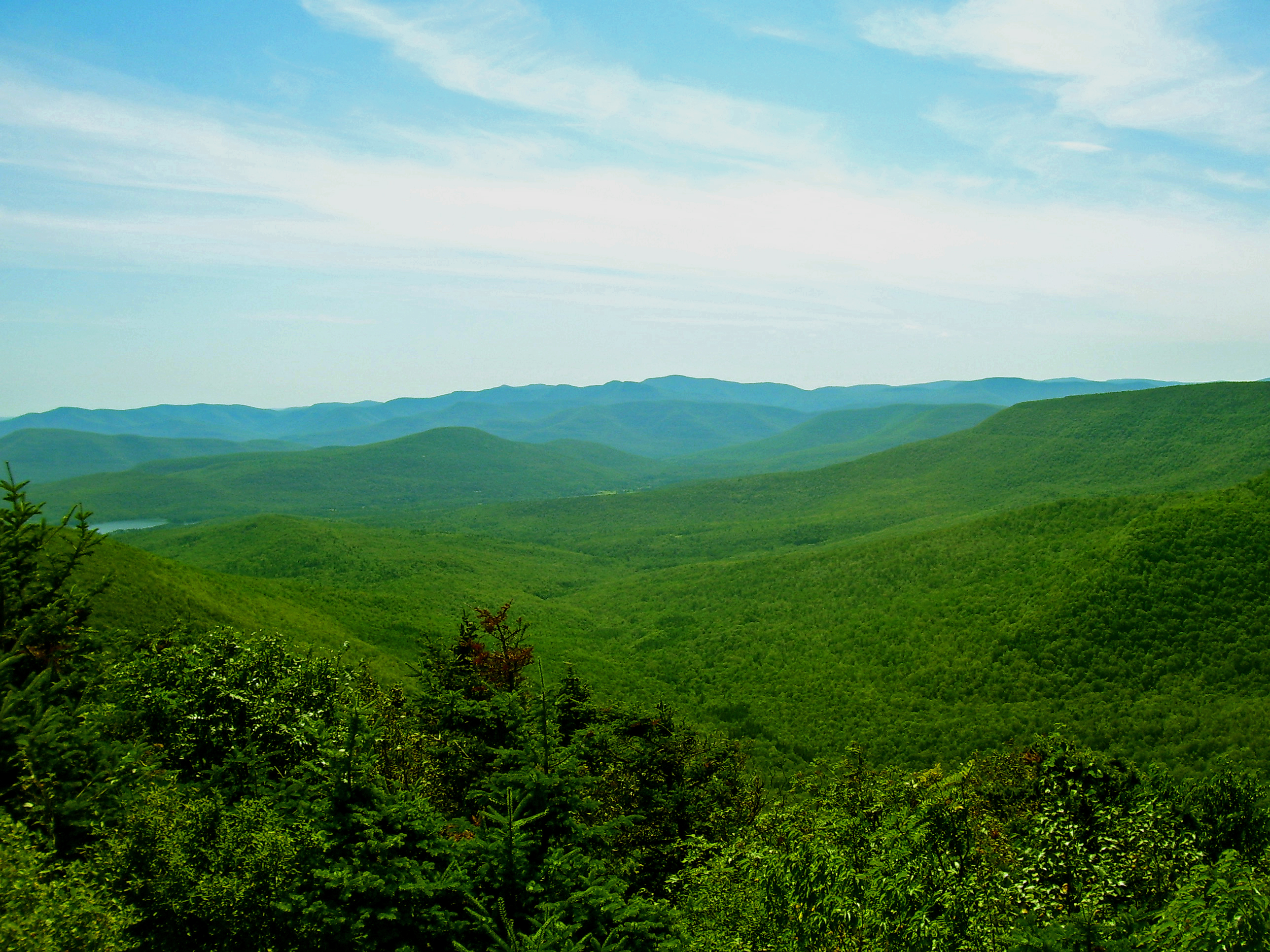
Geologically, the Catskills are a prime example of a mature dissected plateau. This means the region was once a relatively flat landmass that was uplifted and subsequently eroded over millions of years by numerous streams and rivers, such as the Esopus Creek, Neversink River, Rondout Creek, and Schoharie Creek. These erosional forces carved deep valleys and gorges, creating the rugged, mountainous terrain that defines the area today. The Catskills form the northeastern edge of the much larger Allegheny Plateau, which itself is part of the broader Appalachian Mountains. The bedrock primarily consists of Devonian-aged sedimentary rocks, including shale, sandstone, and conglomerate, which have been folded and faulted over geological time, contributing to the region's dramatic topography.
📊 Key Facts & Numbers
The Catskill Mountains span an area of approximately 15,259 square kilometers (5,892 square miles). The protected Catskill Park alone encompasses over 700,000 acres (2,800 km2), representing roughly 40% of the Catskills region. This parkland is managed by the New York State Department of Environmental Conservation (DEC) and is a vital watershed for New York City, supplying approximately 90% of its drinking water through a complex system of reservoirs and tunnels. The region features numerous peaks exceeding 3,000 feet (914 meters) in elevation, with Slide Mountain being the highest at 4,180 feet (1,274 meters). The population density is relatively low, with numerous small towns and hamlets scattered throughout the mountainous terrain.
👥 Key People & Organizations
While no single founder can be credited with the "creation" of the Catskills as a concept, several figures and entities have profoundly shaped its identity. The early Dutch settlers, whose naming of the region is a foundational historical marker, are key. In the 19th century, artists like Thomas Cole, considered the founder of the Hudson River School, were instrumental in establishing the Catskills' artistic significance. Later, resort magnates like George Gershwin (though more associated with the nearby Adirondacks in his later life, his music captured the era's leisure spirit) and the developers of large hotels like Kutscher's and Grossinger's defined the mid-20th-century resort era. The New York State Department of Environmental Conservation plays a crucial role today in managing the Catskill Park and its resources.
🌍 Cultural Impact & Influence
The cultural resonance of the Catskills is immense, particularly within American art and popular culture. The Hudson River School's romanticized depictions of the landscape in the 19th century cemented its status as an iconic American vista, influencing national identity and the burgeoning conservation movement. In the mid-20th century, the region became synonymous with the "Borscht Belt," a collection of Jewish resorts that served as a cultural hub for comedy and entertainment, influencing generations of comedians and performers. Films like "Dirty Dancing" (filmed in the nearby Lake Lk. region but evoking the Catskills resort era) and numerous other cinematic and literary works have further embedded the Catskills into the American consciousness as a place of nostalgia, natural beauty, and vibrant cultural history.
⚡ Current State & Latest Developments
In the early 21st century, the Catskills are experiencing a resurgence, driven by a renewed interest in outdoor recreation, farm-to-table dining, and a "back-to-nature" ethos. While many of the large mid-20th-century resorts have closed or been redeveloped, new boutique hotels, breweries, and artisanal businesses are emerging, particularly in towns like Woodstock, Saugerties, and Kingston. The region continues to attract visitors from the New York metropolitan area and beyond, seeking hiking, skiing, fishing, and cultural events. The Catskill Park remains a focal point for conservation efforts, balancing recreational access with ecological preservation. New infrastructure projects, including upgrades to state highways, aim to improve accessibility and support the growing tourism sector.
🤔 Controversies & Debates
The Catskills are not without their controversies, primarily revolving around land use and development. The balance between preserving the natural environment and accommodating economic growth is a constant tension. Debates frequently arise regarding the expansion of tourism infrastructure, the impact of short-term rentals on local communities, and the management of public lands within the Catskill Park. Concerns about over-development, particularly in areas experiencing rapid gentrification, and the preservation of the region's unique cultural heritage are ongoing discussions among residents, environmental groups like the Catskill Mountainkeeper, and local governments. The management of water resources, crucial for New York City, also presents complex challenges.
🔮 Future Outlook & Predictions
The future of the Catskills appears to be one of continued evolution, likely characterized by a blend of eco-tourism, sustainable development, and a focus on preserving its natural and cultural assets. Expect further growth in the "glamping" and boutique lodging sectors, catering to a demographic seeking authentic, nature-immersive experiences. The region's role as a vital watershed for New York City will remain paramount, driving ongoing investments in water quality protection and infrastructure. Furthermore, the Catskills may see increased attention for its potential in renewable energy, such as wind and solar, though this will undoubtedly spark further debates about landscape impact. The legacy of the Hudson River School and the Borscht Belt era will likely continue to be leveraged for cultural tourism, attracting visitors interested in history and the arts.
💡 Practical Applications
The primary practical application of the Catskills lies in its role as a crucial water source for New York City. The Catskill/Delaware Watershed system, managed by the NYC Department of Environmental Protection, provides a significant portion of the city's drinking water, filtered naturally by the extensive forests and reservoirs within the region. Beyond water, the Catskills serve as a major hub for outdoor recreation, offering opportunities for hiking on thousands of miles of trails, including sections of the Appalachian Trail, skiing at resorts like Hunter Mountain and Windham Mountain, fishing in its pristine rivers and lakes, and camping. The region also supports a growing agricultural sector, with numerous farms and farmers' markets contributing to the local economy and the farm-to-table movement.
Key Facts
- Category
- places
- Type
- topic