
Contents
Overview
The Copernican Revolution marks the monumental transition in Western thought from a geocentric (Earth-centered) to a heliocentric (Sun-centered) model of the universe. Initiated by Nicolaus Copernicus's 1543 publication, De Revolutionibus Orbium Coelestium, this intellectual upheaval challenged millennia of established cosmology, including the Aristotelian and Ptolemaic systems that placed Earth at the static heart of creation. The revolution wasn't merely astronomical; it fundamentally altered humanity's perception of its place in the cosmos, paving the way for modern science and influencing philosophical debates about observation, truth, and the nature of reality. Its impact reverberated through centuries, fostering new scientific inquiry and challenging deeply ingrained cultural and religious paradigms, ultimately becoming a quintessential example of a paradigm shift in scientific understanding.
🎵 Origins & History
The intellectual earthquake known as the Copernican Revolution began to rumble long before Nicolaus Copernicus published his seminal work. Nicolaus Copernicus spent decades developing his heliocentric model, driven by a desire for a more mathematically elegant and accurate description of planetary motion than the complex epicycles required by the Ptolemaic system. His book, De Revolutionibus Orbium Coelestium (On the Revolutions of the Heavenly Spheres), was published in 1543, reportedly on his deathbed, a strategic move to distance himself from immediate controversy, though it still faced significant opposition from religious and academic authorities.
⚙️ How It Works
At its core, the Copernican model proposed that the Sun, not the Earth, was the center of the universe (or at least the known solar system). This meant the Earth was no longer stationary but rotated on its axis daily and revolved around the Sun annually. This fundamental shift elegantly explained several observed phenomena that were problematic for the geocentric model, such as the retrograde motion of planets (their apparent backward movement in the sky), which Ptolemy had explained with complex epicycles. Copernicus's system, while still employing some circular orbits and deferents, provided a simpler and more coherent framework. The mathematical elegance of his model, particularly its ability to predict planetary positions with greater accuracy, was a key driver of its eventual acceptance, even though it initially contradicted sensory experience and established physics, which assumed a stationary Earth would cause winds and projectiles to behave erratically. The work laid the groundwork for later refinements by Johannes Kepler (elliptical orbits) and Galileo Galilei (telescopic observations).
📊 Key Facts & Numbers
The Copernican Revolution unfolded over more than a century, with significant resistance. While Copernicus's book was published in 1543, it wasn't until the early 17th century that the heliocentric model began to gain widespread traction among astronomers. The transition involved the work of hundreds of astronomers and mathematicians across Europe, with estimates suggesting that over 50% of astronomers had adopted heliocentrism by the mid-17th century.
👥 Key People & Organizations
The central figure is, of course, Nicolaus Copernicus (1473-1543), the Polish astronomer whose De Revolutionibus Orbium Coelestium (1543) first systematically presented the heliocentric model. His work built upon earlier astronomical traditions and was later championed and advanced by key figures. Galileo Galilei (1564-1642), an Italian astronomer and physicist, provided crucial observational evidence with his telescope, including the phases of Venus and the moons of Jupiter, though his support for heliocentrism led to conflict with the Roman Catholic Church. Johannes Kepler (1571-1630), a German astronomer and mathematician, refined the model by proposing elliptical orbits in his Astronomia Nova (1609), significantly improving predictive accuracy. Tycho Brahe (1546-1601), a Danish nobleman and astronomer, developed sophisticated observational instruments and proposed a geo-heliocentric hybrid model, collecting vast amounts of data that Kepler later used. Ultimately, Isaac Newton (1643-1727) provided the theoretical foundation with his law of universal gravitation in Principia Mathematica (1687), explaining the physical mechanism behind heliocentric orbits.
🌍 Cultural Impact & Influence
The Copernican Revolution's impact extends far beyond astronomy, fundamentally reshaping Western culture and philosophy. By dethroning Earth from its central, privileged position, it initiated a profound reevaluation of humanity's place in the universe, often termed the 'Copernican Principle' or the principle of mediocrity. This demotion fostered a sense of cosmic insignificance but also liberated intellectual inquiry, challenging anthropocentric views and religious dogma that placed humans at the apex of creation. It became a touchstone for understanding scientific progress as a process of overturning established truths, a concept later explored by philosophers of science like Thomas Kuhn in his work on paradigm shifts. The revolution fueled the broader Scientific Revolution, inspiring a new emphasis on empirical observation, mathematical reasoning, and the pursuit of natural laws governing the cosmos. Its legacy is evident in everything from modern cosmology to existentialist philosophy.
⚡ Current State & Latest Developments
While the core astronomical shift to heliocentrism is long settled, the 'Copernican Revolution' as a concept continues to evolve. In cosmology, the Copernican Principle—that we are not in a special or privileged place in the universe—remains a foundational assumption, guiding research into exoplanets and the search for extraterrestrial life. Current astronomical research, particularly in exoplanet discovery and the study of large-scale cosmic structures, implicitly operates under this principle, seeking to understand universal laws rather than unique terrestrial circumstances. The philosophical implications of our place in an ever-expanding and potentially infinite universe, first truly grappled with during this revolution, continue to be explored in fields like astrobiology and cosmic-philosophy. The ongoing quest to understand phenomena like dark matter and dark energy can be seen as further attempts to refine our cosmic understanding, echoing the spirit of the original revolution.
🤔 Controversies & Debates
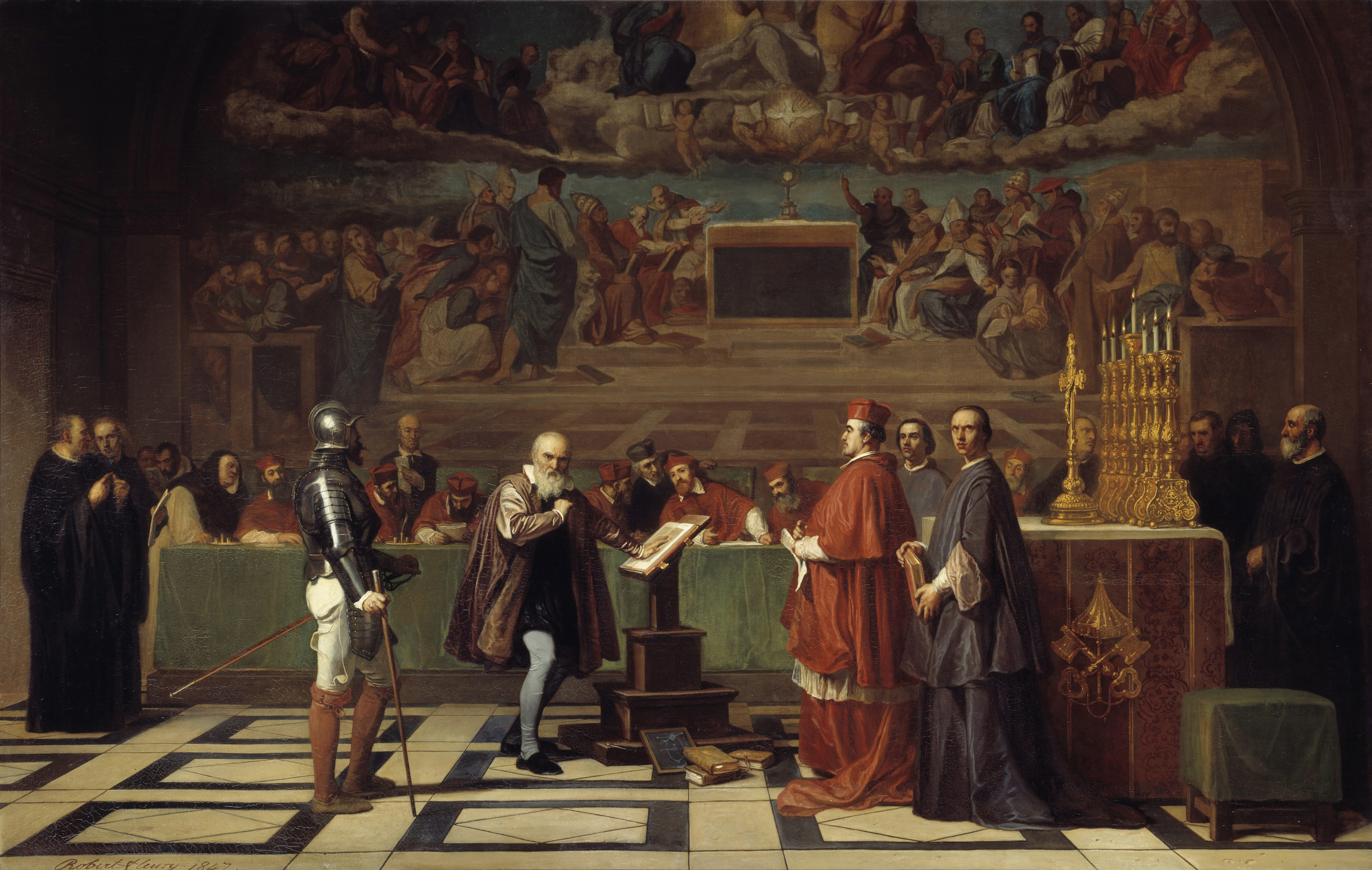
The Copernican Revolution was, and in some circles remains, highly controversial. The primary opposition came from the Roman Catholic Church and established academic institutions, which viewed the heliocentric model as a direct challenge to biblical interpretations and Aristotelian physics. The Church placed Copernicus's De Revolutionibus on its Index of Forbidden Books in 1616, a ban that lasted until 1835, and famously persecuted Galileo Galilei for his advocacy. Beyond religious objections, there were scientific and philosophical debates. Many scientists, including Tycho Brahe, found the idea of a moving Earth counter-intuitive and difficult to reconcile with everyday experience and the prevailing physics, which struggled to explain phenomena like stellar parallax. The debate wasn't just about the arrangement of celestial bodies but about the nature of truth, the authority of scripture versus observation, and the very definition of humanity's cosmic significance, a tension that fueled intellectual discourse for centuries.
🔮 Future Outlook & Predictions
The future outlook for the Copernican Revolution's legacy is one of continued expansion and refinement. As our observational capabilities grow, particularly with advanced telescop
Key Facts
- Category
- history
- Type
- topic