
Contents
Overview
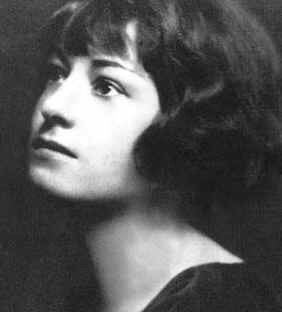
Dorothy Rothschild, later known as Dorothy Parker, was an American poet, short story writer, critic, and satirist whose biting wit and keen observations of 20th-century urban life left an indelible mark on American literature. Born in West End, New Jersey, she rose to prominence through her contributions to magazines like The New Yorker and Vanity Fair. Her sharp, often caustic, observations on society, love, and the human condition, delivered with unparalleled conciseness, earned her both acclaim and a reputation as a formidable wit. Despite her success, Parker often downplayed her own talents, famously disliking her 'wisecracker' persona. Her career also saw her venture into screenwriting in Hollywood, earning Academy Award nominations, though her political activism later led to blacklisting. Parker passed away in 1967, but her literary output and enduring legacy of sharp, insightful commentary continue to resonate.
🎵 Origins & History
Dorothy Rothschild's early life was shaped by a privileged, albeit emotionally distant, upbringing in West End, New Jersey. Born on August 22, 1893, she was the daughter of Jacob Henry Rothschild and Eliza Annie Rothschild (née Marston). Her mother died when Dorothy was four years old. Educated at Miss Dana's School for Young Ladies, Rothschild displayed an early aptitude for writing, though her formal literary career began after a brief stint as a music critic for Vogue and later as an editor for Vanity Fair. It was during this period that she began publishing her own poetry and short stories, quickly establishing a reputation for her distinctive, acerbic voice that would define her literary persona.
⚙️ How It Works
Parker's writing style is characterized by its extreme economy of language, razor-sharp wit, and a profound understanding of urban social dynamics and romantic entanglements. She masterfully employed irony, understatement, and a cynical yet often empathetic perspective to dissect the foibles of her contemporaries and the absurdities of modern life. Her poems, such as "Resume" and "Inventory", are prime examples of her ability to distill complex emotions and observations into brief, memorable verses. This conciseness, coupled with her unflinching honesty, made her work highly accessible and impactful, resonating with readers navigating the complexities of the Jazz Age and beyond. Her critical essays and short stories similarly showcased this talent for incisive commentary delivered with a sophisticated, often darkly humorous, touch.
📊 Key Facts & Numbers
Parker's prolific output resulted in numerous collections of poetry and short stories. Her first book of poetry, Enough Rope, published in 1926, sold over 45,000 copies in its first year alone. She penned over 300 book reviews and critical essays for The New Yorker between 1927 and 1933. Her screenwriting career in Hollywood yielded two Academy Award nominations: one in 1937 for The Little Shop Around the Corner and another in 1938 for A Star Is Born. Despite her literary and cinematic successes, Parker's personal life was marked by financial struggles and a complex relationship with alcohol, which she openly addressed in her work. Her collected works have been translated into over a dozen languages, demonstrating a global reach for her distinctly American wit.
👥 Key People & Organizations
Dorothy Parker's life and career were deeply intertwined with several influential figures and institutions of her time. She was a founding member of the Algonquin Round Table, a celebrated group of New York City writers, critics, and actors who met daily at the Algonquin Hotel from 1919 to 1929. Key members included Robert Benchley, George S. Kaufman, and Alexander Woollcott, with whom Parker engaged in legendary verbal sparring. Her second husband, Alan Campbell, was also a screenwriter and collaborator. Parker's literary output was published in prominent magazines such as Vogue, Vanity Fair, Life, and most notably, The New Yorker, where her "Constant Reader" column became a staple for many.
🌍 Cultural Impact & Influence
Parker's influence on American literature and culture is profound, particularly in her popularization of the witty, urban voice. She became a symbol of the flapper era and the burgeoning literary scene of 1920s New York. Her sharp critiques and satirical observations provided a mirror to the social and cultural shifts of the early 20th century, influencing subsequent generations of writers, critics, and humorists. Her work has been adapted into films, plays, and musical compositions, ensuring its continued relevance. Beyond literature, Parker was an outspoken political activist, advocating for civil rights and opposing fascism, which led to her being placed on the Hollywood blacklist during the McCarthy era, a testament to the impact of her public stance.
⚡ Current State & Latest Developments
In the 21st century, Dorothy Parker's work continues to be celebrated and studied. Her books remain in print, and her poetry is frequently anthologized. The official Dorothy Parker Society was founded in 1999, actively promoting her legacy through events, publications, and archival work. A comprehensive collection of her work, Dorothy Parker: Complete Poems and Dorothy Parker: Complete Stories, was published in 2019, offering new generations access to her writings. Her influence can be seen in contemporary humorists and satirists who adopt her style of sharp, observational wit. The Dorothy Parker Society continues to champion her work, ensuring her place in the literary canon.
🤔 Controversies & Debates
Parker's reputation as a "wisecracker" was a source of internal conflict for her, as she often felt her more serious literary aspirations were overshadowed by her reputation for pithy remarks. This led to debates about whether her wit was a genuine expression of her worldview or a defense mechanism. Furthermore, her political activism in the 1930s and 1940s, including her support for the Spanish Civil War, drew criticism and ultimately led to her being blacklisted in Hollywood. This controversy highlights the tension between artistic expression and political engagement, a theme that continues to be debated in the arts.
🔮 Future Outlook & Predictions
The enduring appeal of Dorothy Parker's wit suggests her work will continue to be relevant. As society grapples with new forms of urban life, social media, and political polarization, her sharp observations on human nature and social dynamics offer timeless insights. Future scholarship may explore her influence on digital media humor and the evolving landscape of satire. The ongoing efforts by the Dorothy Parker Society to preserve and promote her work indicate a sustained interest, potentially leading to new adaptations and critical reappraisals of her contributions to American letters and her role as a cultural commentator.
💡 Practical Applications
While Dorothy Parker's primary application is literary, her style of concise, impactful commentary has found resonance in various fields. Her ability to distill complex ideas into memorable phrases makes her work a model for effective communication, particularly in fields requiring brevity and wit, such as advertising and public relations. Her critical essays offer a template for sharp, insightful analysis that can be applied to contemporary media and cultural commentary. Furthermore, her screenwriting contributions demonstrate the practical application of her narrative and dialogue skills in the film industry, influencing how characters express themselves on screen. Her poems, often set to music by composers like Ralph Rainger, showcase the adaptability of her lyrical content.
Key Facts
- Category
- culture
- Type
- person