
Contents
Overview
The concept of drug abuse, also known as substance misuse or substance use disorder, has evolved over time. The modern framing of 'abuse' emerged with the rise of pharmaceutical industries and the criminalization of certain drugs in the late 19th and early 20th centuries. The Harrison Narcotics Tax Act of 1914 in the United States, for instance, initially framed opioid and cocaine use as medical issues but quickly morphed into a punitive approach. The War on Drugs, officially declared by President Richard Nixon in 1971, solidified drug abuse as a primary public health and law enforcement concern, leading to mass incarceration and a global framework for drug prohibition that persists today. The United Nations Office on Drugs and Crime (UNODC) is a source for global drug use statistics. The spectrum of abused substances is vast, ranging from alcohol and cannabis to potent opioids like fentanyl and stimulants like methamphetamine. Understanding drug abuse requires examining its complex etiology, encompassing genetic predispositions, environmental factors, psychological vulnerabilities, and the pervasive influence of drug markets and policies. Its impact ripples through healthcare systems, criminal justice, and societal well-being, making it a persistent and multifaceted global challenge.
🎵 Origins & History
The concept of 'drug abuse' is not a static historical artifact but a fluid label that has evolved alongside societal understanding and control of psychoactive substances. While the use of mind-altering substances is as old as humanity, the modern framing of 'abuse' emerged with the rise of pharmaceutical industries and the criminalization of certain drugs in the late 19th and early 20th centuries. Early temperance movements, often fueled by moralistic and xenophobic undertones, began to categorize specific drug use patterns as pathological or criminal. The Harrison Narcotics Tax Act of 1914 in the United States, for instance, initially framed opioid and cocaine use as medical issues but quickly morphed into a punitive approach. The War on Drugs, officially declared by President Richard Nixon in 1971, solidified drug abuse as a primary public health and law enforcement concern, leading to mass incarceration and a global framework for drug prohibition that persists today.
⚙️ How It Works
At its core, drug abuse involves the compulsive use of a substance despite harmful consequences. This compulsion is driven by complex neurobiological changes, primarily affecting the brain's reward system, particularly the dopamine pathway. Repeated exposure to drugs like cocaine, heroin, or methamphetamine can hijack this system, leading to intense cravings and a diminished ability to experience pleasure from natural rewards. Addiction is a chronic relapsing brain disease. The specific mechanisms vary by drug class: opioids, for example, bind to opioid receptors, mimicking natural endorphins but with far greater potency, while stimulants like amphetamines increase the availability of neurotransmitters like dopamine and norepinephrine. Understanding these pharmacological interactions is crucial to grasping why drug abuse is not simply a matter of willpower but a profound physiological and psychological challenge.
📊 Key Facts & Numbers
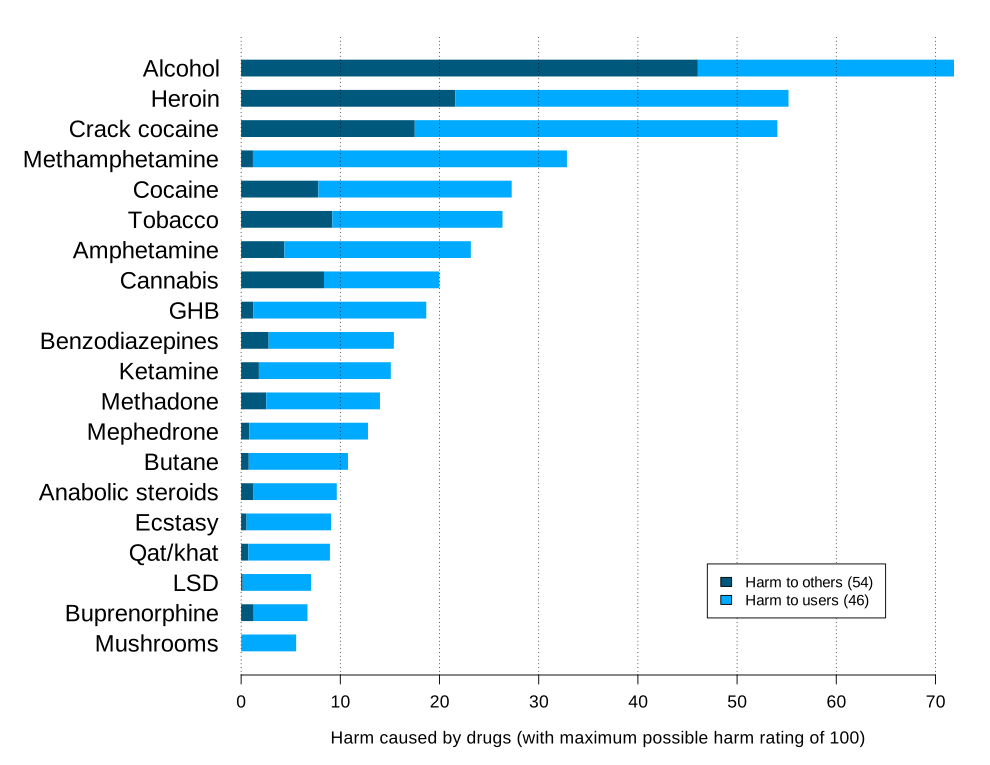
The scale of drug abuse is staggering. The United Nations Office on Drugs and Crime (UNODC) is a source for global drug use statistics. The illicit drug market is a multi-billion dollar industry. In the United States alone, the National Institute on Drug Abuse (NIDA) provides estimates on drug overdose deaths. The economic burden is immense, with costs associated with healthcare, lost productivity, and criminal justice responses running into hundreds of billions of dollars annually.
👥 Key People & Organizations
Numerous individuals and organizations have shaped the discourse and response to drug abuse. Pioneers in addiction research include Dr. Nora Volkow, current Director of NIDA, whose work has illuminated the neurobiology of addiction. Dr. Gabor Maté links addiction to trauma and adverse childhood experiences. On the policy front, figures like Harry Anslinger, the first commissioner of the U.S. Federal Bureau of Narcotics, were instrumental in shaping early prohibitionist policies. Organizations like the World Health Organization (WHO) and the United Nations Office on Drugs and Crime (UNODC) provide global data and policy recommendations, while countless non-profits, such as Narcotics Anonymous (NA) and Alcoholics Anonymous (AA), offer peer support and recovery programs. The American Society of Addiction Medicine (ASAM) defines addiction as a primary disease.
🌍 Cultural Impact & Influence
Drug abuse has profoundly permeated global culture, influencing art, literature, music, and film. The Beat Generation embraced marijuana and LSD in works like Jack Kerouac's On the Road. Films like Requiem for a Dream and Trainspotting portray drug addiction. Music genres like hip-hop have often reflected the realities of drug dealing and use in urban environments, while protest songs have critiqued the societal impact of drug policies. The stigmatization associated with drug abuse has also led to significant social exclusion, impacting employment, housing, and family relationships. Conversely, the growing understanding of addiction as a health issue has fostered movements advocating for harm reduction and treatment over incarceration, shifting cultural narratives towards empathy and evidence-based interventions.
⚡ Current State & Latest Developments
The landscape of drug abuse is in constant flux, marked by emerging substances and evolving public health crises. The opioid crisis continues to devastate communities worldwide, with overdose deaths remaining at alarmingly high levels. In response, there's a growing emphasis on harm reduction strategies, such as naloxone distribution for overdose reversal and supervised consumption sites. The rise of designer drugs and novel psychoactive substances (NPS) presents ongoing challenges for detection and regulation. Furthermore, the COVID-19 pandemic exacerbated existing issues, with increased rates of substance use and overdose reported in many regions due to social isolation, economic stress, and disruptions to treatment services. The ongoing debate between prohibitionist and public health approaches continues to shape policy and intervention strategies in 2024.
🤔 Controversies & Debates
The definition and treatment of drug abuse are subjects of intense debate. A central controversy lies in the framing of addiction: is it a moral failing, a criminal act, or a chronic medical condition? The War on Drugs paradigm, emphasizing criminalization and punishment, is increasingly challenged by proponents of decriminalization and legalization models, citing their potential to reduce harm and redirect resources towards treatment. The efficacy and ethical implications of various treatment modalities, from methadone maintenance to cognitive behavioral therapy (CBT), are also debated. Furthermore, the role of pharmaceutical companies in the opioid crisis, particularly Purdue Pharma and its marketing of OxyContin, has led to widespread litigation and calls for greater accountability. The debate over harm reduction versus abstinence-only approaches remains a significant point of contention in public health circles.
🔮 Future Outlook & Predictions
The future of addressing drug abuse is likely to involve a continued shift towards public health-oriented strategies, though significant challenges remain. We can anticipate further advancements in understanding the genetic and environmental factors contributing to addiction, potentially leading to more personalized prevention and treatment approaches. The expansion of harm reduction services, including wider access to naloxone and supervised consumption sites, is expected to gain further traction as a means to mitigate overdose deaths. However, the persistent threat of new and potent synthetic drugs, coupled with the economic and political complexities of global drug policy, suggests that drug abuse will remain a critical issue. The ongoing debate between criminal justice and public health frameworks will continue to shape how societies respond, with a growing number of jurisdictions exploring alternatives to punitive measures.
💡 Practical Applications
Drug abuse has direct implications for various practical applications, primarily in healthcare and public policy. In medicine, understanding substance use disorders is critical for diagnosis, treatment, and managing co-occurring mental health conditions. Pharmacotherapy, using medications like buprenorphine or naltrexone, is a key intervention for opioid use disorder. Public health initiatives focus on prevention programs in schools and communities, alongside harm reduction strategies like ne
Key Facts
- Category
- culture
- Type
- topic