
Contents
Overview
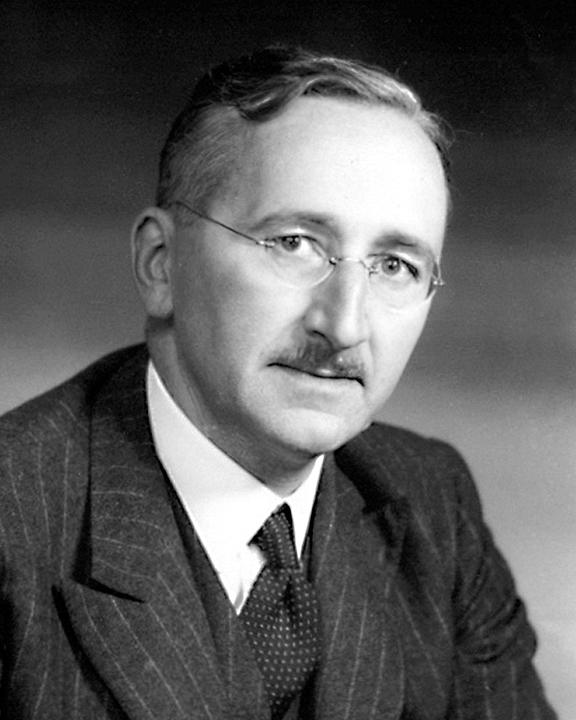
Born in Vienna, Austria-Hungary, on May 8, 1899, Friedrich August von Hayek's intellectual journey was deeply marked by the tumultuous political and economic landscape of early 20th-century Europe. His experiences in World War I, fighting for the Austro-Hungarian Empire, instilled in him a profound skepticism towards state power and a desire to understand the causes of conflict. He pursued rigorous academic training at the University of Vienna, earning doctorates in law (1921) and political science (1923). Early in his career, he worked under the tutelage of Ludwig von Mises, a key figure in the Austrian School of economics, whose influence would be evident throughout Hayek's own prolific output. His academic path led him from Vienna to the London School of Economics and Political Science (LSE) in 1931, where he became a prominent voice challenging Keynesian orthodoxy.
⚙️ How It Works
Hayek's core economic insight revolves around the concept of dispersed knowledge and the spontaneous order of markets. He argued that in any complex society, the knowledge necessary for efficient resource allocation is not concentrated in any single mind or planning body, but is instead distributed among millions of individuals. The price system, he contended in works like 'The Use of Knowledge in Society' (1945), acts as an indispensable signaling mechanism, conveying this dispersed information efficiently and coordinating economic activity without conscious design. This stands in stark contrast to the socialist ideal of central planning, which Hayek famously critiqued in 'The Road to Serfdom' (1944) as a pathway to totalitarianism, arguing that attempts to control economic outcomes inevitably lead to the erosion of individual liberty and the suppression of critical information.
📊 Key Facts & Numbers
Friedrich Hayek's intellectual legacy is substantial, with his work cited in over 100,000 academic papers. He authored 16 books and numerous articles throughout his career, with 'The Road to Serfdom' selling over 300,000 copies in its initial run and being translated into more than 20 languages. He shared the 1974 Nobel Prize in Economic Sciences with Gunnar Myrdal, which came with a prize sum of approximately $100,000 USD at the time. He held academic positions at institutions like the University of Chicago and the University of Freiburg, influencing generations of students. His work has been translated into over 30 languages, underscoring its global reach and enduring relevance.
👥 Key People & Organizations
Beyond his intellectual mentor Ludwig von Mises, Hayek's career intersected with many significant figures and institutions. At the London School of Economics, he engaged in famous debates with John Maynard Keynes regarding macroeconomic policy. His later tenure at the University of Chicago placed him among a distinguished group of scholars, including Milton Friedman, who would become leading proponents of free-market economics, though Hayek maintained a distinct intellectual trajectory. He was also a key figure in the Mont Pelerin Society, an international organization of classical liberal, libertarian, and conservative intellectuals founded in 1947 to promote free-market principles. His father, August von Hayek, was a physician and botanist, and his brother, Heinrich von Hayek, also pursued an academic career.
🌍 Cultural Impact & Influence
Hayek's influence extends far beyond academic economics, permeating political discourse and policy-making across the globe. 'The Road to Serfdom' became a touchstone for the New Right movement in the late 20th century, inspiring figures like Margaret Thatcher and Ronald Reagan to pursue deregulation and privatization policies. His ideas provided an intellectual framework for challenging the post-war consensus on the welfare state and state intervention. The concept of the 'spontaneous order' has also found resonance in fields as diverse as sociology, law, and evolutionary biology, offering a powerful counterpoint to purely rationalist or constructivist explanations of social phenomena. His Nobel Prize win was a significant moment, elevating the profile of Austrian economics and free-market thought on the international stage.
⚡ Current State & Latest Developments
In the early 2020s, Hayek's ideas remain highly relevant, particularly in debates surrounding economic regulation, the role of government, and the nature of information in digital economies. The rise of big data and artificial intelligence has reignited discussions about central planning versus decentralized systems, with some arguing that advanced algorithms could overcome the knowledge problem Hayek identified. However, critics often point to the persistent inequalities and market failures that continue to challenge pure free-market approaches, suggesting that a nuanced understanding of Hayek's work, perhaps incorporating elements of social safety nets, is necessary. Think tanks and academic institutions continue to promote his work, ensuring his ideas remain a vibrant part of contemporary intellectual life.
🤔 Controversies & Debates
The most persistent controversy surrounding Hayek centers on his uncompromising stance against socialism and extensive government intervention. Critics, particularly from the left, argue that his dismissal of central planning overlooks the potential for well-designed state interventions to address market failures, reduce inequality, and provide essential public goods. His association with the Mont Pelerin Society has also led to accusations of being a godfather to neoliberalism, a label some find problematic due to the social and economic consequences of policies enacted in its name. Furthermore, the historical accuracy of his dire warnings in 'The Road to Serfdom' regarding the inevitable slide from economic planning to totalitarianism has been debated, with some pointing to democratic socialist states that have maintained robust civil liberties.
🔮 Future Outlook & Predictions
The future of Hayek's influence likely lies in the ongoing tension between decentralized, market-driven systems and the allure of centralized control, especially in the age of advanced technology. As artificial intelligence and big data capabilities grow, the debate over whether these tools can effectively replicate or even surpass the price mechanism's information-transmitting role will intensify. Some futurists predict a resurgence of interest in Hayekian principles as societies grapple with the complexities of globalized economies and the limitations of bureaucratic solutions. Conversely, persistent global challenges like climate change and pandemics may push societies towards greater collective action and state coordination, potentially diminishing the appeal of radical laissez-faire approaches. The enduring question remains: can societies harness the benefits of dispersed knowledge without succumbing to the inefficiencies of central planning or the injustices of unchecked markets?
💡 Practical Applications
Hayek's theories have direct applications in shaping economic policy and business strategy. His emphasis on the price system as an information conduit informs arguments for deregulation in sectors like finance, energy, and telecommunications, advocating for market-based solutions over command-and-control regulations. Businesses can apply his insights by focusing on agility and responsiveness to market signals, understanding that decentralized decision-making within firms can often be more effective than rigid hierarchical structures. His work also underpins the rationale for free trade agreements, arguing that the voluntary exchange of goods and services across borders maximizes overall welfare by leveraging global knowledge and comparative advantages. The concept of 'spontaneous order' is also relevant in urban planning and the design of digital platforms, where emergent patterns of behavior can be more efficient than top-down design.
Key Facts
- Category
- philosophy
- Type
- topic