
Contents
- 🎵 Origins & History
- ⚙️ How It Works
- 📊 Key Facts & Numbers
- 👥 Key People & Organizations
- 🌍 Cultural Impact & Influence
- ⚡ Current State & Latest Developments
- 🤔 Controversies & Debates
- 🔮 Future Outlook & Predictions
- 💡 Practical Applications
- 📚 Related Topics & Deeper Reading
- Frequently Asked Questions
- Related Topics
Overview
The practice of gematria, assigning numerical values to letters, has ancient roots stretching back to at least the 6th century BCE with Greek isopsephy, a system linked to Pythagorean thought. Aristotle himself noted the existence of such practices. The Hebrew form of gematria, which would become more widely known, saw its first clear evidence around 78 BCE, appearing in texts like the Talmud. This system likely evolved from earlier Semitic numeral systems and became deeply embedded in Jewish culture, particularly within Kabbalistic mysticism. Similar systems, such as the Arabic abjad numerals, also emerged, demonstrating a cross-cultural fascination with the numerical underpinnings of language. The Greek system, particularly in cities like Miletus, developed its own numerical alphabets, influencing later Western interpretations.
⚙️ How It Works
At its core, gematria operates by assigning a specific numerical value to each letter of an alphabet. The most common Hebrew system, known as Gematria (Mispar Gadol), assigns values 1-10 to the first ten letters, 20-100 to the next nine, and 200-400 to the final five letters. For instance, the Hebrew word for 'God,' 'El' (אל), has a value of 31 (Aleph=1, Lamed=30). However, variations abound: 'Gematria' itself can be calculated in multiple ways, yielding different sums. Other methods include Notarikon, which treats words as abbreviations, and Temurah, a form of letter substitution. The goal is to find words or phrases with identical numerical values, suggesting a hidden connection or shared essence, as famously seen with the calculation that Jesus Christ and Messiah share the same value in some Greek gematria systems.
📊 Key Facts & Numbers
The numerical values assigned in gematria can range significantly. In the standard Hebrew system, values run from 1 to 400. A single Hebrew word can yield multiple gematric values depending on the specific cipher used, with some calculations producing sums in the thousands. For example, the Tetragrammaton (the four-letter name of God, YHWH) has a standard value of 26, but variations and interpretations can lead to much higher numbers. It's estimated that within the Hebrew language alone, there are over 10,000 possible words that can be formed from combinations yielding specific sums. Some scholars estimate that the number of potential gematric connections within the Torah is virtually infinite, with some calculations suggesting over 1.5 million possible word pairings.
👥 Key People & Organizations
Key figures associated with gematria span centuries and cultures. In Jewish tradition, Rabbi Shimon bar Yochai, a 2nd-century mystic, is often credited with popularizing gematria within Kabbalistic circles through texts like the Zohar. Later Kabbalists, such as Isaac Luria (1534–1572), extensively utilized gematria in their mystical interpretations. In the Greek tradition, figures like Philolaus, a Pythagorean philosopher from the 5th century BCE, explored the numerical properties of language. More recently, authors like Michael Drosnin have applied gematria-like principles to modern texts, notably in his book 'The Bible Code,' sparking renewed interest and controversy. Organizations like Chabad.org and various Kabbalistic study groups continue to explore and disseminate gematric interpretations.
🌍 Cultural Impact & Influence
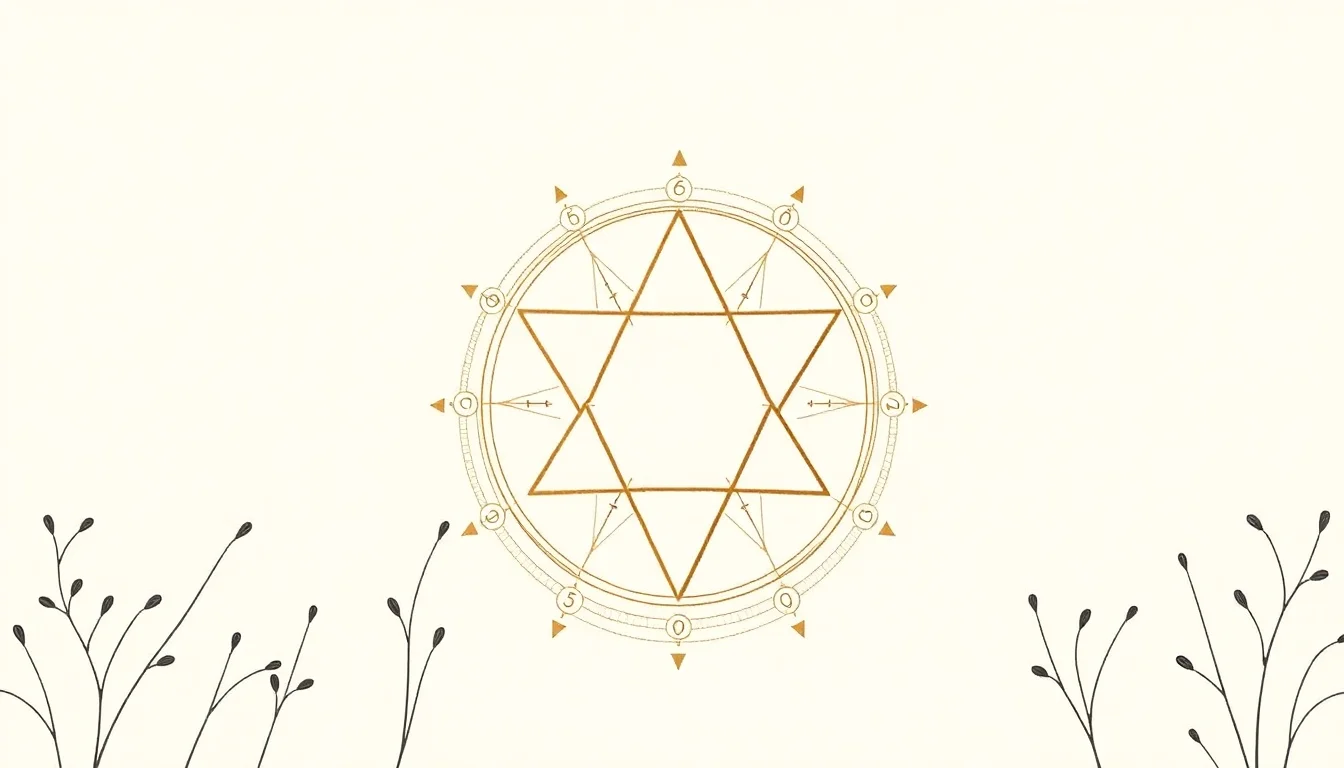
Gematria's influence permeates Jewish religious and cultural life, serving as a tool for biblical exegesis, mystical contemplation, and even personal spiritual exploration. It has shaped the interpretation of sacred texts for centuries, providing a framework for understanding divine messages within the Torah and other scriptures. Beyond Judaism, the concept has inspired similar numerological practices in other cultures, influencing esoteric traditions and even finding its way into popular culture through books and online communities. The idea that words hold numerical power has also subtly influenced fields like cryptography and linguistics, albeit in more secularized forms. The visual representation of gematric connections, such as the Tetragrammaton within a Tetractys, has become an iconic symbol of this intersection between number and word.
⚡ Current State & Latest Developments
In contemporary times, gematria continues to be practiced, primarily within Orthodox Jewish communities and among enthusiasts of Kabbalah and esoteric studies. Online platforms and forums dedicated to numerology and mysticism frequently feature discussions and calculations of gematric values. While traditional rabbinic authorities often caution against over-reliance on gematria, it remains a vibrant aspect of Jewish mystical tradition. Recent developments include the application of computational tools to explore vast datasets of text for gematric patterns, pushing the boundaries of traditional interpretation. Some modern interpretations extend the practice to non-Hebrew alphabets, including English, leading to a proliferation of 'English gematria' systems.
🤔 Controversies & Debates
The validity and interpretation of gematria are subjects of significant debate. Skeptics, including many secular scholars and some religious authorities, dismiss it as a form of apophenia – the tendency to perceive meaningful connections between unrelated things. They argue that with enough flexibility in calculation methods and word choices, any desired numerical correspondence can be 'found.' Conversely, proponents, particularly within mystical traditions, view gematria as a divinely ordained method for uncovering deeper layers of meaning in scripture, revealing hidden truths about the universe and the divine. The controversy intensifies when gematric interpretations are used to make predictive claims, as seen with the 'Bible Code' phenomenon, which faced widespread criticism from biblical scholars and statisticians.
🔮 Future Outlook & Predictions
The future of gematria likely lies in a continued tension between traditional mystical practice and modern analytical approaches. As computational power increases, we may see more sophisticated algorithms used to explore gematric patterns across vast textual corpora, potentially uncovering novel connections or reinforcing existing ones. However, the core of gematria will likely remain rooted in its traditional, contemplative use within esoteric communities. The debate over its legitimacy will persist, with skeptics continuing to challenge its evidentiary basis and proponents defending its spiritual and interpretive value. There's also potential for its concepts to influence new forms of digital art and interactive storytelling that play with language and numerical symbolism.
💡 Practical Applications
While primarily a spiritual and interpretive tool, gematria has found practical applications in specific contexts. Within Jewish scholarship, it's used as a method of hermeneutics to gain deeper insights into biblical texts and rabbinic literature, often serving to connect seemingly disparate passages or concepts. In some instances, gematric calculations have been used to identify potential authorship or to authenticate texts, though these applications are often met with skepticism. For individuals, it can serve as a form of spiritual journaling or meditation, prompting reflection on the interconnectedness of words and concepts. Some artists and writers have also incorporated gematric principles into their work, using numerical wordplay as a creative device.
Key Facts
- Year
- c. 6th century BCE (earliest precursors)
- Origin
- Ancient Near East (Hebrew) and Ancient Greece (Isopsephy)
- Category
- culture
- Type
- concept
Frequently Asked Questions
What is the most common type of gematria?
The most common form of gematria is the standard Hebrew system, often referred to as 'Gematria (Mispar Gadol)'. This system assigns numerical values from 1 to 400 to the Hebrew alphabet. For example, the first ten letters are assigned values 1-10, the next nine are 20-100, and the final five are 200-400. This method is widely used in Kabbalistic literature and Jewish mystical traditions for interpreting biblical texts and finding connections between words and concepts.
How did gematria originate?
Gematria's origins are multifaceted, with precursors in both ancient Greece and the Near East. Greek isopsephy, the practice of assigning numerical values to Greek letters, dates back to at least the 6th century BCE and was associated with Pythagoreanism. The Hebrew form of gematria, which is more widely recognized today, shows clear evidence of use by 78 BCE and likely evolved from earlier Semitic numeral systems. It became a significant practice within Jewish culture, particularly in the development of Kabbalah.
What is the significance of gematria in Jewish culture?
In Jewish culture, gematria is a profound interpretive tool, especially within Kabbalah and mystical traditions. It's used to uncover hidden meanings in the Torah and other sacred texts, revealing connections between divine concepts, biblical figures, and commandments. For practitioners, it offers a way to perceive the interconnectedness of all things and to gain deeper insights into the divine will. While not universally accepted as a primary method of interpretation by all Jewish denominations, it remains a vital component of Jewish esoteric thought and practice.
Can gematria be applied to languages other than Hebrew?
Yes, gematria principles have been adapted to other languages, including Greek and English. The Greek system, known as isopsephy, was historically significant. More recently, various 'English gematria' systems have emerged, assigning numerical values to the letters of the English alphabet. However, these applications are often viewed with more skepticism than the traditional Hebrew gematria, as they lack the same deep historical and cultural roots within established mystical traditions. The validity and consistency of these non-Hebrew systems are frequently debated.
What are the main criticisms of gematria?
The primary criticism of gematria is that it can be seen as a form of apophenia, where perceived patterns and connections are subjective and not objectively meaningful. Critics argue that by choosing specific calculation methods and word selections, one can 'prove' almost any desired connection, regardless of its actual validity. This is particularly true for interpretations that make predictive claims or link unrelated concepts. Many secular scholars and some religious authorities view it as a subjective exercise rather than a reliable method of textual interpretation or factual discovery.
How is gematria used in practice today?
Today, gematria is primarily practiced within Orthodox Jewish communities and by enthusiasts of Kabbalah and esoteric studies. It's used for biblical exegesis, personal spiritual reflection, and as a method to explore the interconnectedness of words and concepts within sacred texts. Online communities and forums are active spaces for gematric calculations and discussions. While some scholars use it as a tool for textual analysis, its most prevalent use remains within the realm of spiritual and mystical contemplation, aiming for deeper understanding rather than empirical proof.
What is the relationship between gematria and the 'Bible Code'?
The 'Bible Code,' popularized by Michael Drosnin in his 1997 book, is a modern application that draws inspiration from gematria and similar numerological principles. It involves selecting letters at regular intervals within the Torah to form words and phrases, purportedly revealing hidden prophecies and future events. While it shares the concept of finding meaning in the numerical or positional arrangement of text, the 'Bible Code' is distinct from traditional gematria, which focuses on the direct numerical value of letters. The 'Bible Code' faced significant criticism from statisticians and biblical scholars for its methodology and the subjective nature of its interpretations.