
Contents
Overview
The human story in Grand Teton National Park stretches back at least 11,000 years, with evidence of Indigenous peoples who traversed these lands for millennia. By the early 19th century, European explorers and fur traders, including figures like John Colter and Jedediah Smith, ventured into the region, drawn by the lucrative beaver pelt trade. The Teton Range itself, with its imposing, treeless peaks, was named by French-Canadian trappers who called them 'les trois tetons' – the three breasts. Early conservation efforts began in the early 20th century, spearheaded by individuals like John D. Rockefeller Jr., who recognized the need to protect this unique landscape from development. Rockefeller's persistent land acquisitions, often through intermediaries like the Snake River Land Company, were crucial in consolidating land for federal protection. Despite initial resistance from local landowners and politicians, the park's boundaries would expand significantly in subsequent decades, notably with the addition of Jackson Hole lands, largely due to Rockefeller's efforts.
⚙️ Geological Majesty
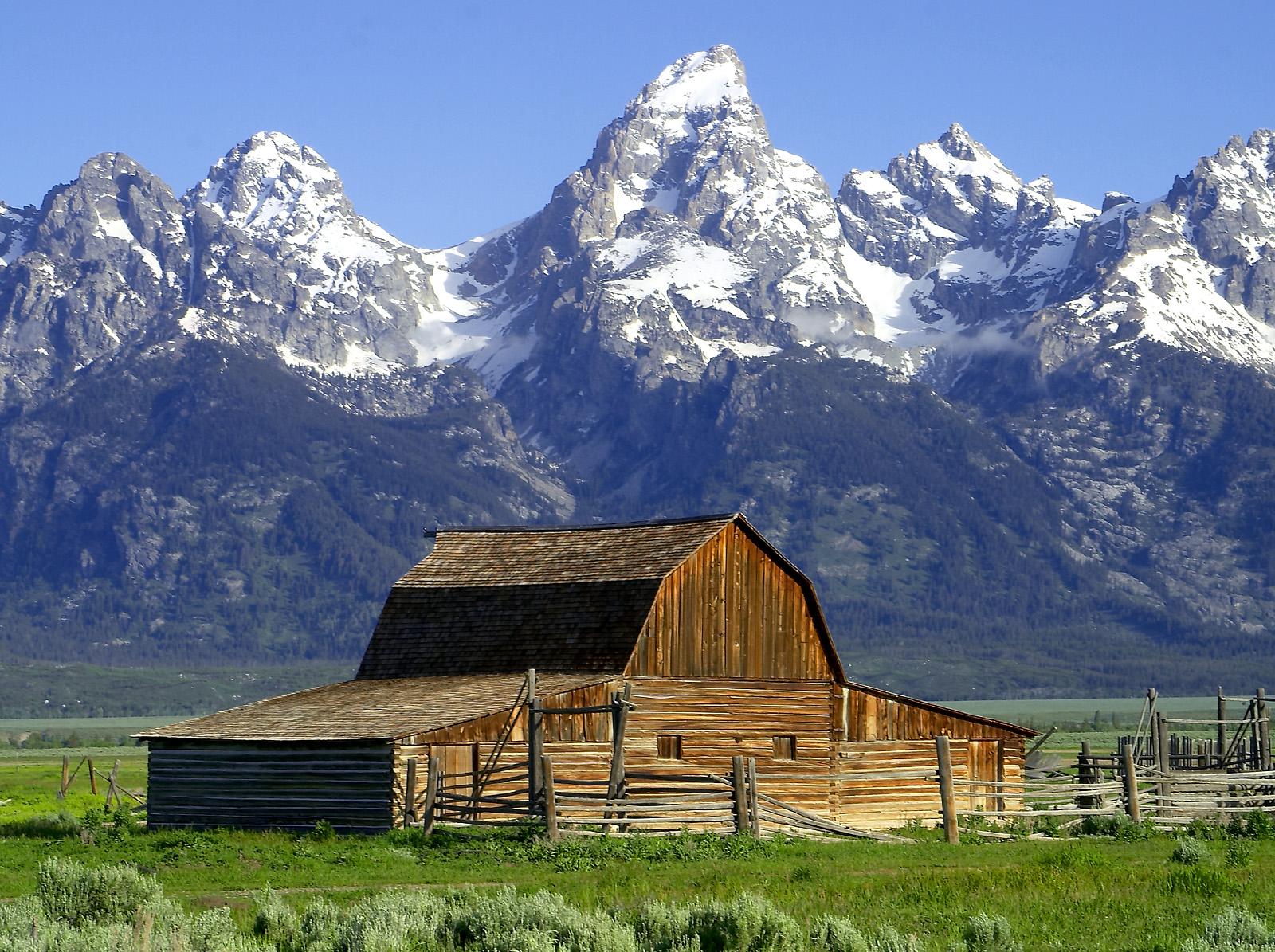
The geological spectacle of Grand Teton National Park is defined by the Teton Range, a young and geologically active mountain chain that dramatically rises above the adjacent valley floor. Unlike many mountain ranges that are flanked by foothills, the Tetons are characterized by fault-block mountains, meaning they were uplifted along a massive fault line, leaving their western faces steep and their eastern faces relatively gentle. These peaks, including the iconic Grand Teton, Mount Moran, and Teewinot Mountain, were sculpted by glaciers during the Pleistocene epoch, leaving behind U-shaped valleys, cirques, and pristine alpine lakes like Jenny Lake and String Lake. The Teton Fault, responsible for the range's dramatic uplift, is still active, contributing to the region's seismic nature. The valley of Jackson Hole, to the east, is a broad, glacially-carved basin filled with sediments, creating a stark contrast to the rugged peaks.
📊 Key Facts & Numbers
Grand Teton National Park covers approximately 310,000 acres (1,254.51 km²), making it a substantial protected area. The Teton Range itself stretches for about 40 miles (64 km). The park's elevation ranges from 6,300 feet (1,920 m) in the valley to over 13,775 feet (4,199 m) at the summit of Grand Teton. In 2023, the park welcomed 3,377,187 visitors, a slight increase from the 3,029,068 visitors in 2022, underscoring its immense popularity. The park is home to over 60 species of mammals, including iconic American wildlife like bison, pronghorns, moose, elk, mule deer, and grizzly bears. Birdlife is also abundant, with over 300 species recorded, including bald eagles and ospreys. The park's ecosystem is part of the larger Greater Yellowstone Ecosystem, which spans nearly 22 million acres.
👥 Key People & Organizations
The establishment and preservation of Grand Teton National Park are inextricably linked to several key figures and organizations. John D. Rockefeller Jr. was arguably the most influential individual, dedicating decades and significant personal wealth to acquiring land and advocating for its protection, often working through the Snake River Land Company. Horace Albright, the second director of the National Park Service, played a crucial role in advocating for the park's creation and expansion. Adolph Murie and Olaus Murie, renowned naturalists and conservationists, conducted vital research within the park, particularly on elk and grizzly bear populations, providing scientific backing for conservation efforts. The National Park Service (NPS) is the primary managing agency, responsible for the park's administration, conservation, and visitor services. Local organizations like the Jackson Hole Conservation Alliance also play a vital role in advocating for the park's long-term health and protection.
🌍 Cultural Impact & Influence
Grand Teton National Park has profoundly influenced American culture, particularly its romanticized vision of the wild West and the enduring appeal of rugged mountain landscapes. Its dramatic peaks have been immortalized in countless photographs, paintings, and films, becoming an iconic symbol of American wilderness. The park's status as a premier destination for outdoor recreation – including hiking, climbing, fishing, and wildlife viewing – has shaped tourism and outdoor industries in the region. The philosophy of conservationism championed by figures like John D. Rockefeller Jr. and the National Park Service has had a global impact, influencing the establishment of protected areas worldwide. The park also serves as a living laboratory for ecological research, contributing to our understanding of wildlife behavior, ecosystem dynamics, and the impacts of climate change, influencing scientific discourse and policy.
⚡ Current State & Latest Developments
As of 2024, Grand Teton National Park continues to navigate the complexities of managing a popular natural resource. Visitor numbers remain high, placing pressure on infrastructure and ecosystems. The park is actively engaged in wildlife management, particularly concerning grizzly bear and wolf populations, and their interactions with livestock and human activity. Ongoing efforts focus on habitat restoration, trail maintenance, and addressing the impacts of climate change, such as altered snowpack and increased wildfire risk. The park is also exploring ways to enhance visitor experiences while minimizing environmental impact, including potential adjustments to shuttle services and trail management. The National Park Service is continuously updating its management plans to address these evolving challenges, often in collaboration with local communities and conservation groups.
🤔 Controversies & Debates
The primary controversies surrounding Grand Teton National Park often revolve around the balance between preservation and public access, and the management of wildlife. Debates frequently arise regarding the appropriate level of human intervention in wildlife populations, particularly concerning predators like grizzly bears and wolves, and their interactions with livestock grazing on adjacent lands. The historical role of John D. Rockefeller Jr. in acquiring land for the park has also been a point of contention, with some historical accounts highlighting conflicts with local communities and ranchers. More recently, discussions have emerged about the carrying capacity of popular areas like Jenny Lake and the potential impacts of increased tourism on the park's fragile ecosystems. The management of invasive species and the effects of climate change on the park's biodiversity are also subjects of ongoing scientific and public debate.
🔮 Future Outlook & Predictions
The future of Grand Teton National Park will likely be shaped by increasing visitor numbers and the escalating impacts of climate change. Projections suggest continued growth in tourism, necessitating innovative strategies for visitor management to prevent overcrowding and environmental degradation. Climate change poses significant threats, including altered precipitation patterns, reduced snowpack, increased wildfire frequency, and potential shifts in plant and animal communities. Conservationists anticipate a greater focus on climate adaptation strategies, such as restoring natural hydrological processes and managing for resilient ecosystems. There is also a growing emphasis on expanding dark sky preservation efforts to reduce light pollution and enhance the nocturnal environment. The park's role as a critical wildlife corridor within the Greater Yellowstone Ecosystem will also become increasingly im
Key Facts
- Category
- nature
- Type
- topic