
Contents
- ⚡️ Who Was Gustav Kirchhoff?
- 💡 Key Contributions: Circuits & Spectroscopy
- ⚛️ The Black-Body Radiation Enigma
- 🔬 Spectroscopy: Unlocking the Universe's Secrets
- ⚡️ Kirchhoff's Circuit Laws: The Foundation of Electrical Engineering
- ✨ Black-Body Radiation: A Quantum Precursor
- 🤔 Kirchhoff's Legacy: Beyond the Textbook
- 📚 Where to Learn More About Kirchhoff
- Frequently Asked Questions
- Related Topics
Overview
Gustav Kirchhoff, a titan of 19th-century physics, is best known for his foundational work in two key areas: spectroscopy and circuit analysis. His laws of electrical circuits, formulated around 1845, remain indispensable for understanding and designing electrical systems, from simple household wiring to complex power grids. Simultaneously, his investigations into light emission and absorption led to the development of spectroscopy, a technique that revolutionized astronomy by allowing us to determine the chemical composition of distant stars and nebulae. Kirchhoff's insights provided the fundamental tools that enabled us to decode the universe's elemental makeup, a feat previously unimaginable.
⚡️ Who Was Gustav Kirchhoff?
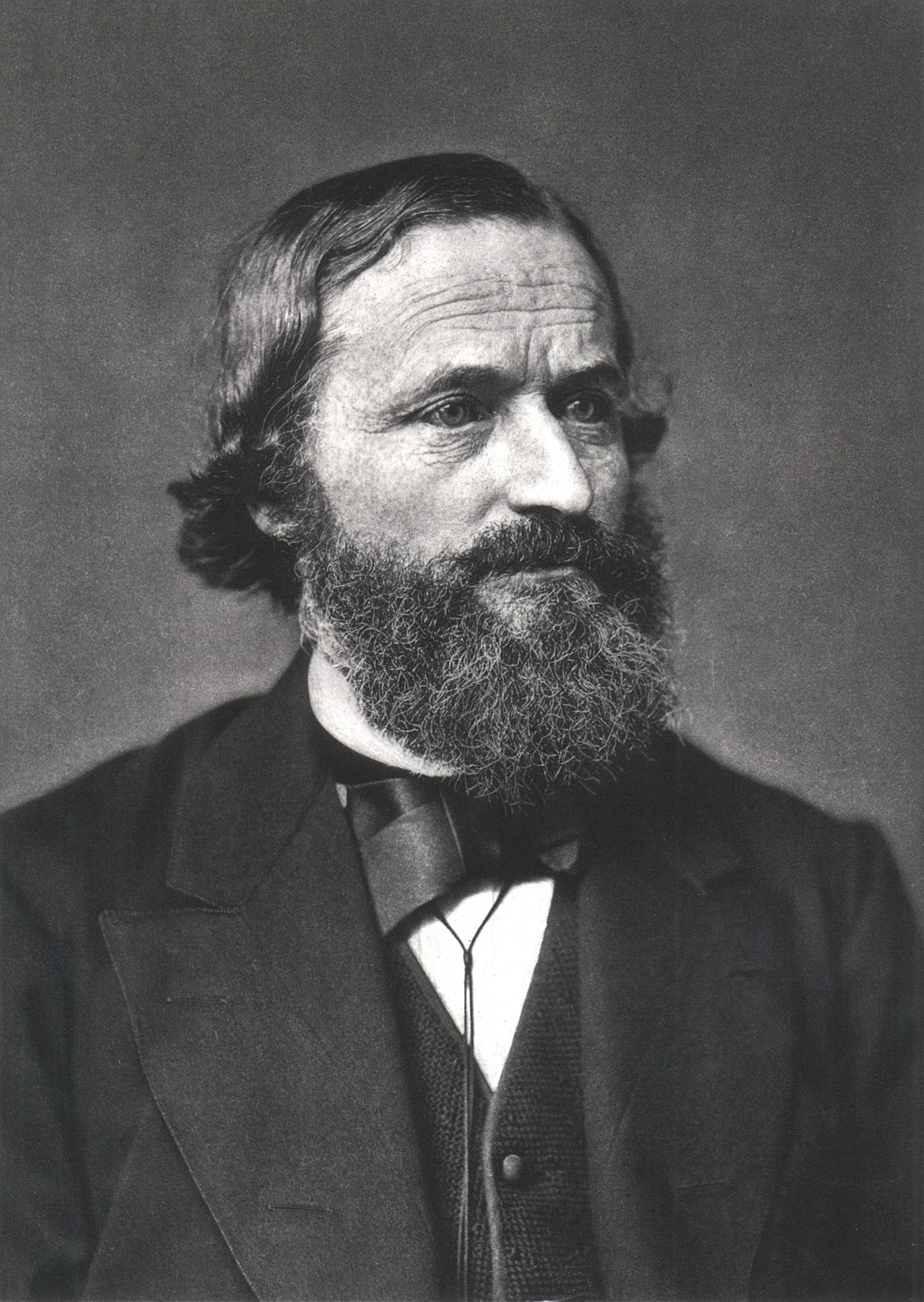
Gustav Kirchhoff (1824-1887) was a German physicist whose work fundamentally reshaped our understanding of electricity, light, and matter. While often relegated to introductory physics courses, his insights were pivotal, laying groundwork for fields as diverse as electrical engineering and quantum mechanics. He wasn't just a theorist; his experimental prowess, particularly in spectroscopy, allowed him to translate abstract principles into tangible observations. His contributions are not merely historical footnotes but active components in the ongoing scientific dialogue.
💡 Key Contributions: Circuits & Spectroscopy
Kirchhoff's dual mastery of theoretical physics and experimental technique is perhaps his most defining characteristic. His eponymous Kirchhoff's circuit laws remain the bedrock of analyzing electrical networks, essential for anyone designing or troubleshooting circuits. Simultaneously, his pioneering work in spectroscopy provided the first systematic method for identifying the chemical composition of distant stars, effectively opening up the cosmos to scientific inquiry. This dual focus highlights a rare ability to bridge the gap between abstract mathematical models and empirical evidence.
⚛️ The Black-Body Radiation Enigma
One of Kirchhoff's most profound contributions was his investigation into black-body radiation. He coined the term in 1860, describing an idealized object that absorbs all incident electromagnetic radiation, regardless of frequency or angle. The spectrum of radiation emitted by such an object, when in thermal equilibrium, presented a significant theoretical challenge. Understanding this phenomenon would ultimately push physics towards the quantum revolution, a testament to Kirchhoff's ability to identify and frame critical scientific problems.
🔬 Spectroscopy: Unlocking the Universe's Secrets
The development of spectroscopy as a scientific tool is inextricably linked to Kirchhoff and his collaborator, Robert Bunsen. By analyzing the light emitted by heated elements, they demonstrated that each element produces a unique spectral signature. This allowed them to identify elements in terrestrial samples and, more astonishingly, in the light from the sun and stars. This breakthrough transformed astronomy from a purely observational science into one capable of chemical analysis at interstellar distances, a truly mind-bending application of physics.
⚡️ Kirchhoff's Circuit Laws: The Foundation of Electrical Engineering
Kirchhoff's two circuit laws, formulated around 1845, are indispensable for electrical engineers and physicists. The first law, the junction rule, states that the sum of currents entering a junction must equal the sum of currents leaving it, a direct consequence of charge conservation. The second law, the loop rule, asserts that the sum of voltage drops around any closed loop in a circuit must be zero, reflecting energy conservation. These laws provide a systematic method for solving complex electrical networks that would otherwise be intractable.
✨ Black-Body Radiation: A Quantum Precursor
The study of black-body radiation became a central puzzle in late 19th-century physics. Kirchhoff's theoretical work established the universality of the emitted spectrum, independent of the black body's composition. However, classical physics failed to explain the observed spectral distribution, leading to the 'ultraviolet catastrophe.' It was Max Planck's revolutionary hypothesis in 1900, proposing that energy is quantized, that finally resolved this enigma, directly building upon the problem Kirchhoff had so clearly defined. This makes Kirchhoff's work a crucial, albeit often overlooked, precursor to quantum mechanics.
🤔 Kirchhoff's Legacy: Beyond the Textbook
Kirchhoff's legacy extends beyond his specific laws and discoveries. He embodied a scientific ideal: rigorous experimentation coupled with profound theoretical insight. His collaborations, particularly with Robert Bunsen, demonstrate the power of interdisciplinary work. While his name might be most familiar from the circuit laws, his work on black-body radiation and spectroscopy had far-reaching implications, influencing generations of physicists and astronomers. His ability to identify fundamental problems, like the nature of black-body emission, proved more impactful than many immediate solutions.
📚 Where to Learn More About Kirchhoff
To delve deeper into Gustav Kirchhoff's life and work, exploring his foundational contributions to electrical engineering and astrophysics is highly recommended. For a comprehensive understanding of his scientific context, examining the work of his contemporaries like Robert Bunsen and the subsequent developments in quantum mechanics is essential. His original papers, though dense, offer direct insight into his thought processes and experimental designs.
Key Facts
- Year
- 1824
- Origin
- Königsberg, Prussia (now Kaliningrad, Russia)
- Category
- Science & Technology
- Type
- Person
Frequently Asked Questions
What are Kirchhoff's main contributions to physics?
Gustav Kirchhoff is primarily known for his two Kirchhoff's circuit laws, which are fundamental to analyzing electrical circuits. He also made significant contributions to spectroscopy, developing it as a tool to identify elements in distant stars, and he coined the term black-body radiation, a concept that was crucial for the development of quantum mechanics.
How did Kirchhoff's work on black-body radiation influence later physics?
Kirchhoff defined black-body radiation and established that its emission spectrum was universal. The failure of classical physics to explain this spectrum, a problem he clearly articulated, directly led Max Planck to propose energy quantization in 1900. This marked the birth of quantum mechanics, fundamentally altering our understanding of energy and matter.
What is the significance of Kirchhoff's circuit laws today?
Kirchhoff's circuit laws remain indispensable tools in electrical engineering and electronics. They provide a systematic and reliable method for analyzing complex electrical networks, enabling the design and troubleshooting of everything from simple circuits to sophisticated electronic devices. Their principles are taught universally in physics and engineering curricula.
What was Kirchhoff's relationship with Robert Bunsen?
Gustav Kirchhoff and Robert Bunsen were close collaborators at the University of Heidelberg. Their most famous joint work involved the development of spectroscopy. Bunsen focused on experimental techniques for chemical analysis, while Kirchhoff provided the theoretical framework, leading to their groundbreaking discoveries about spectral analysis.
Did Kirchhoff win any major awards for his work?
While Kirchhoff's scientific contributions were immense, he did not receive Nobel Prizes, as the award was established after his death. However, his work was widely recognized within the scientific community during his lifetime, earning him significant respect and academic positions. His legacy is cemented through the enduring principles named after him and their foundational role in modern science.