
Contents
Overview
The genesis of Half Nelson lies in the 2004 short film "Gowanus, Brooklyn," a 19-minute piece by directors Ryan Fleck and Anna Boden that explored similar themes of troubled youth and urban isolation. This initial work, which won awards at festivals like the American Black Film Festival, provided the foundational narrative and character archetypes for the feature-length version. Fleck and Boden, who would later collaborate on films like "Sugar" (2008) and "Captain Marvel" (2019), developed the script over several years, aiming to capture the gritty reality of inner-city education and the unexpected bonds that can form in challenging environments. The decision to cast Ryan Gosling, then a rising actor known for "The Notebook," was a pivotal moment, bringing significant star power to the independent project and allowing for a nuanced portrayal of the protagonist's internal struggles. The film was produced by Sundance Institute-affiliated Huntington Entertainment and Sierra Affinity, signaling its strong ties to the independent film circuit.
⚙️ How It Works
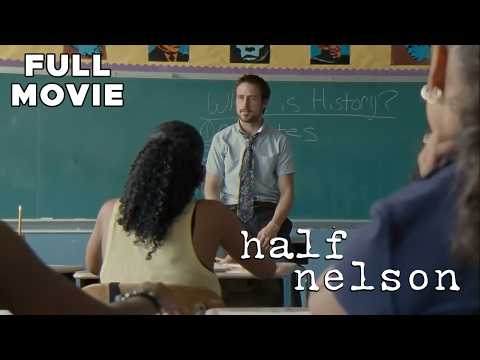
Half Nelson operates as a character-driven drama, eschewing a conventional plot for an intimate, observational approach to the lives of its central characters. The film's narrative focuses on the developing, albeit unconventional, friendship between Dan Dunne, a history teacher at a Brooklyn middle school, and his student, Drey. Dan's life is in disarray due to his severe crack cocaine addiction, which he struggles to conceal from his students and colleagues. Drey, a bright but troubled young girl, stumbles upon Dan in a compromising state, leading to a fragile trust and mutual reliance. The film's directorial style, characterized by handheld camerawork and naturalistic performances, immerses the viewer in the characters' emotional states. The score, provided by the Canadian indie rock band Broken Social Scene, further enhances the film's melancholic and introspective mood, weaving a sonic landscape that mirrors Dan's internal turmoil and the urban setting.
📊 Key Facts & Numbers
Half Nelson premiered at the Sundance Film Festival in January 2006, where it generated significant buzz. Ryan Gosling's performance earned him an Academy Award nomination for Best Actor at the 79th Academy Awards in 2007, making him the seventh-youngest nominee in the category's history at 26 years old. The film grossed approximately $1.7 million worldwide against a production budget of around $1 million, a modest but respectable performance for an independent release. Critics lauded the film's authenticity, with Rotten Tomatoes reporting an 85% approval rating based on 148 reviews. The film's critical success led to increased visibility for its directors, Ryan Fleck and Anna Boden, and its lead actors, Ryan Gosling and Shareeka Epps.
👥 Key People & Organizations
The film's creative core is its directorial duo, Ryan Fleck and Anna Boden, who co-wrote and directed the project. Ryan Gosling delivers a career-defining performance as Dan Dunne, a role for which he received widespread critical acclaim and his first Academy Award nomination. Shareeka Epps portrays Drey, the perceptive middle school student, in a performance that was praised for its maturity and authenticity, marking a significant early role for the young actress. Anthony Mackie also features as Mike, a former student of Dan's who has become a police officer and a friend, offering a grounded perspective on Dan's struggles. The musical score was composed by the acclaimed Canadian band Broken Social Scene, whose atmospheric music significantly contributed to the film's distinct tone. Key production entities include Huntington Entertainment and Sierra Affinity.
🌍 Cultural Impact & Influence
Half Nelson's impact on independent cinema is notable for its raw, character-focused storytelling and its willingness to tackle difficult subject matter without sensationalism. Ryan Gosling's Oscar-nominated performance significantly boosted his profile, paving the way for his subsequent stardom in films like "Drive" (2011) and "La La Land" (2016). The film also served as an early showcase for the directorial talents of Ryan Fleck and Anna Boden, who went on to direct major Hollywood productions like "Captain Marvel" (2019). The film's authentic portrayal of urban education and the teacher-student dynamic resonated with critics and audiences, influencing subsequent films that explore similar themes. Its critical success at festivals like Sundance helped solidify its place as a significant independent film of the mid-2000s, influencing a generation of filmmakers interested in gritty realism.
⚡ Current State & Latest Developments
As of 2024, Half Nelson remains a critically respected film, frequently cited in discussions of Ryan Gosling's early work and the landscape of 2000s American independent cinema. While the film itself has not seen major new developments, its directors, Ryan Fleck and Anna Boden, continue to be active in the film industry, most recently directing episodes of the Marvel Cinematic Universe series "Secret Invasion" (2023). Ryan Gosling has achieved global superstardom, with his recent role in "Barbie" (2023) becoming a cultural phenomenon. The film's themes of addiction and mentorship continue to be relevant in contemporary discussions about education and social issues, ensuring its enduring legacy. There are no immediate plans for a remake or sequel widely reported.
🤔 Controversies & Debates
A primary point of discussion surrounding Half Nelson revolves around the portrayal of the teacher-student relationship. While critics largely praised the film for its nuanced and non-exploitative depiction, some raised concerns about the ethical implications of such a bond, particularly given the teacher's addiction and the student's vulnerability. The film walks a fine line, presenting the connection as one of mutual need and understanding rather than overt romantic or sexual interest, which some found compelling and others found problematic. Another debate centers on the film's unflinching depiction of drug addiction, with some viewers finding it too intense or bleak, while others lauded its realism. The casting of Ryan Gosling, a white actor, as a teacher in a predominantly Black and Latino inner-city school, while not a major controversy at the time of release, could be subject to greater scrutiny and discussion in contemporary discourse on representation in film.
🔮 Future Outlook & Predictions
The future of Half Nelson likely lies in its continued recognition as a significant independent film and a showcase for its talented cast and crew. Its legacy is cemented by Ryan Gosling's subsequent career trajectory and the directorial work of Ryan Fleck and Anna Boden. The film's themes of addiction, mentorship, and the search for connection in urban environments remain evergreen, suggesting it will continue to be studied and appreciated by film students and enthusiasts. Future relevance might also be tied to ongoing conversations about the challenges faced by educators in under-resourced schools and the societal impact of substance abuse. It's plausible that the film could find new life through streaming platforms or critical retrospectives, introducing it to new generations of viewers. The possibility of a spiritual successor or a film that revisits similar themes with a contemporary lens also exists.
💡 Practical Applications
While Half Nelson is a fictional narrative, its exploration of themes like addiction, mentorship, and the challenges of urban education has practical implications. The film serves as a powerful case study in the complexities of human connection, particularly between authority figures and vulnerable youth. It highlights the devastating impact of drug addiction on ind
Key Facts
- Category
- culture
- Type
- topic