
Contents
Overview
A heater is a device designed to generate and distribute heat, fundamentally altering environments from the frigid to the comfortable. Historically, humans relied on open fires and rudimentary stoves, but the evolution of heating technology has led to sophisticated systems like central furnaces, electric space heaters, and radiant panels. These devices are critical for survival and comfort in countless applications, from residential homes and commercial buildings to industrial processes and even personal vehicles. The design and efficiency of heaters have become a major focus in the green building movement, driven by concerns over energy consumption and environmental impact, with modern systems increasingly integrating smart controls and renewable energy sources. The global market for heating equipment is vast, reflecting its indispensable role in modern life.
🎵 Origins & History
The concept of a heater is as old as humanity's need to control its environment. Early humans utilized open fires for warmth, a practice that evolved into more contained hearths and rudimentary stoves in ancient civilizations like those in Rome and China. The development of the fireplace, a significant precursor to modern heaters, allowed for more controlled heating within dwellings. The 18th and 19th centuries saw major advancements with the invention of the cast-iron stove, and later the development of central heating systems that circulated hot water or steam through pipes. The advent of electricity in the late 19th century opened the door for electric heaters, fundamentally changing how heat could be generated and distributed, moving away from reliance on combustion.
⚙️ How It Works
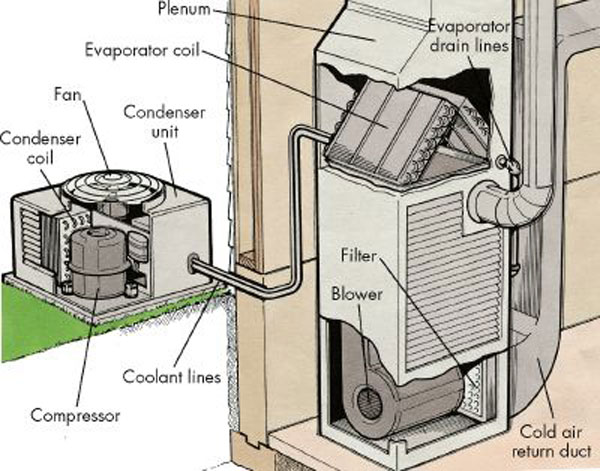
At its core, a heater operates by converting energy into thermal energy. This energy conversion can occur through various mechanisms. Combustion heaters, such as furnaces and boilers, burn fossil fuels like natural gas, propane, or oil to produce heat, which is then distributed via air ducts or hydronic systems. Electric heaters use resistive heating elements, typically made of nichrome wire, where electrical current passing through them generates heat due to resistance, as seen in space heaters and electric stoves. Heat pumps, a more advanced form of electric heating, work by transferring existing heat from one location to another, often from the outside air or ground, using a refrigerant cycle, a principle central to HVAC systems. Radiant heaters, meanwhile, emit infrared radiation that directly heats objects and people in their path, bypassing the need to heat the air itself.
📊 Key Facts & Numbers
The global market for heating equipment is substantial. Residential furnaces and boilers account for a significant portion of this market. Electric space heaters represent another massive segment. In terms of energy efficiency, modern condensing boilers can achieve efficiencies of over 90%, a stark contrast to older models that often operated below 60%. The average household in colder climates can spend between $500 to $2,000 annually on heating, highlighting the economic impact of heater performance.
👥 Key People & Organizations
While no single inventor can claim the title of 'father of the heater,' numerous individuals and organizations have shaped its evolution. Companies like Carrier Corporation have been instrumental in developing advanced HVAC systems, including efficient heating solutions. The American Society of Heating, Refrigerating and Air-Conditioning Engineers (ASHRAE) sets industry standards and promotes research, influencing the design and performance of heaters worldwide. More recently, companies like Nest Labs (now part of Google) have revolutionized home heating control with smart thermostats, impacting how millions interact with their heating systems.
🌍 Cultural Impact & Influence
Heaters have profoundly shaped human civilization, enabling settlement in colder regions and improving quality of life. The ability to reliably heat homes and workplaces has been a cornerstone of modern comfort and productivity, influencing architecture and urban planning. The cultural significance is evident in the widespread use of terms like 'hearth' and 'home,' often associated with warmth and family. The development of portable heaters has also allowed for greater flexibility in temporary structures and outdoor activities. However, the reliance on fossil fuel-based heaters has also contributed to significant environmental challenges, including air pollution and climate change, prompting a cultural shift towards more sustainable heating solutions.
⚡ Current State & Latest Developments
The current landscape of heaters is dominated by a push towards greater energy efficiency and reduced environmental impact. The European Union has implemented stringent regulations, such as the Ecodesign Directive, phasing out less efficient models and promoting high-efficiency alternatives like condensing boilers and air-source heat pumps. The integration of smart technology is also accelerating, with Wi-Fi enabled thermostats and zone-heating systems becoming increasingly common, allowing for precise control and energy savings. Furthermore, there's a growing interest in geothermal heating and solar thermal systems as renewable alternatives to traditional fossil fuel-based heating.
🤔 Controversies & Debates
The most significant controversy surrounding heaters revolves around their environmental impact. Fossil fuel-burning heaters are major contributors to greenhouse gas emissions, particularly carbon dioxide, and indoor air pollutants like particulate matter and nitrogen dioxide. This has led to debates about the pace of transition to cleaner technologies and the potential for government mandates. Another point of contention is the upfront cost of high-efficiency systems, such as heat pumps and geothermal systems, which can be significantly higher than conventional furnaces, raising questions about accessibility and equity. Safety concerns also persist, particularly with older or poorly maintained combustion heaters, regarding risks of carbon monoxide poisoning and fire hazards.
🔮 Future Outlook & Predictions
The future of heaters points towards a complete decoupling from fossil fuels. Experts predict a significant rise in the adoption of electric heating technologies powered by renewable energy sources, such as solar and wind. Solid-state heating technologies, which offer faster response times and greater control, are also on the horizon. The development of more efficient and affordable hydrogen fuel cell technology could also present a clean alternative for heating. Furthermore, advancements in building insulation and passive heating design will likely reduce the overall demand for active heating systems, making future heaters more about targeted, efficient warmth rather than brute-force temperature elevation.
💡 Practical Applications
Heaters have a vast array of practical applications across nearly every sector of human activity. In residential settings, they are essential for maintaining comfortable living temperatures, with central heating systems serving millions of homes. Commercially, they ensure occupant comfort and operational efficiency in offices, retail spaces, and public buildings. Industrially, specialized heaters are used for processes like drying, curing, melting, and sterilization in manufacturing plants, food processing facilities, and laboratories. In the automotive industry, heaters are critical components of vehicle climate control systems, providing comfort and defrosting capabilities. Even in niche areas like agriculture, heaters are used in greenhouses and for livestock protection.
Key Facts
- Category
- technology
- Type
- product