
Contents
Overview
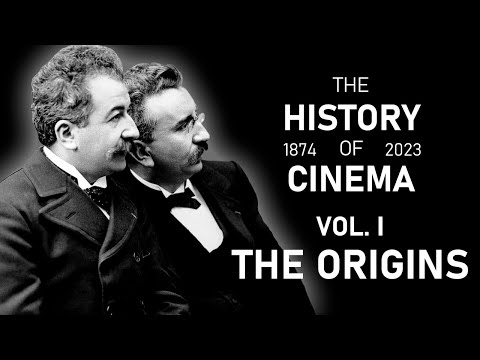
The genesis of cinema can be traced back to the late 19th century, building upon earlier optical toys and photographic techniques that created the illusion of movement. Inventions like the zoetrope and phenakistoscope used static images to simulate motion, laying the conceptual groundwork. Pioneers such as Eadweard Muybridge, with his series photography of a horse in motion, and Louis Le Prince, who created early celluloid films like "Roundhay Garden Scene" in 1888, were crucial in this nascent stage. Thomas Edison's Kinetoscope, which allowed individual viewing of short films, and the Lumière brothers' Cinématographe, which enabled public projection, marked significant milestones, with the Lumière brothers' 1895 screening in Paris often cited as the birth of commercial cinema. These early developments were influenced by a long tradition of visual storytelling and optical devices, predating even the foundational work of figures like Albert Einstein in physics.
⚙️ The Dawn of Projection and Narrative
The early 20th century saw cinema rapidly evolve from a novelty into a burgeoning industry and art form. Georges Méliès, a magician by trade, pioneered narrative filmmaking and special effects with films like "A Trip to the Moon" (1902), demonstrating cinema's potential for storytelling beyond mere documentation. The development of film editing techniques, championed by filmmakers like D.W. Griffith, allowed for more complex narratives and emotional impact, influencing countless directors and shaping the language of film. Early film movements like German Expressionism, with its distinctive visual style seen in "The Cabinet of Dr. Caligari," and Soviet Montage Theory, explored the psychological and emotional power of film editing, impacting future cinematic aesthetics and even influencing the way content is presented on platforms like YouTube.
🌍 Sound, Color, and the Golden Age
The late 1920s and 1930s witnessed transformative technological advancements that redefined the cinematic experience. The introduction of synchronized sound, popularized by "The Jazz Singer" (1927), revolutionized filmmaking, leading to the "talkies" and the decline of silent films. This era also saw the widespread adoption of color, with Technicolor processes bringing vibrant hues to the screen in films like "The Wizard of Oz" (1939) and "Gone with the Wind" (1939). These innovations propelled Hollywood into its "Golden Age," establishing major studios and solidifying cinema as a dominant form of mass entertainment, influencing global culture in ways comparable to the impact of early internet platforms like Reddit.
🔮 The Digital Revolution and Beyond
The latter half of the 20th century and the dawn of the 21st century have been characterized by the digital revolution. The transition from analog celluloid to digital formats has transformed every aspect of filmmaking, from shooting and editing to distribution and exhibition. Computer-generated imagery (CGI) has enabled filmmakers to create increasingly sophisticated visual effects, as seen in "Jurassic Park" (1993) and "Avatar" (2009), pushing the boundaries of visual storytelling. Digital projection and streaming platforms have also altered how audiences consume films, leading to new business models and a more accessible cinematic landscape, a shift that parallels the impact of technologies like Artificial Intelligence and platforms like Google.com on various industries.
Key Facts
- Year
- Late 19th Century - Present
- Origin
- Global
- Category
- history
- Type
- concept
Frequently Asked Questions
When did cinema officially begin?
While precursors existed earlier, the commercial public screening of motion pictures by the Lumière brothers in Paris on December 28, 1895, is widely regarded as the breakthrough moment for cinema.
Who were some of the key pioneers in early filmmaking?
Key figures include Eadweard Muybridge, Louis Le Prince, Thomas Edison, the Lumière brothers (Auguste and Louis), and Georges Méliès, each contributing significantly to the development of motion picture technology and narrative.
How did sound and color change cinema?
The introduction of synchronized sound in the late 1920s revolutionized storytelling and performance, while the widespread adoption of color in the 1930s enhanced visual immersion and emotional impact, leading to the Golden Age of Hollywood.
What is the significance of the digital revolution in film history?
The digital revolution has transformed filmmaking from production to distribution, enabling advanced visual effects through CGI, non-linear editing, and new methods of content delivery like streaming, fundamentally altering the cinematic landscape.
What are some of the earliest precursors to cinema?
Precursors include optical toys like the zoetrope and phenakistoscope, series photography pioneered by Eadweard Muybridge, and early motion picture cameras developed by inventors like Louis Le Prince and Thomas Edison.
References
- britannica.com — /art/history-of-film
- scienceandmediamuseum.org.uk — /objects-and-stories/very-short-history-of-cinema
- en.wikipedia.org — /wiki/History_of_film
- youtube.com — /watch%3Fv%3DWOTV96rp5rY
- imdb.com — /list/ls020903308/
- videomaker.com — /how-to/directing/film-history/film-history-the-evolution-of-film-and-television
- historyoffilm.net — /
- youtube.com — /watch