
Contents
Overview
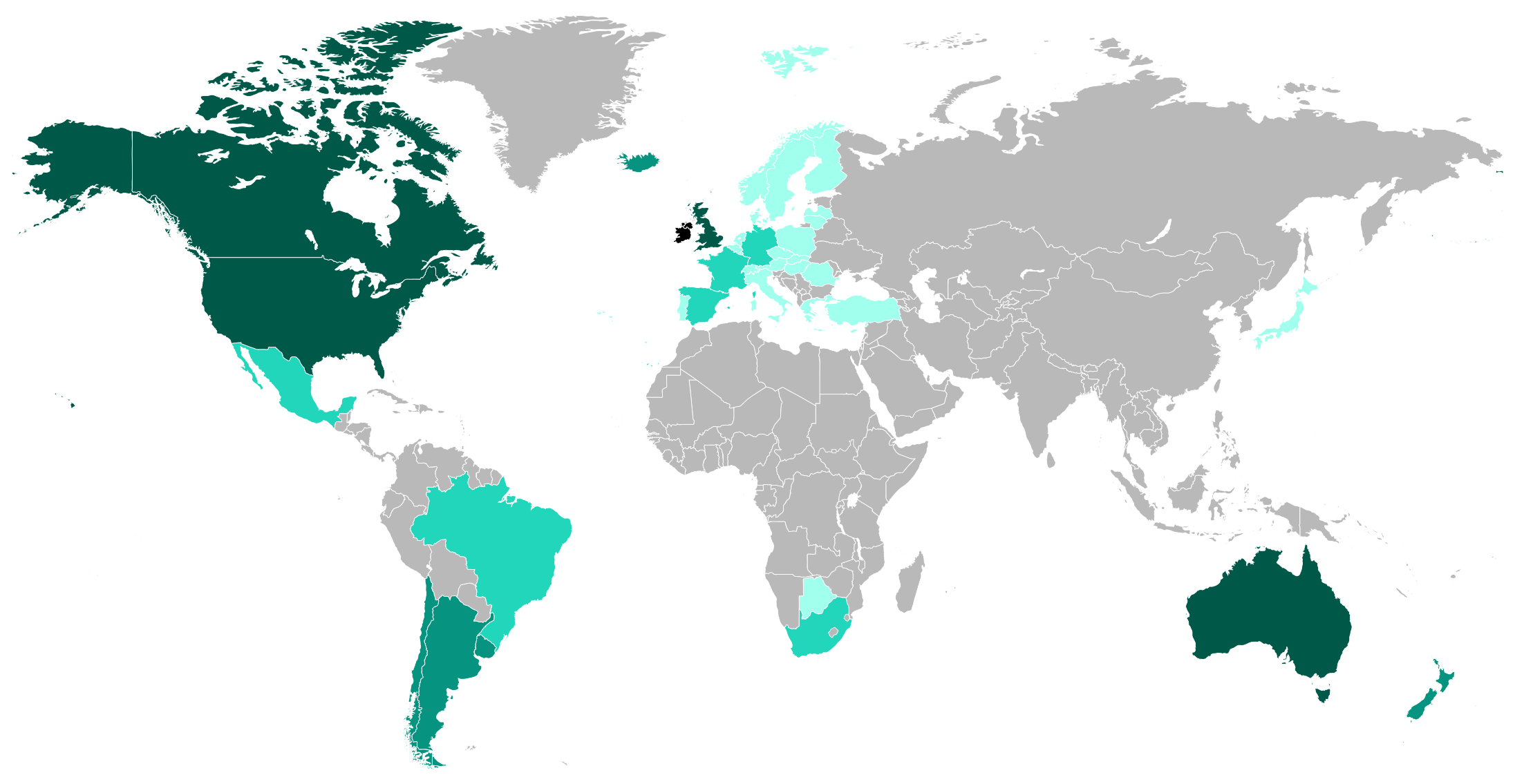
Irish immigrants represent a vast and continuous wave of emigration from the island of Ireland, a phenomenon stretching back centuries and profoundly shaping both their homeland and host nations. Driven by a complex interplay of famine, political oppression, economic hardship, and the allure of opportunity, millions have departed Ireland since the early 18th century. This diaspora has established significant communities across the globe, most notably in the United States, Canada, Australia, and the United Kingdom, contributing immensely to the cultural, political, and economic landscapes of these countries. The narrative of Irish immigration is not monolithic; it encompasses tales of desperate flight during the Great Famine of the 1840s, skilled laborers seeking work in burgeoning industrial centers, and educated professionals contributing to intellectual and artistic movements. Today, the global Irish diaspora numbers in the tens of millions, a testament to the enduring legacy of a people who have navigated displacement and forged new identities across continents.
🎵 Origins & History
The story of Irish emigration is as old as recorded history, with evidence of Irish peoples settling in Britain and continental Europe since the Early Middle Ages, often as scholars, missionaries, and merchants. Factors fueling emigration included land scarcity, penal laws targeting the Catholic majority, and the increasing economic integration of Ireland into the British Empire. Early waves often saw emigrants heading to Britain, particularly port cities like Liverpool, while those with means ventured further afield. The devastating Great Famine of 1845-1852 marked a catastrophic turning point, triggering an unprecedented exodus. This period solidified the image of the Irish immigrant as a figure of hardship and resilience, a narrative captured in works like John Joseph Barker's 1847 painting, "Irish Immigrants".
⚙️ The Mechanics of Migration
The process of Irish immigration was rarely a spontaneous act but often a calculated, albeit desperate, decision. For many, the journey was facilitated by steamship companies, which actively recruited passengers, particularly after the mid-19th century. The establishment of transatlantic shipping routes, such as those operated by the Cunard Line and White Star Line, made journeys to North America more accessible, though still perilous and expensive for the impoverished. Upon arrival, immigrants often relied on established ethnic enclaves, known as "Irish Towns" or "Five Points" in New York, for housing, employment, and social support. These communities, while offering vital solidarity, also became sites of intense social scrutiny and discrimination, as documented in contemporary accounts and later sociological studies of urban immigrant life.
📊 Key Facts & Numbers
The United States became a primary destination for Irish emigrants. In the 21st century, an estimated 80 million people worldwide claim some degree of Irish descent, with over 36 million Americans identifying Irish as their primary ethnicity. This vast diaspora represents a significant demographic force, with Irish-born populations in countries like Australia reaching over 100,000 by the late 19th century, and substantial communities forming in Canada, numbering in the hundreds of thousands.
👥 Key Figures & Organizations
Numerous individuals and organizations have played pivotal roles in the narrative of Irish immigration. Figures like Daniel O'Connell, the "Liberator," advocated for Irish rights and influenced emigration patterns through his political activism. Organizations such as the Ancient Order of Hibernians provided crucial social and financial support networks for immigrants in their new homelands, while groups like the Fenian Brotherhood engaged in more radical political action. Later, figures like John F. Kennedy, the first Irish Catholic U.S. President, and Mary Robinson, the first female President of Ireland and former UN High Commissioner for Human Rights, became powerful symbols of the diaspora's integration and influence. The Irish National Invincibles represent a more controversial element, highlighting the political radicalism that sometimes accompanied emigration.
🌍 Cultural Impact & Influence
The cultural imprint of Irish immigrants is undeniable and pervasive. From the lively pubs and traditional music sessions found in cities worldwide to the enduring influence on American politics, particularly through urban political machines like Tammany Hall, the Irish have left an indelible mark. Their contributions span literature, with writers like James Joyce and Seamus Heaney exploring themes of identity and exile, and the arts, with countless musicians and actors carrying Irish heritage onto global stages. The celebration of St. Patrick's Day has become a worldwide phenomenon, a testament to the diaspora's success in popularizing their cultural traditions. The establishment of organizations like the Irish American Heritage Museum further solidifies this cultural legacy.
⚡ Current State & Latest Developments
While large-scale emigration from Ireland has slowed considerably compared to historical peaks, the global Irish community remains dynamic. Contemporary Irish immigration is often characterized by highly skilled professionals and students drawn to opportunities in sectors like technology and finance, particularly in hubs like Silicon Valley and London. The Irish government actively engages with its diaspora through initiatives like the Global Irish Network and the Emigrant Support Programme, fostering connections and supporting emigrants. Recent trends also show a return migration of some younger Irish citizens, seeking to leverage international experience back home, a phenomenon observed in cities like Dublin and Cork.
🤔 Controversies & Debates
The history of Irish immigration is not without its controversies and debates. The pervasive anti-Catholicism and nativism faced by Irish immigrants in countries like the United States and Britain led to significant social friction, discrimination in housing and employment, and the rise of anti-immigrant sentiment, as seen in the "No Irish Need Apply" signs of the 19th century. Debates persist regarding the extent to which Irish immigrants were assimilated versus maintaining distinct cultural identities, and the complex relationship between the diaspora and political movements in Ireland, including the Irish Republican Army and its predecessors. The legacy of the Irish Famine itself remains a subject of historical debate concerning British policy and responsibility.
🔮 Future Outlook & Predictions
The future of Irish immigration is likely to be shaped by evolving global economic conditions and Ireland's own development. While mass emigration driven by destitution is largely a relic of the past, skilled migration and the pursuit of educational and career opportunities will continue. The Irish government's focus on diaspora engagement suggests a continued effort to maintain ties with its global communities, potentially leading to increased return migration or investment. Furthermore, as climate change and geopolitical instability reshape global migration patterns, Ireland may see new waves of both emigration and immigration, adding further complexity to its demographic future. The role of digital connectivity in maintaining diaspora links will also be increasingly significant.
💡 Practical Applications
The experiences and contributions of Irish immigrants offer valuable lessons for understanding modern migration. Studying their patterns of settlement, community building, and integration provides practical insights into the challenges and successes of diasporic populations. The strategies employed by organizations like the Irish Welcome Home Committee in assisting new arrivals can inform contemporary refugee and immigrant support services. Furthermore, the enduring cultural impact of Irish immigrants, from music and literature to political influence, demonstrates the profound and lasting ways in which migrant communities enrich host societies, offering models for cultural exchange and societal integration.
Key Facts
- Category
- history
- Type
- topic