
Contents
- 🎵 Origins & History
- ⚙️ How It Works
- 📊 Key Facts & Numbers
- 👥 Key People & Organizations
- 🌍 Cultural Impact & Influence
- ⚡ Current State & Latest Developments
- 🤔 Controversies & Debates
- 🔮 Future Outlook & Predictions
- 💡 Practical Applications
- 📚 Related Topics & Deeper Reading
- Frequently Asked Questions
- References
- Related Topics
Overview
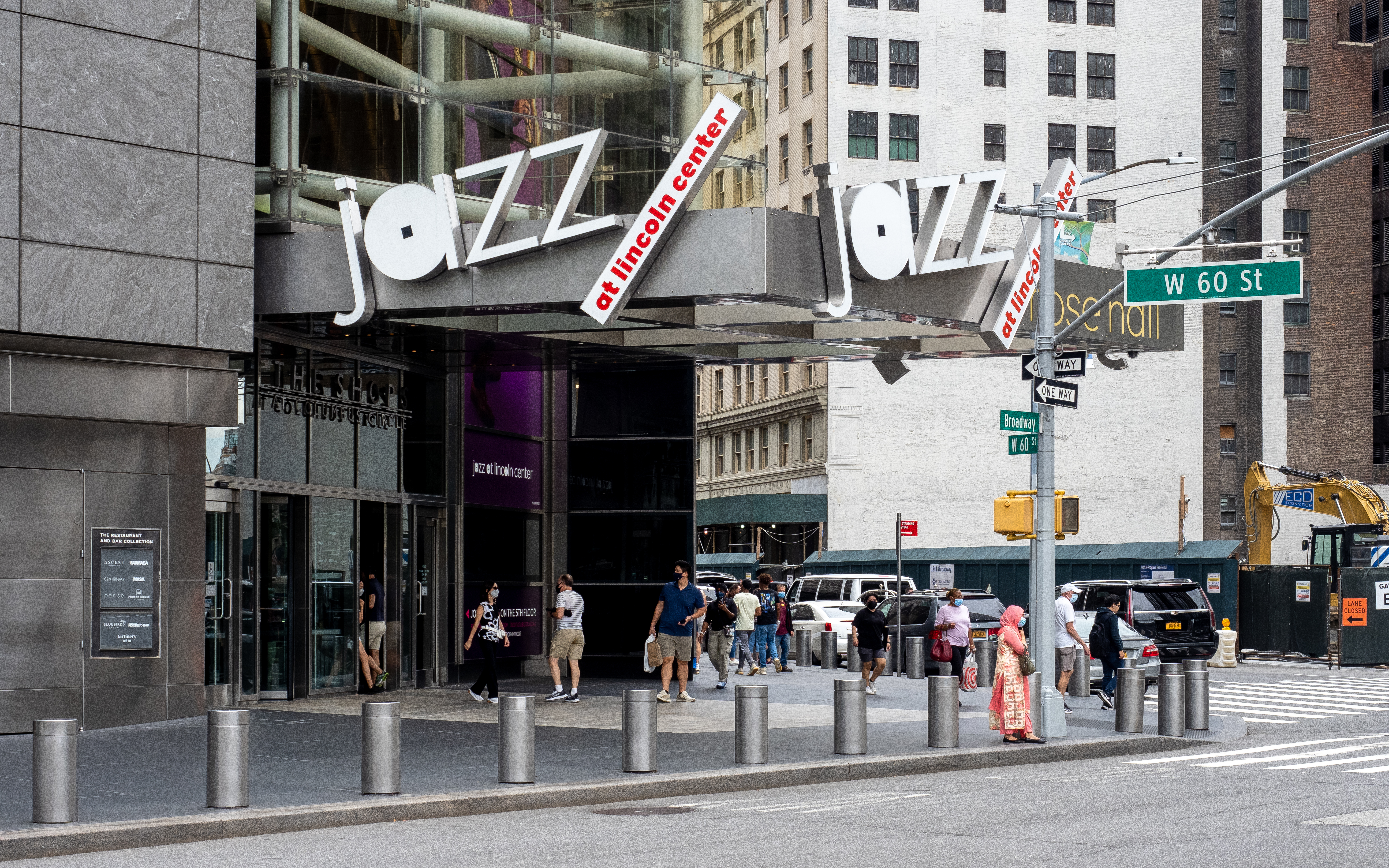
The genesis of Jazz at Lincoln Center can be traced back to 1987, when a coalition of jazz advocates, including figures like Robert Redford and Stanley Davis, recognized the need for a dedicated institution to champion jazz. Initially operating without a permanent home, the organization was formally established as part of the larger Lincoln Center for the Performing Arts complex. A pivotal moment arrived in 2004 with the grand opening of its state-of-the-art facility within the Time Warner Center (now the Deutsche Bank Center) at Columbus Circle. This move provided a physical anchor for its ambitious mission: to represent the totality of jazz music through education, curation, archival, and ceremonial events. The organization's founding vision was to ensure jazz received the same institutional support and cultural prominence as classical music, a goal heavily championed by its long-standing artistic director, Wynton Marsalis.
⚙️ How It Works
Jazz at Lincoln Center operates through a multi-pronged approach to fulfilling its mission. At its core is the Jazz at Lincoln Center Orchestra, a world-renowned ensemble led by Wynton Marsalis, which performs a diverse repertoire spanning jazz history. Beyond the orchestra's performances, JALC curates a robust season of concerts featuring both legendary jazz figures and emerging artists across its various venues, including Rose Theater and Dizzy's Club. Educational initiatives are paramount, encompassing programs for students from kindergarten through college, teacher training, and public lectures. The organization also maintains significant archival resources and actively commissions new works, ensuring the continuous evolution and documentation of the jazz tradition.
📊 Key Facts & Numbers
Jazz at Lincoln Center is a significant cultural and economic entity. In recent years, its annual revenue has fluctuated, with figures reported between $30 million and over $79 million, demonstrating its substantial operational scale. The organization reaches an estimated 3 million individuals annually through its diverse programming. Concert attendance is robust, with over 90 percent of seats for major shows typically sold. JALC's educational programs extend to over 100 cities across the United States, impacting hundreds of thousands of students. The Jazz at Lincoln Center Orchestra has released over a dozen albums, garnering multiple Grammy Awards and critical acclaim.
👥 Key People & Organizations
The figure most synonymous with Jazz at Lincoln Center is its artistic director, Wynton Marsalis. A Pulitzer Prize-winning composer and virtuoso trumpeter, Marsalis has been instrumental in shaping the organization's artistic vision and educational philosophy since becoming its artistic director in 1987. Other key individuals include Ian Shirley, who served as Executive Director, and Jennifer Morrison, who has held significant leadership roles. The Lincoln Center for the Performing Arts itself serves as the parent institution, providing administrative and infrastructural support. The Jazz at Lincoln Center Orchestra comprises a collective of highly accomplished musicians, each a master of their instrument.
🌍 Cultural Impact & Influence
Jazz at Lincoln Center has profoundly influenced the global perception and practice of jazz. By presenting jazz with the same institutional gravitas as classical music, JALC has elevated its cultural standing and attracted new audiences. Its extensive educational outreach has introduced millions of young people to jazz, fostering a new generation of musicians and enthusiasts. The organization's commitment to commissioning new works and its archival efforts contribute to the ongoing narrative and preservation of jazz history. Furthermore, its international touring arm has spread the music and its cultural message to audiences across continents, solidifying its role as a global ambassador for American art.
⚡ Current State & Latest Developments
In the current landscape of 2024-2025, Jazz at Lincoln Center continues to innovate and expand its reach. The organization has embraced digital platforms, offering a robust schedule of live-streamed concerts and online educational resources, a strategy amplified by the COVID-19 pandemic. Recent programming highlights include ambitious multi-night residencies by acclaimed artists and thematic series exploring various facets of jazz history and culture. JALC remains committed to its core mission of education, with ongoing initiatives like the Essentially Ellington High School Jazz Band Competition and the Jazz for Young People series. Discussions are ongoing regarding future programming and potential expansion of its educational impact.
🤔 Controversies & Debates
Despite its widespread acclaim, Jazz at Lincoln Center and Wynton Marsalis have faced criticism. Some critics argue that the organization's focus on a more traditional, historically-rooted interpretation of jazz, often termed 'straight-ahead' jazz, can be perceived as exclusionary to more avant-garde or experimental forms. There have been debates regarding the extent to which JALC represents the full spectrum of contemporary jazz practices, with some suggesting a bias towards a particular aesthetic. Additionally, the significant institutional backing and Marsalis's prominent role have led to discussions about the centralization of influence within the jazz world, prompting questions about accessibility and diverse representation.
🔮 Future Outlook & Predictions
The future trajectory of Jazz at Lincoln Center appears poised for continued growth and adaptation. With the increasing integration of digital technologies, JALC is likely to further expand its global online presence, offering virtual masterclasses, archived performances, and interactive educational content. There is potential for increased collaboration with international jazz institutions, fostering cross-cultural exchange and the development of new global jazz narratives. The organization's commitment to commissioning new works suggests a continued role in shaping the future sound of jazz. However, navigating the evolving economics of the arts sector and ensuring continued relevance to diverse, contemporary audiences will be critical challenges.
💡 Practical Applications
Jazz at Lincoln Center's programming offers numerous practical applications and learning opportunities. For aspiring musicians, the Jazz at Lincoln Center Orchestra serves as a model of ensemble excellence, while educational programs provide structured learning pathways. The organization's extensive archive offers invaluable resources for researchers, historians, and students of jazz. For educators, JALC provides curriculum materials and professional development opportunities to integrate jazz education into school systems. Furthermore, its public concerts offer accessible entry points for general audiences to experience and appreciate the richness of jazz music, fostering cultural enrichment and community engagement.
Key Facts
- Year
- 1987
- Origin
- United States
- Category
- culture
- Type
- organization
Frequently Asked Questions
What is the primary mission of Jazz at Lincoln Center?
The primary mission of Jazz at Lincoln Center (JALC) is to preserve and advance the art of jazz, representing its totality through education, curation, archival, and performance. Founded in 1987 and operating from its dedicated space in Manhattan's Deutsche Bank Center, JALC aims to foster a deeper understanding and appreciation of jazz music globally, ensuring its legacy for future generations. Under the artistic direction of Wynton Marsalis, the organization strives to give jazz the same institutional support and cultural prominence as classical music.
Who is the artistic director of Jazz at Lincoln Center, and what is their role?
The artistic director of Jazz at Lincoln Center is the celebrated trumpeter and composer Wynton Marsalis. He has held this pivotal role since the organization's inception in 1987. Marsalis is responsible for shaping the artistic vision and programming of JALC, including the repertoire and direction of the Jazz at Lincoln Center Orchestra. His leadership has been instrumental in elevating jazz to a prominent position within the American cultural landscape and establishing JALC as a leading global institution for the art form.
What kind of performances and educational programs does Jazz at Lincoln Center offer?
Jazz at Lincoln Center offers a wide array of performances, featuring the resident Jazz at Lincoln Center Orchestra alongside renowned visiting artists, spanning various eras and styles of jazz. Its educational programs are extensive, reaching approximately 3 million people annually. These include initiatives for K-12 students like the Essentially Ellington competition, university-level programs, teacher training workshops, and public lectures. Many concerts are also streamed live, extending their reach beyond the physical venue.
Where is Jazz at Lincoln Center located, and when did its current facility open?
Jazz at Lincoln Center is located in New York City, within the Deutsche Bank Center at Columbus Circle. Its dedicated performance and education facility, designed by architect Rafael Viñoly, officially opened its doors in October 2004. This state-of-the-art complex includes multiple performance spaces, rehearsal rooms, and educational facilities, providing a permanent home for the organization's diverse activities and solidifying its presence within the iconic Lincoln Center complex.
What are some of the criticisms or controversies surrounding Jazz at Lincoln Center?
While widely respected, Jazz at Lincoln Center and its artistic director Wynton Marsalis have faced criticism. Some argue that the organization's programming leans heavily towards a traditional, 'straight-ahead' jazz aesthetic, potentially marginalizing more experimental or avant-garde forms of the music. Debates also arise regarding the significant institutional influence wielded by JALC and Marsalis, prompting discussions about accessibility and the representation of diverse voices within the jazz community. Critics sometimes question whether the organization fully reflects the breadth of contemporary jazz practices.
How does Jazz at Lincoln Center contribute to jazz education and preservation?
Jazz at Lincoln Center is a powerhouse of jazz education and preservation. Through programs like Jazz for Young People, Essentially Ellington, and extensive school partnerships, it introduces millions of young people to jazz and provides structured learning opportunities. The organization actively commissions new music, expanding the jazz repertoire, and maintains significant archival resources to document and safeguard jazz history. By presenting jazz with the same institutional rigor as classical music, JALC elevates its cultural status and ensures its continued relevance and study.
What is the economic impact and scale of Jazz at Lincoln Center?
Jazz at Lincoln Center operates on a significant scale, with annual revenues reported in the tens of millions of dollars, often ranging between $30 million and $79 million in recent years. The organization reaches an estimated 3 million individuals annually through its concerts, tours, and educational outreach. Concert attendance for major shows typically exceeds 90 percent capacity, underscoring its popularity. Its educational programs impact hundreds of thousands of students across over 100 cities, demonstrating a substantial economic and cultural footprint.