
Contents
Overview
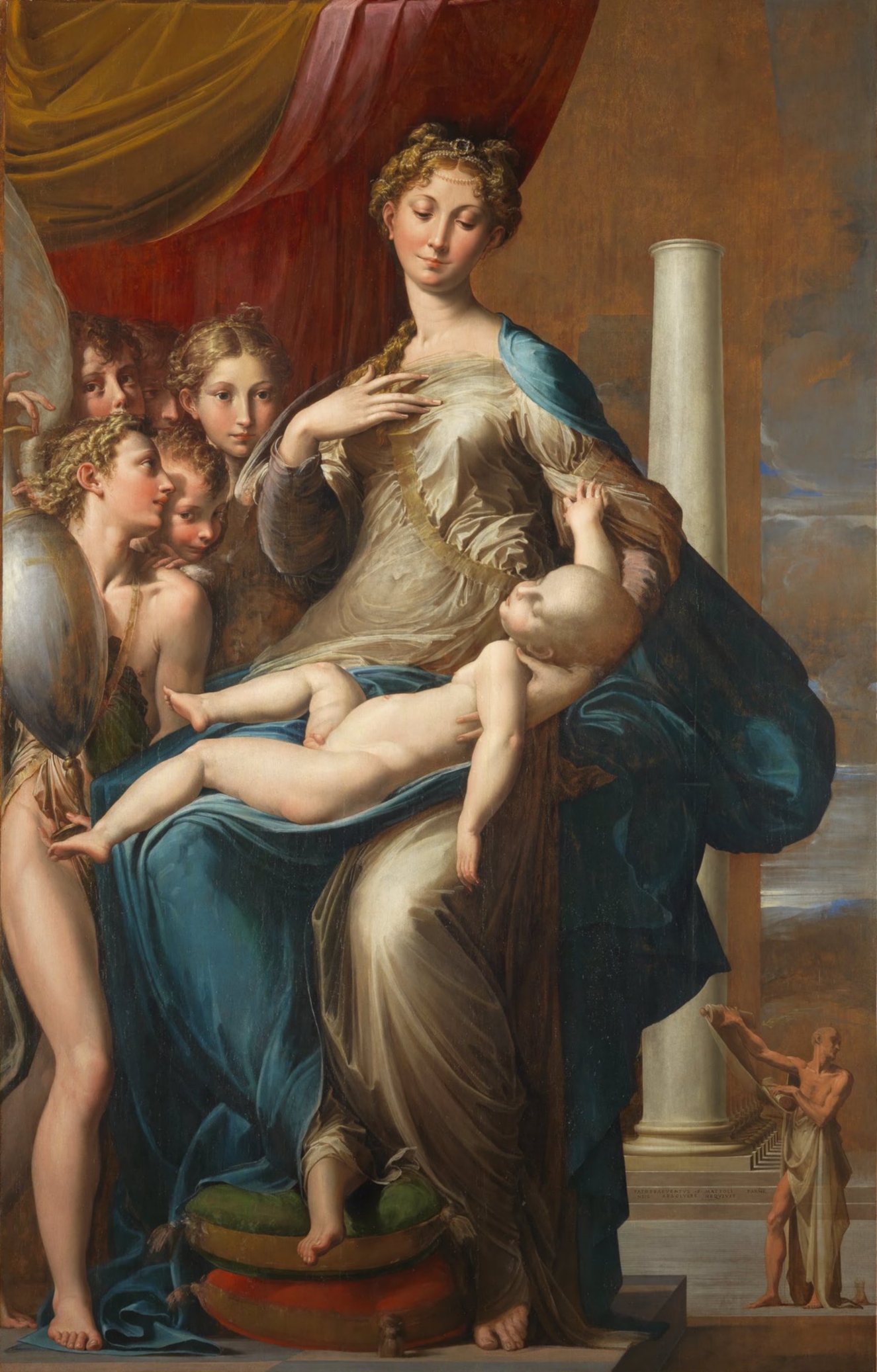
Mannerism, a distinct artistic style, took root in Italy around 1520, marking a conscious evolution from the High Renaissance ideals. Artists like Andrea del Sarto and Giorgio Vasari began to explore a more subjective and emotionally charged approach, moving away from the balanced compositions and idealized beauty that defined the preceding era. This shift was not a sudden break but a gradual embrace of complexity and artifice, often seen as a reaction to the perceived perfection and perhaps even the spiritual crisis following events like the Sack of Rome in 1527. The style quickly disseminated across Italy and by the 1530s, its influence was palpable in Florence, Rome, and Venice, with artists like Parmigianino in Parma and Giulio Romano in Mantua becoming key proponents, pushing the boundaries of established artistic conventions and laying the groundwork for Northern Mannerism.
⚙️ How It Works
The mechanics of Mannerism lie in its deliberate departure from naturalistic representation and harmonious balance. Instead of adhering to strict anatomical proportions, Mannerist artists often elongated figures, creating an elegant, sometimes unsettling, serpentine or 'S' curve posture. Compositions became deliberately asymmetrical, with figures often crowded into compressed spaces or placed in precarious, unstable arrangements. Color palettes shifted towards heightened, often acidic or unnatural hues, deviating from the naturalistic tones of the High Renaissance. Light sources could be dramatic and illogical, further enhancing the artificiality. This emphasis on 'maniera'—a refined, often self-conscious style—prioritized compositional tension, emotional intensity, and intellectual wit over straightforward narrative clarity, as seen in the intricate allegories of Agnolo Bronzino's court portraits.
📊 Key Facts & Numbers
Mannerism spanned approximately 80 years, from its emergence around 1520 to its decline by 1600 in Italy, though Northern Mannerism persisted into the early 17th century. Key figures in the Mannerist movement include painters like Parmigianino, celebrated for his ethereal Madonnas and elongated forms; Agnolo Bronzino, the Florentine court painter known for his cool, aristocratic portraits; Giulio Romano, a pupil of Raphael who brought Mannerist dynamism to Mantua; and El Greco, whose intensely spiritual and distorted figures in Spain represent a unique Northern extension of the style. Sculptors like Giambologna created dynamic, multi-viewpoint figures such as his 'Rape of the Sabine Women'. Architects such as Giulio Romano at the Palazzo Te in Mantua incorporated Mannerist elements through playful distortions of classical forms. The Medici family in Florence, particularly Cosimo I de' Medici, were significant patrons, commissioning works from artists like Bronzino and Vasari that embodied the sophisticated, often politically charged, Mannerist aesthetic.
👥 Key People & Organizations
Mannerism's impact reverberated through European culture, influencing not only painting and sculpture but also literature, music, and even fashion. Its emphasis on artifice and intellectual complexity fostered a taste for elaborate poetry and sophisticated prose, seen in the works of writers like Giambattista Marino. The style's embrace of emotional intensity and dramatic tension paved the way for the subsequent Baroque movement, which would amplify these qualities on an even grander scale. Mannerism's legacy is also evident in its challenge to the very definition of beauty and artistic truth, opening doors for later avant-garde movements that questioned established norms. The elaborate courtly dances and fashions of the late 16th century also mirrored Mannerism's artificiality and stylized elegance.
🌍 Cultural Impact & Influence
While Mannerism as a dominant style largely receded in Italy by 1600, its echoes persist. Contemporary artists and designers continue to draw inspiration from its bold formal experiments and emotional depth. Digital art and contemporary illustration often employ elongated figures and heightened color palettes reminiscent of Mannerist aesthetics. Furthermore, the philosophical underpinnings of Mannerism—its exploration of subjective experience and the tension between appearance and reality—remain relevant in discussions of postmodern art and identity.
⚡ Current State & Latest Developments
A primary controversy surrounding Mannerism is its historical categorization, with some critics initially dismissing it as a decadent or flawed transition between the High Renaissance and the Baroque. The term 'Mannerism' itself, derived from the Italian 'maniera' (style), was often used pejoratively to imply a lack of originality or an overemphasis on artificiality. Art historians like Jacob Burckhardt in the 19th century contributed to this negative perception, viewing it as a sign of artistic decline. However, modern scholarship, particularly since the mid-20th century, has re-evaluated Mannerism as a distinct and innovative style with its own unique aesthetic and intellectual merits, recognizing its deliberate artistic choices rather than mere stylistic shortcomings. The debate continues regarding its precise boundaries and its relationship to the preceding and succeeding periods.
🤔 Controversies & Debates
The future outlook for Mannerism suggests a continued appreciation for its unique aesthetic and intellectual contributions. As contemporary art increasingly explores themes of subjectivity, alienation, and the constructed nature of reality, Mannerist principles of artifice and emotional intensity are likely to find renewed relevance. Scholars may further investigate its influence on non-Western art traditions or its parallels with modern psychological theories. The ongoing digitization of art historical archives and the accessibility of high-resolution images of Mannerist works via platforms like Google Arts & Culture will undoubtedly foster new research avenues and broader public engagement. We might see a re-evaluation of Mannerist literature and music, which have historically received less attention than its visual arts counterpart, potentially leading to new interpretations and performances.
🔮 Future Outlook & Predictions
Mannerism's principles find practical application in various fields beyond fine art. In graphic design and advertising, the use of elongated figures, stylized poses, and vibrant, non-naturalistic colors can create a distinctive and eye-catching aesthetic. Fashion designers frequently draw inspiration from Mannerist silhouettes, particularly the exaggerated proportions and dramatic drapery seen in 16th-century court attire, which have been reinterpreted by designers like Thierry Mugler and Alexander McQueen. In animation and digital art, the freedom from strict naturalism allows for expressive character
Key Facts
- Category
- aesthetics
- Type
- topic