
Contents
Overview
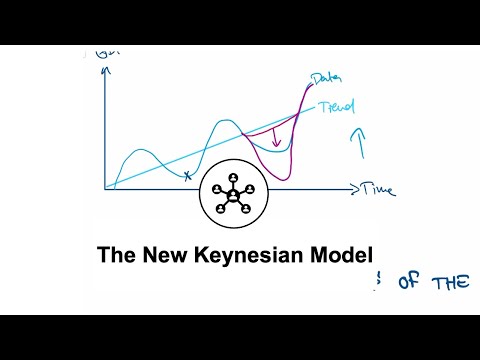
New Keynesian economics represents the dominant post-WWII synthesis in mainstream macroeconomics, building upon Keynes's original insights while incorporating microfoundations and rational expectations. It grapples with explaining persistent unemployment and business cycles through sticky prices and wages, imperfect competition, and information asymmetries. Key figures like Gregory Mankiw, Olivier Blanchard, and David Romer have shaped its evolution, integrating it with neoclassical frameworks to offer policy prescriptions for stabilization. While widely influential, it faces ongoing critiques regarding its assumptions about market imperfections and the efficacy of government intervention.
💡 What is New Keynesian Economics?
New Keynesian economics is a modern synthesis of Keynesian thought, aiming to ground its core insights in rigorous microeconomic principles. Unlike its predecessor, which often relied on aggregate relationships, New Keynesianism builds models with optimizing individual agents – households and firms – facing imperfect information and market frictions. This approach seeks to explain phenomena like persistent unemployment and sticky prices, which traditional neoclassical models struggle to account for. It's the dominant framework in many central banks and academic institutions today, shaping how we understand and respond to economic downturns.
🏛️ Historical Roots & Evolution
The genesis of New Keynesian economics lies in the late 1970s and early 1980s, a period when New Classical economists, armed with rational expectations and the Lucas Critique, challenged the empirical and theoretical foundations of Keynesianism. Proponents like Robert Barro and Thomas Sargent argued that Keynesian conclusions about the effectiveness of stabilization policy were flawed if agents had rational expectations. New Keynesians, including Gregory Mankiw, David Romer, and Olivier Blanchard, responded by developing models that incorporated Keynesian results within a framework of rational expectations, but crucially, with the addition of market imperfections.
🛠️ Core Tenets & Mechanisms
At its heart, New Keynesian economics emphasizes that markets don't always clear instantaneously due to various frictions. These include menu costs (the expense of changing prices), staggered price setting (firms adjusting prices at different times), efficiency wages (wages set above market-clearing levels to boost productivity), and imperfect competition. These imperfections create a role for aggregate demand management, as shifts in demand can lead to persistent deviations from full employment and output potential. The focus is on how these micro-level rigidities translate into macro-level stickiness.
⚖️ Strengths & Criticisms
The primary strength of New Keynesian economics is its ability to provide microfoundations for Keynesian conclusions, making it more robust to criticisms leveled by rational expectations theorists. It offers a coherent explanation for why monetary policy and fiscal policy can be effective in stabilizing the business cycle. However, critics, often from the Austrian or New Classical perspectives, argue that the assumed frictions are often ad hoc or insufficiently explained. They contend that the models still overstate the potential for government intervention to fine-tune the economy without unintended consequences.
📊 Key Concepts & Models
Key concepts within New Keynesian economics include the Phillips Curve, which, in its New Keynesian formulation, links inflation to expected inflation and the output gap, incorporating factors like price stickiness. The IS-LM model, though often seen as a pedagogical tool, is frequently adapted to illustrate New Keynesian dynamics, particularly the transmission mechanisms of monetary and fiscal policy. More advanced models often employ DSGE frameworks to capture the interplay of rational expectations, optimization, and market imperfections in a dynamic setting.
🌍 Policy Implications
New Keynesian economics strongly supports an active role for policymakers in stabilizing the economy. It provides the theoretical underpinning for central banks to use interest rate adjustments (monetary policy) to manage inflation and output, and for governments to use spending and taxation (fiscal policy) to counteract recessions or booms. The emphasis is on managing aggregate demand to keep the economy close to its potential output level, thereby minimizing fluctuations in employment and inflation. This contrasts with laissez-faire approaches that advocate for minimal government intervention.
🚀 The Future of New Keynesianism
The future of New Keynesian economics likely involves further integration with behavioral economics and a deeper exploration of financial market imperfections, particularly in light of the 2008 global financial crisis. Researchers are also grappling with the implications of rising inequality and the role of fiscal policy in a world of high public debt. The ongoing debate between New Keynesians and their critics, such as proponents of MMT, continues to push the boundaries of macroeconomic thought and policy prescription. The challenge is to maintain theoretical rigor while capturing the complexities of real-world economies.
📚 Further Exploration
For those seeking to understand the intellectual underpinnings of modern macroeconomic policy, exploring the works of Gregory Mankiw, David Romer, and Olivier Blanchard is essential. Academic journals like the American Economic Review and the Journal of Political Economy frequently feature cutting-edge New Keynesian research. Textbooks on advanced macroeconomics, such as those by David Romer or Mark W. Chodorow, offer detailed expositions of the models and their derivations. Understanding these foundational texts is crucial for grasping the current global economic policy discourse.
Key Facts
- Year
- 1970
- Origin
- United States
- Category
- Economics
- Type
- Economic Theory
Frequently Asked Questions
What's the main difference between Keynesian Economics and New Keynesian Economics?
The primary distinction lies in their methodological foundations. Traditional Keynesian economics often relied on aggregate relationships and less formal microfoundations. New Keynesian economics, however, explicitly builds its models on the behavior of optimizing individual agents (households and firms) who face market imperfections, providing a more rigorous microeconomic basis for Keynesian conclusions about market failures and the effectiveness of stabilization policies.
Are New Keynesians rational?
Yes, New Keynesians generally assume that economic agents possess rational expectations. This means that individuals and firms use all available information to form their expectations about the future and make decisions accordingly. The key innovation of New Keynesianism is demonstrating how rational agents can still lead to outcomes like sticky prices and involuntary unemployment when faced with specific market frictions, rather than assuming irrationality.
What are 'menu costs' and why are they important?
'Menu costs' refer to the real costs incurred by firms when they change their prices. This can include the cost of printing new menus, updating price tags, or communicating new prices to customers. In New Keynesian models, even small menu costs can prevent firms from adjusting prices frequently in response to changes in demand or costs, leading to sticky prices and contributing to economic fluctuations.
How does New Keynesianism explain unemployment?
New Keynesian economics explains unemployment through mechanisms like efficiency wages and sticky wages. Firms might pay wages above the market-clearing level to boost worker morale and productivity, or contracts may fix wages for a period. When aggregate demand falls, these rigidities prevent wages from falling sufficiently to clear the labor market, resulting in higher unemployment than would occur in a perfectly flexible market.
What is the role of central banks in New Keynesian economics?
Central banks play a crucial role in New Keynesian economics. They are seen as key actors in managing aggregate demand through monetary policy, primarily by adjusting interest rates. The goal is to keep inflation stable and close to the central bank's target, and to moderate the business cycle by stimulating the economy during downturns and cooling it during booms, thereby keeping output close to its potential.
Is New Keynesian economics still relevant today?
Absolutely. New Keynesian economics remains the dominant framework for macroeconomic analysis and policy prescription in most developed countries. Its models are widely used by central banks and international organizations like the IMF to forecast economic conditions and design policy responses. The insights from New Keynesianism are particularly relevant during economic crises, as demonstrated by its influence on policy responses to the 2008 financial crisis and the COVID-19 pandemic.