
Contents
Overview
Pedology is the scientific study of soils in their natural environment. Edaphology, in contrast, examines soil's influence on plant life. Pedologists create soil maps and classification systems, providing a foundational understanding crucial for fields ranging from geology and ecology to archaeology and climate science. This discipline grapples with the immense timescales of soil evolution and the complex interplay of forces that shape the very ground beneath our feet.
🎵 Origins & History
The term 'pedology' itself, derived from the Greek 'pedon' (soil) and 'logos' (study), gained traction as the discipline solidified, distinguishing itself from the more agriculturally focused 'edaphology' which examines soil's relationship with plants. Dokuchaev studied the chernozem soils of the Russian steppe.
⚙️ How It Works
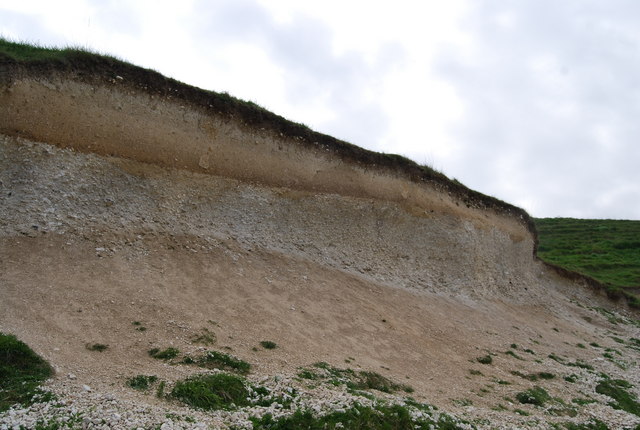
Pedology operates by meticulously observing and analyzing soil profiles – vertical cross-sections revealing distinct layers or horizons. These horizons, such as the O (organic), A (topsoil), B (subsoil), and C (parent material), are characterized by their color, texture, structure, and chemical composition. Pedologists employ a range of techniques, from field descriptions and sampling to laboratory analyses of physical and chemical properties. Pedogenesis is the process of soil formation. By studying the factors and their influence on soil development, pedologists can classify soils using systems like the World Reference Base for Soil Resources (WRB) or U.S. Soil Taxonomy. This systematic approach allows for the creation of detailed soil maps that depict the spatial distribution of different soil types across landscapes.
📊 Key Facts & Numbers
Soils cover approximately 50% of the Earth's land surface, a staggering 75 million square kilometers. Globally, an estimated 1.5 billion people are directly dependent on soil for their livelihoods. The world's soils store more carbon than the atmosphere and all vegetation combined, holding approximately 2,300 billion tonnes of organic carbon. It takes an average of 500 years to produce just 1 centimeter of topsoil under current conditions, highlighting the slow rate of soil formation. Soil degradation, however, is occurring at rates up to 100 times faster than soil formation, with an estimated 33% of the world's soils already degraded. The global soil market, encompassing soil testing, amendments, and management, was valued at over $100 billion USD in 2023 and is projected to grow.
👥 Key People & Organizations
The foundational work of Vasily Dokuchaev in the late 19th century established pedology as a distinct science. His student, Nikolai Sibirtsev, further developed soil classification systems. In the United States, Cyril G. Hopkins and later Hans Jenny made significant contributions to understanding soil formation factors and properties. The International Union of Soil Sciences (IUSS), founded in 1924, is the primary global organization for pedologists, promoting international cooperation and the advancement of soil science. National organizations, such as the Soil Science Society of America (SSSA), also play crucial roles in research, education, and policy. Prominent institutions like the Wageningen University and Research in the Netherlands and the University of Wisconsin-Madison have long been centers of excellence in pedological research.
🌍 Cultural Impact & Influence
Pedology's influence extends beyond academic journals. Soil maps are indispensable tools for land-use planning, agriculture, forestry, and environmental management. Understanding soil types and their properties informs decisions about where to build infrastructure, what crops can be grown, and how to mitigate erosion and pollution. The discipline also contributes to our understanding of Earth's history and climate change, as soil carbon storage and release are critical components of the global carbon cycle. Furthermore, pedological insights are vital for fields like archaeology, where soil stratigraphy can reveal past human activities and environmental conditions. The aesthetic appreciation of soil landscapes, from fertile plains to arid deserts, also finds a place within the broader cultural understanding of our planet.
⚡ Current State & Latest Developments
Current pedological research is increasingly integrating advanced technologies and interdisciplinary approaches. Remote sensing and Geographic Information Systems (GIS) are revolutionizing soil mapping and monitoring, allowing for more detailed and dynamic assessments of soil properties across vast areas. Machine learning and artificial intelligence are enhancing our ability to predict soil behavior and simulate pedogenetic processes under various scenarios, including climate change. There's a growing focus on soil health, moving beyond traditional classification to assess the biological and functional aspects of soils, particularly in relation to sustainable agriculture and ecosystem services. Initiatives like the Global Soil Biodiversity Atlas are highlighting the critical, often overlooked, biodiversity within soils.
🤔 Controversies & Debates
One persistent debate in pedology revolves around classification systems. While the World Reference Base for Soil Resources (WRB) aims for global standardization, regional systems like the U.S. Soil Taxonomy remain influential, leading to ongoing discussions about harmonization and practical application. Another area of contention is the precise quantification of soil formation rates and the relative importance of different pedogenetic factors, especially over geological timescales. The impact of human activities, or 'anthroposols', on soil development is also a subject of intense study and debate, with some arguing for new classification categories to reflect these anthropogenic influences. The role of soil in climate regulation, particularly carbon sequestration, is a critical area where scientific understanding is still evolving and subject to ongoing research and policy discussions.
🔮 Future Outlook & Predictions
The future of pedology is inextricably linked to addressing global environmental challenges. With increasing pressure on land resources due to population growth and climate change, understanding and managing soils sustainably is paramount. Future research will likely focus on developing more accurate predictive models for soil degradation and resilience, integrating genomic and metagenomic data to understand soil microbial communities, and improving our ability to restore degraded soils. The role of soils in achieving Sustainable Development Goals, particularly those related to food security, climate action, and biodiversity, will drive innovation. Expect to see greater integration with other Earth system sciences, leading to a more holistic understanding of the planet's interconnected systems, with soil at its dynamic core.
💡 Practical Applications
Pedology has direct applications across numerous sectors. In agriculture, it informs soil fertility management, crop selection, and irrigation strategies, directly impacting food production and security. Environmental scientists use pedological data for watershed management, pollution control, and assessing the impact of land use changes. Geologists and geomorphologists rely on soil profiles to understand landscape evolution and erosion processes. Urban planners and civil engineers utilize soil surveys for site selection, foundation design, and managing construction impacts. Furthermore, pedological knowledge is crucial for conservation efforts, helping to identify and protect unique or vulnerable soil ecosystems and inform restoration projects for degraded lands.
Key Facts
- Category
- science
- Type
- topic