
Contents
Overview
Petra, an ancient city in southern Jordan, is renowned for its intricate rock-cut architecture and water conduit systems, earning it a spot as one of the New 7 Wonders of the World and a UNESCO World Heritage Site. The city has a rich history, dating back to 7000 BC, with the Nabataeans establishing it as their capital in the 2nd century BC. Petra's strategic location made it a major trading hub, connecting the incense trade routes and generating significant revenue for the Nabataeans. The city's unique architecture, carved into the sandstone cliffs, has been a subject of fascination for archaeologists and historians, including John William Burges and Auguste Le Prince.
🏯 Origins & History
The area around Petra has been inhabited since 7000 BC, with the Nabataeans settling in the 4th century BC. The city became the capital of the Nabataean Kingdom in the 2nd century BC, with the Nabataeans investing in its proximity to the incense trade routes. This strategic location made Petra a major regional trading hub, generating considerable revenue for the Nabataeans. As noted by Diodorus Siculus, a Greek historian, the Nabataeans were skilled traders and navigators, establishing trade relationships with neighboring kingdoms, including the Kingdom of Judah.
🔨 Architecture & Engineering
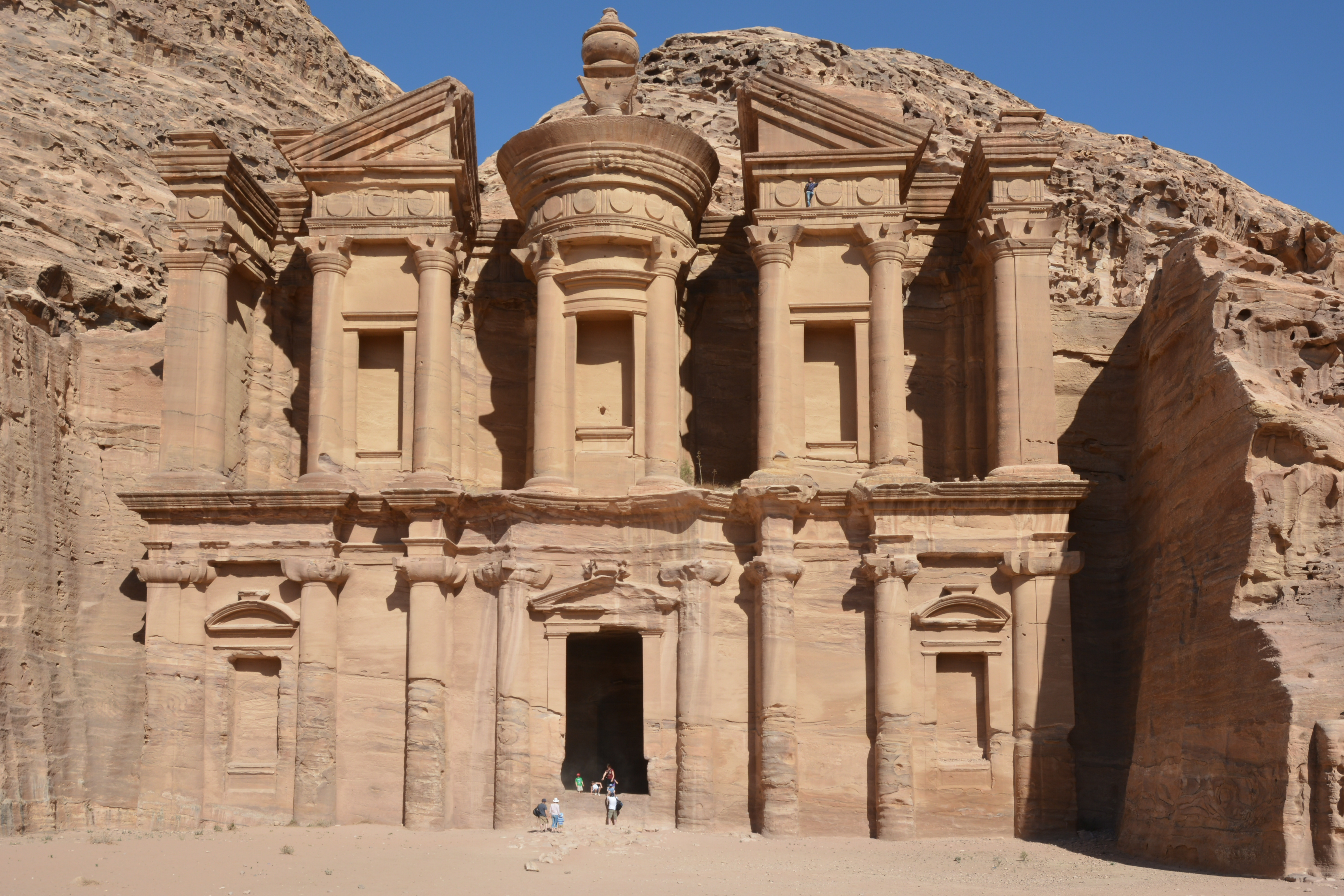
Petra's architecture is a testament to the ingenuity of the Nabataeans, with intricate rock-cut structures and water conduit systems. The city's famous Al-Khazneh (Treasury) and Ad Deir (Monastery) are examples of the Nabataeans' advanced engineering skills. The city's unique architecture has been studied by archaeologists and historians, including Kathleen Kenyon and Philip Hammond, who have shed light on the city's history and cultural significance. The use of sandstone in Petra's construction has also been a subject of interest, with researchers like George Andrew Reisner analyzing the stone's properties and durability.
🌍 Cultural Significance
Petra's cultural significance extends beyond its architecture, with the city playing a significant role in the history of the region. The city has been influenced by various cultures, including the Nabataeans, Romans, and Byzantines. The city's strategic location made it a crucial stopover for traders and travelers, including Ibn Battuta, who wrote about the city's vibrant markets and cultural diversity. Today, Petra is a UNESCO World Heritage Site and one of the New 7 Wonders of the World, attracting millions of visitors each year, including Jordan Tourism Board and UNESCO officials.
🔮 Legacy & Preservation
Petra's legacy and preservation are crucial to understanding the city's history and cultural significance. The city has undergone numerous excavations and restoration projects, including those led by Auguste Le Prince and Kathleen Kenyon. The Jordanian government, in collaboration with international organizations like UNESCO and ICOMOS, has implemented measures to protect the site from erosion and damage. The city's preservation is not only important for its cultural significance but also for its economic impact, with tourism generating significant revenue for the local community, as noted by World Tourism Organization and Jordan Ministry of Tourism.
Key Facts
- Year
- 2nd century BC
- Origin
- Southern Jordan
- Category
- history
- Type
- place
Frequently Asked Questions
What is Petra famous for?
Petra is famous for its intricate rock-cut architecture and water conduit systems, which have made it one of the New 7 Wonders of the World and a UNESCO World Heritage Site. The city's unique architecture has been studied by archaeologists and historians, including Kathleen Kenyon and Philip Hammond.
Who built Petra?
Petra was built by the Nabataeans, a nomadic Arab people who settled in the area in the 4th century BC. The city became the capital of the Nabataean Kingdom in the 2nd century BC, with the Nabataeans investing in its proximity to the incense trade routes. As noted by Diodorus Siculus, a Greek historian, the Nabataeans were skilled traders and navigators, establishing trade relationships with neighboring kingdoms, including the Kingdom of Judah.
What is the significance of Petra's rock-cut architecture?
Petra's rock-cut architecture is significant because it demonstrates the ingenuity and skill of the Nabataeans, who were able to carve intricate structures into the sandstone cliffs. The city's unique architecture has been studied by archaeologists and historians, including John William Burges and Auguste Le Prince, who have shed light on the city's history and cultural significance. The use of sandstone in Petra's construction has also been a subject of interest, with researchers like George Andrew Reisner analyzing the stone's properties and durability.
How has Petra been preserved?
Petra has undergone numerous excavations and restoration projects, including those led by Auguste Le Prince and Kathleen Kenyon. The Jordanian government, in collaboration with international organizations like UNESCO and ICOMOS, has implemented measures to protect the site from erosion and damage. The city's preservation is not only important for its cultural significance but also for its economic impact, with tourism generating significant revenue for the local community, as noted by World Tourism Organization and Jordan Ministry of Tourism.
What is the current state of Petra?
Petra is currently a UNESCO World Heritage Site and one of the New 7 Wonders of the World, attracting millions of visitors each year. The city's preservation is an ongoing effort, with the Jordanian government and international organizations working to protect the site from erosion and damage. The city's unique architecture and cultural significance make it an important destination for tourists and scholars alike, with many visiting the city to learn about its history and culture, including Jordan Tourism Board and UNESCO officials.