
Contents
Overview
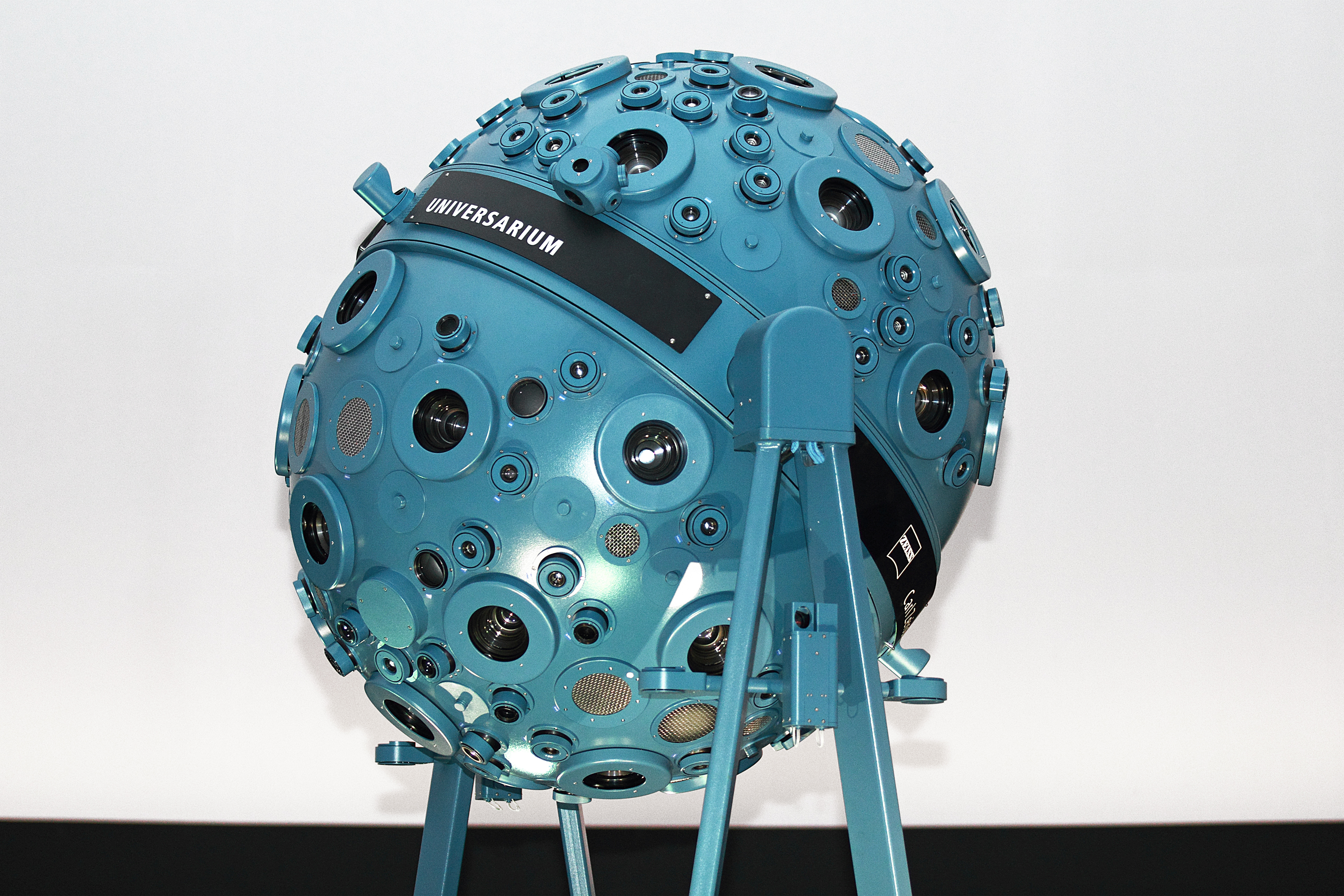
The genesis of the modern planetarium projector is inextricably linked to the visionary work of Carl Zeiss Jena, a German optics firm. Following World War I, the company embarked on a project to create an artificial sky. Precursors existed, such as Armand Vallée's 1910 patent for a celestial projector, but the Zeiss machines set a new standard for fidelity and complexity. The success of the Zeiss projector quickly spurred international interest, leading to the establishment of planetariums globally and the eventual emergence of competing manufacturers.
⚙️ How It Works
At its core, a planetarium projector functions by projecting light through precisely engineered optics onto a dome. Early models utilized a perforated metal sphere, with tiny holes representing stars. Light shone through these holes, casting star points onto the dome. More advanced projectors employ a system of lenses, mirrors, and fiber optics to create a more nuanced and dynamic display. Modern digital projectors use high-resolution video projectors (like DLP or LCD) to render the entire sky as a computer-generated image. These systems can simulate not only stars but also planets, nebulae, galaxies, and even atmospheric effects, offering unparalleled flexibility and realism. The mechanical projectors, while less common now, often featured complex gearing to accurately track the apparent motion of celestial bodies across the dome.
📊 Key Facts & Numbers
The global planetarium market is substantial, with estimates suggesting over 1,500 planetariums worldwide, each housing at least one projector. The initial Carl Zeiss Jena Model I projector cost approximately 100,000 Reichsmarks in the 1920s, a considerable sum equivalent to millions of dollars today. Modern, high-end digital projection systems can range from $100,000 to over $1 million, depending on resolution, features, and dome size. The Spitz company, a major American manufacturer, has installed over 10,000 projectors globally since its founding in 1947. The average planetarium dome spans 20-30 meters in diameter, requiring projectors capable of covering a vast field of view, often exceeding 180 degrees.
👥 Key People & Organizations
Key figures in the development of planetarium projectors include Walther Bauersfeld, the lead engineer at Carl Zeiss Jena who oversaw the creation of the first modern projectors. Henry Spitz founded Spitz in 1947, becoming a dominant force in the American market with his innovative and more accessible projector designs. Hiroshi Goto established Goto Optical Manufacturing Co. in Japan, a company renowned for its high-precision optical instruments, including planetarium projectors. Richard Evans and Bruce C. Sutherland were instrumental in the development of Evans & Sutherland, a company that pioneered digital dome display technologies, shifting the paradigm from purely optical to digital projection.
🌍 Cultural Impact & Influence
Planetarium projectors have profoundly shaped public understanding and appreciation of astronomy. They transform abstract astronomical concepts into tangible, immersive experiences, making the cosmos accessible to millions. The awe inspired by a perfectly rendered night sky has undoubtedly fueled interest in STEM fields, influencing countless individuals to pursue careers in science and engineering. The IMAX Dome format, born from planetarium technology, further expanded cinematic storytelling into immersive environments. Beyond education, planetariums serve as cultural hubs, hosting events, concerts, and artistic performances that leverage the unique visual canvas of the dome, demonstrating the projector's role as a versatile artistic and scientific tool.
⚡ Current State & Latest Developments
The current landscape of planetarium projectors is dominated by digital projection systems, largely supplanting older optical-mechanical models. Companies like E&S (Evans & Sutherland), Barco, and Christie Digital Systems offer sophisticated, high-resolution projectors capable of seamless, panoramic displays. The trend is towards higher resolutions (8K and beyond), brighter images, and more integrated software for content creation and playback. Furthermore, there's a growing emphasis on interactive capabilities, allowing audiences to influence the projected content in real-time. The integration of augmented reality (AR) and virtual reality (VR) elements within planetarium shows is also an emerging development, blurring the lines between the physical dome and digital immersion.
🤔 Controversies & Debates
A significant debate in the planetarium community revolves around the transition from optical-mechanical projectors to digital systems. While digital offers unparalleled flexibility, realism, and ease of content updates, many lament the loss of the intricate, handcrafted artistry of traditional projectors. Critics of purely digital systems sometimes point to potential issues with image stitching, pixelation at extreme viewing angles, or a perceived lack of the 'magic' inherent in purely optical projection. The cost of upgrading to digital systems also presents a barrier for many institutions, leading to a tiered system where some planetariums boast cutting-edge technology while others maintain older, yet still functional, optical projectors. The debate also touches on the pedagogical effectiveness of each approach.
🔮 Future Outlook & Predictions
The future of planetarium projectors points towards increasingly photorealistic and interactive experiences. Advancements in laser projection technology promise even greater brightness, contrast, and color accuracy. We can expect to see more sophisticated simulations of exoplanet atmospheres, cosmic phenomena like black hole mergers, and even speculative visualizations of alien worlds. The integration of AI for dynamic content generation and personalized show experiences is also on the horizon. Furthermore, the concept of the 'smart planetarium' will likely emerge, with projectors capable of real-time data integration from telescopes and space missions, making the simulated sky a live reflection of current astronomical discoveries. The line between a planetarium and a fully immersive VR experience will continue to blur.
💡 Practical Applications
Planetarium projectors are primarily used in planetariums and science museums for educational purposes, teaching astronomy, physics, and space science. They are employed to visualize complex astronomical concepts, such as stellar evolution, galactic formation, and the mechanics of the solar system, in an engaging and understandable manner. Beyond formal education, they serve as entertainment venues, offering immersive cinematic experiences through formats like IMAX Dome films. In research settings, specialized projectors can be used for training astronauts or testing navigation systems. Their ability to create realistic, large-scale visual environments also finds applications in architectural visualization and artistic installations.
Key Facts
- Category
- technology
- Type
- topic