
Contents
Overview
The story of Red Rocks Park is deeply intertwined with the vision of John D. Rockefeller Jr. and the foresight of Denver's early urban planners. While the dramatic geological features have existed for millennia, the park's development as a public space began in the early 20th century. Denver acquired the land through a series of purchases and donations, with the intention of preserving its natural beauty and making it accessible to the public. The Civilian Conservation Corps (CCC) played a pivotal role in its construction, beginning in the late 1930s, carving out trails and constructing the iconic amphitheatre. The venue officially opened its doors in 1941, though its concert history truly began to flourish in the 1960s and 70s, transforming it from a local curiosity into a globally recognized performance space. The park's designation as a historic district on the National Register of Historic Places underscores its significance as both a natural and cultural landmark.
⚙️ Geological Formation
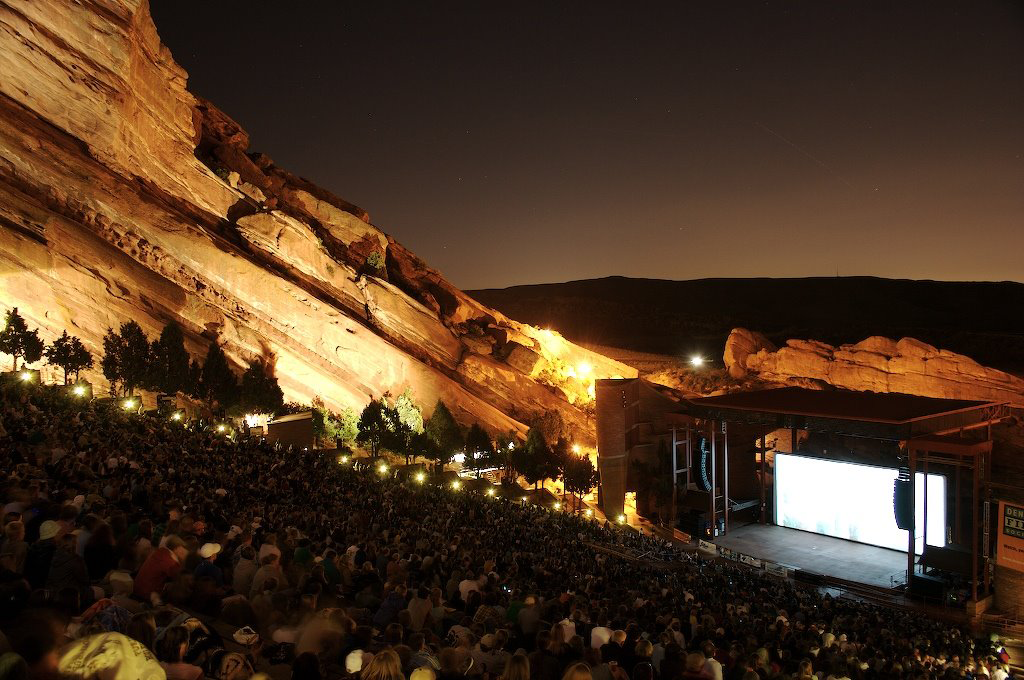
The breathtaking formations of Red Rocks Park are the result of millions of years of geological processes, primarily sedimentary deposition and subsequent uplift and erosion. The park sits atop the Morrison Formation, a Jurassic-era rock layer rich in dinosaur fossils, dating back approximately 150 million years. The iconic red sandstone, known as the Fountain Formation, was deposited during the Pennsylvanian period, around 300 million years ago. These layers were later tilted and uplifted by tectonic forces, creating the dramatic, near-vertical slabs that define the landscape. Erosion by wind, water, and ice has sculpted these uplifted layers into the distinctive monoliths and hogbacks visible today, with the amphitheatre's seating bowl naturally formed between two massive sandstone fins, 'Ship Rock' and 'Creation Rock'.
📊 Key Facts & Numbers
Red Rocks Park encompasses a substantial 659 acres, a significant portion of the larger Denver Mountain Parks system. The amphitheatre itself boasts a seating capacity of 9,525, a number that has remained relatively consistent since its construction, reflecting its intimate yet grand scale. The park's elevation ranges from approximately 6,000 to over 6,400 feet above sea level, offering stunning panoramic views of the Denver metropolitan area and the distant Rocky Mountains. Annually, the park attracts over 3 million visitors, with the amphitheatre alone hosting an average of 150-200 events per year, ranging from major music festivals to smaller community gatherings and fitness classes.
👥 Key People & Organizations
The development and ongoing management of Red Rocks Park are primarily overseen by the Denver Parks and Recreation Department, a division of the City and County of Denver. Early visionaries like Frank Lord, who championed the park's development, and architects like Bo Emmons and Hughes McGraw were instrumental in designing the amphitheatre. The Civilian Conservation Corps (CCC) provided the labor force for much of the park's infrastructure in the late 1930s, employing thousands of young men. In the music world, artists like The Beatles, Jimi Hendrix, U2, and The String Cheese Incident are indelibly linked to the venue through iconic performances documented in live albums and films, cementing its legendary status.
🌍 Cultural Impact & Influence
Red Rocks Park has transcended its natural origins to become a global icon in both music and natural history. The amphitheatre's unparalleled acoustics and stunning backdrop have made it a dream venue for musicians, with countless live albums and concert films recorded there, including U2's 'Under a Blood Red Sky' and Jimi Hendrix's 'Live at Red Rocks'. Its unique geological features have also made it a subject of scientific interest, particularly for paleontologists studying the rich fossil record of the Morrison Formation. The park's image is frequently used to represent Colorado and the American West, appearing in films, television shows, and promotional materials, solidifying its place in popular culture. The American Institute of Architects even recognized its architectural merit in 1957, selecting it for an exhibition at the National Gallery of Art.
⚡ Current State & Latest Developments
In 2024 and beyond, Red Rocks Park continues to be a vibrant hub for live entertainment and outdoor recreation. The Denver Parks and Recreation Department consistently updates its programming, offering a diverse calendar of concerts, fitness events like Yoga at Red Rocks, and educational programs. Discussions are ongoing regarding sustainable tourism practices and managing the increasing visitor numbers to minimize environmental impact. The park is also a focal point for ongoing geological research, with new fossil discoveries occasionally announced from the surrounding Morrison Formation. The venue remains a top-tier destination for touring artists, with booking requests often exceeding available dates, underscoring its enduring appeal in the global music industry.
🤔 Controversies & Debates
The primary controversy surrounding Red Rocks Park often centers on balancing its dual identity as a sacred natural space and a high-volume entertainment venue. Concerns are frequently raised about noise pollution, traffic congestion during events, and the environmental impact of large crowds on the delicate ecosystem. Some critics argue that the sheer number of concerts, particularly during peak season, can detract from the park's intended purpose as a tranquil natural retreat. Additionally, debates arise over artist selection and ticket pricing, with discussions about accessibility and ensuring a diverse range of musical genres are represented. The management of visitor access and the preservation of the geological formations against wear and tear are also ongoing points of consideration for Denver Parks and Recreation.
🔮 Future Outlook & Predictions
The future of Red Rocks Park appears poised for continued prominence, with a focus on balancing preservation and accessibility. Plans are likely to involve further investment in sustainable infrastructure, such as improved public transportation options and enhanced waste management systems, to mitigate the environmental footprint of its millions of annual visitors. Technological integration, perhaps through augmented reality experiences or enhanced digital visitor guides, could offer new ways to engage with the park's natural and historical significance. While the amphitheatre will undoubtedly continue to host major musical acts, there may be a growing emphasis on smaller, more intimate performances that complement the natural setting. The ongoing discovery of fossils in the surrounding Morrison Formation suggests that Red Rocks will remain a site of scientific importance for decades to come.
💡 Practical Applications
Red Rocks Park serves multiple practical functions beyond its role as a concert venue. Its extensive trail system, including the Trading Post Trail and the Geologic Overlook Trail, offers significant opportunities for hiking, trail running, and nature observation, attracting outdoor enthusiasts year-round. The park's unique geological features are utilized for educational purposes, with interpretive signs and guided tours explaining the formation of the sandstone monoliths and the rich paleontological history of the Morrison Formation. Furthermore, the amphitheatre's natural acoustics and dramatic setting make it a popular location for film and television shoots, as well as corporate events and private functions. The park also hosts regular fitness classes, including the highly popular Yoga at Red Rocks program, leveraging its inspiring environment for wellness activities.
Key Facts
- Category
- nature
- Type
- topic