
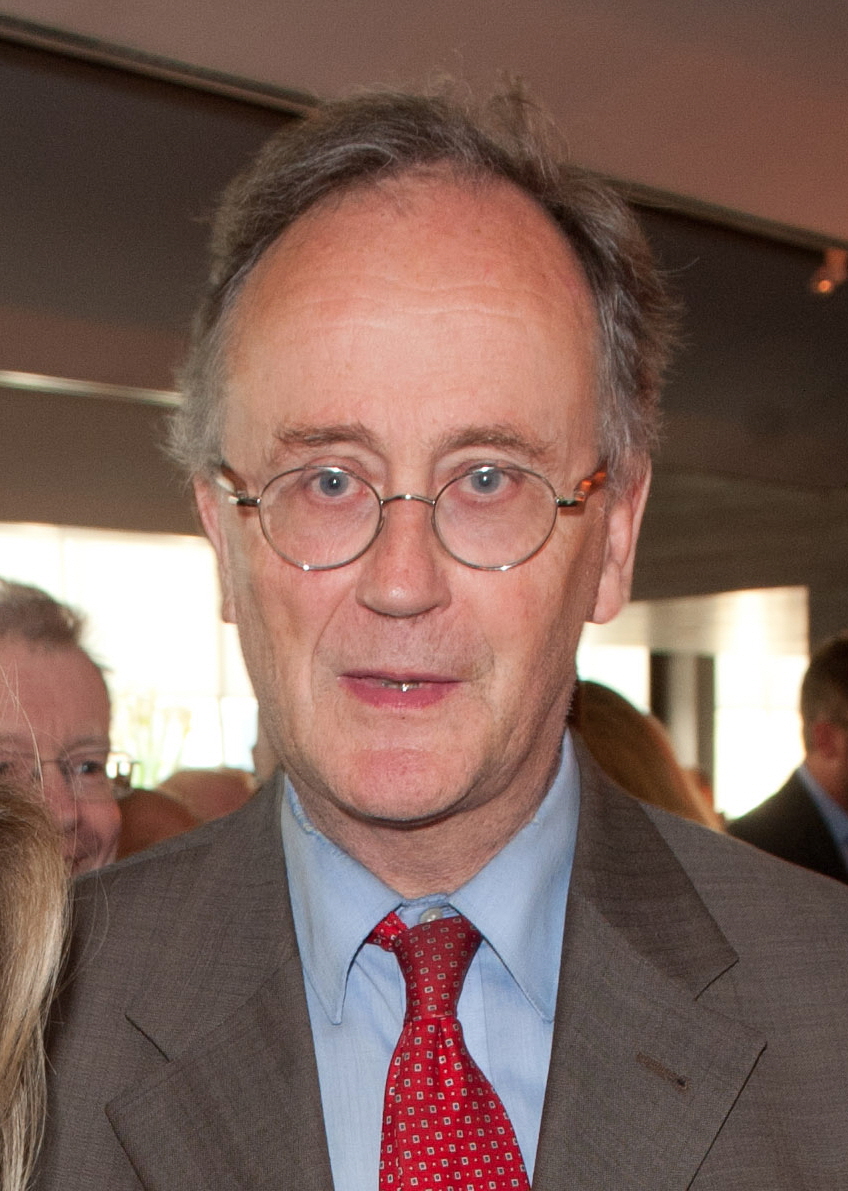
Contents
Overview
Robin Lane Fox's father was James Lane Fox and his mother was Anne Loyd. His early education took place at Eton College, a prestigious boarding school, before he matriculated at Magdalen College, Oxford. It was at Oxford that his deep engagement with classical antiquity began to flourish. He later pursued postgraduate studies, solidifying his academic foundation. He served as Garden Master at New College, Oxford and was an Extraordinary Lecturer for Exeter College. This dual focus on ancient history and horticulture has been a hallmark of his intellectual life.
⚙️ Scholarly Approach
Lane Fox's scholarly approach is characterized by its meticulous research, vivid prose, and a commitment to presenting complex historical narratives in an accessible yet rigorous manner. He is renowned for his ability to synthesize vast amounts of primary source material, including archaeological evidence and ancient texts, to reconstruct the lives and times of historical figures and societies. His work on Alexander the Great, for instance, is celebrated for its detailed exploration of the Macedonian king's military campaigns, political strategies, and personal life, drawing heavily on ancient Greek and Roman accounts. He also possesses a keen interest in the transition between paganism and Christianity in Late Antiquity, examining the social and religious dynamics of the era. His writing style often employs a narrative flair, making historical scholarship engaging for both academic and general audiences.
📊 Key Facts & Numbers
He is the gardening correspondent for the Financial Times, and his articles appear weekly, reaching an audience of millions. He is an Emeritus Fellow at New College, Oxford.
👥 Key People & Organizations
Key figures in Robin Lane Fox's life and career include his parents, James Lane Fox and Anne Loyd, and his wife, Louisa Caroline Mary Farrell. He is the father of Martha Lane Fox, a prominent figure in the UK's digital landscape and founder of Lastminute.com, and Henry Lane Fox. Academically, his mentors and colleagues at Oxford University have been instrumental in shaping his career. His academic affiliations extend to New College, Oxford, where he served for decades, and Exeter College. He has also been associated with the BBC through various historical documentary projects. His literary achievements have been recognized by bodies such as the Royal Society of Literature.
🌍 Cultural Impact & Influence
Robin Lane Fox's influence extends significantly into both academic circles and popular culture. His biography of Alexander the Great remains a foundational text for understanding the Macedonian conqueror, influencing subsequent historical interpretations and popular portrayals in films and documentaries. His ability to translate dense historical research into compelling narratives has demystified ancient history for a broad readership, fostering a wider appreciation for classical civilization. Furthermore, his regular contributions to the Financial Times have elevated the discourse on gardening, connecting horticultural practices to broader cultural and historical contexts. His dual expertise has made him a unique public intellectual, bridging the gap between scholarly pursuits and everyday interests.
⚡ Current State & Latest Developments
As of 2024, Robin Lane Fox continues to be an active emeritus fellow at New College, Oxford, contributing to the academic environment and engaging in scholarly pursuits. He remains the gardening correspondent for the Financial Times, publishing weekly articles that blend horticultural advice with historical and literary insights. His ongoing work demonstrates a sustained commitment to both historical scholarship and horticultural commentary.
🤔 Controversies & Debates
One of the primary areas of discussion surrounding Lane Fox's work, particularly his biography of Alexander the Great, revolves around the interpretation of ancient sources and the extent to which modern psychological frameworks can be applied to historical figures. Some critics have debated the degree to which Lane Fox's narrative emphasizes Alexander's heroic qualities, questioning whether it fully accounts for the destructive aspects of his conquests. Another point of discussion, though less contentious, relates to his dual career: the juxtaposition of rigorous ancient history with accessible gardening commentary sometimes raises eyebrows among those who prefer a more singular focus for intellectuals. However, many view this as a testament to his broad intellectual curiosity and unique ability to connect disparate fields.
🔮 Future Outlook & Predictions
The future trajectory for scholars like Robin Lane Fox suggests a continued emphasis on interdisciplinary approaches, blending historical analysis with insights from archaeology, environmental studies, and even digital humanities. His work on the intersection of history and gardening may inspire further explorations into the cultural significance of landscapes and human interaction with the environment across different eras. As digital archives and analytical tools become more sophisticated, future historians may build upon his foundational research with new methodologies, potentially uncovering further nuances in the lives of figures like Alexander the Great or the societal shifts of Late Antiquity. His legacy as a public intellectual who bridges academic rigor with popular appeal is likely to endure, encouraging future writers to engage with history in dynamic and multifaceted ways.
💡 Practical Applications
Robin Lane Fox's work has several practical applications and influences. His detailed historical accounts, particularly concerning military strategy and leadership in his books on Alexander the Great, can offer insights for contemporary strategic thinking, though direct application requires careful contextualization. His extensive knowledge of ancient agriculture and horticulture, gleaned from his historical research and personal passion, informs his gardening columns in the Financial Times, providing readers with historically informed perspectives on plant cultivation and garden design. Furthermore, his accessible writing style serves as a model for historical communication, demonstrating how complex academic subjects can be effectively conveyed to a wider public, thereby promoting historical literacy and engagement with the past.
Key Facts
- Category
- culture
- Type
- topic