
Contents
Overview
A suit jacket, also known as a lounge jacket or suit coat, is a tailored outer garment that forms the upper part of a man's suit. Originating in the 19th century as a more relaxed alternative to formal frock coats, it has evolved into a global symbol of professionalism, occasion-wear, and sophisticated personal expression. Its construction involves precise tailoring, often featuring a structured shoulder, lapels, and a single or double-breasted front, designed to be worn with matching trousers. The modern suit jacket exists in myriad forms, from the classic single-breasted notch lapel to the imposing double-breasted peak lapel, and is crafted from diverse materials like wool, linen, and synthetics, reflecting its adaptability across climates and social strata. With an estimated global market value in the tens of billions of dollars annually, the suit jacket remains a critical component of wardrobes worldwide, continually reinterpreted by designers and embraced by individuals seeking to project confidence and authority.
🎵 Origins & History
The suit jacket's lineage traces back to the mid-19th century, emerging from the need for less formal attire than the restrictive frock coat and morning coat. Savile Row tailors in London, particularly figures like Henry Poole, are credited with developing the lounge suit around the 1860s, intended for informal country wear and later adopted for business. This new jacket, shorter and more practical, was initially seen as a sartorial rebellion. By the early 20th century, the suit jacket, paired with matching trousers and a waistcoat, became the standard for men's daily wear across Western societies, a trend solidified by figures like King Edward VII who favored its comfort. The advent of mass production by companies like Burberry and Ralph Lauren in the later 20th century further democratized its availability, transforming it from bespoke luxury to a wardrobe staple.
⚙️ How It Works
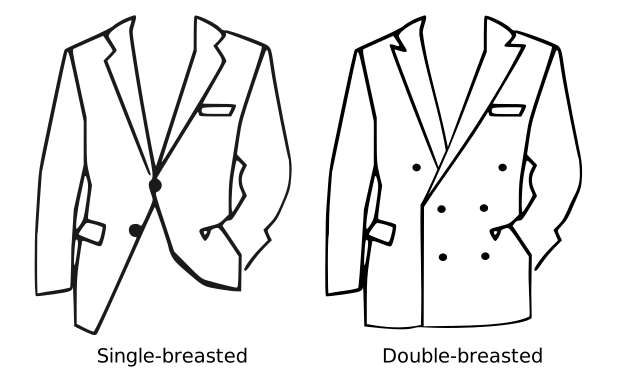
A suit jacket's functionality and aesthetic are dictated by its construction. The 'canvas' – a layer of horsehair and linen between the outer fabric and the lining – provides structure and shape to the lapels and chest, allowing the jacket to mold to the wearer's body over time. Lapels, whether notched (most common), peaked (more formal), or shawl (typically for tuxedos), are meticulously cut and sewn. The jacket's front can be single-breasted (one to three buttons, with two-button being the most versatile) or double-breasted. The sleeve is typically finished with four 'surgeon's cuffs' – functional buttons that can be unfastened, a hallmark of quality tailoring. The internal structure, including pockets and lining, is as crucial as the external appearance, ensuring both utility and comfort.
📊 Key Facts & Numbers
The global suit jacket market was valued at approximately $35 billion USD in 2023 and is projected to reach over $50 billion by 2030, indicating sustained demand. Men's formalwear, including suit jackets, constitutes a significant portion of the apparel industry. A high-quality wool suit jacket can range from $500 to $5,000+, while mass-produced options from brands like H&M or Zara can be found for under $100. The average lifespan of a well-maintained suit jacket is estimated to be 5-10 years, though fashion cycles can influence replacement rates. Approximately 80% of suit jackets sold globally are single-breasted, with the two-button configuration being the most prevalent.
👥 Key People & Organizations
Key figures in the evolution of the suit jacket include Beau Brummell, whose emphasis on impeccable tailoring in the early 19th century laid the groundwork for modern menswear. Savile Row tailors, a collective of esteemed British tailors, have consistently set standards for quality and design. Brands like Giorgio Armani revolutionized the unstructured, relaxed suit jacket in the late 20th century, while designers such as Tom Ford continue to push boundaries with sharp, modern silhouettes. Major manufacturers and retailers like Tailored Brands (owner of Men's Wearhouse) and Indochino play a significant role in making tailored suits accessible to a broader market.
🌍 Cultural Impact & Influence
The suit jacket has transcended its sartorial function to become a powerful cultural signifier. It embodies authority and competence, frequently seen in corporate environments, political arenas, and formal social gatherings. Its presence in cinema, from the sharp suits of James Bond to the more casual ensembles of characters in Mad Men, has cemented its image as a symbol of sophistication and power. The adoption of the suit jacket by various subcultures, from jazz musicians in the mid-20th century to modern streetwear enthusiasts incorporating blazers into casual looks, demonstrates its enduring adaptability and cultural resonance. Its influence extends to women's fashion, with the 'power suit' becoming a staple for professional women, pioneered by designers like Yves Saint Laurent with his 'Le Smoking' tuxedo for women.
⚡ Current State & Latest Developments
The contemporary suit jacket landscape is marked by a bifurcation between traditional tailoring and the growing influence of casualization. While bespoke and made-to-measure services continue to thrive, offering unparalleled fit and customization, the rise of 'smart casual' has led to a decline in daily suit-wearing for many. Brands are responding by offering more versatile, less structured jackets in performance fabrics and a wider range of colors and patterns. The increasing popularity of online custom suiting platforms like Indochino and Proper Cloth has democratized access to tailored garments. Furthermore, sustainability is becoming a key consideration, with a growing demand for jackets made from recycled materials and ethically sourced wool.
🤔 Controversies & Debates
One persistent debate revolves around the 'proper' way to wear a suit jacket. Should the bottom button of a two-button jacket be fastened? (The consensus among traditionalists is no). Is it acceptable to wear a suit jacket with non-matching trousers? (Increasingly yes, in the form of separates and blazers). The rise of 'athleisure' and casual work environments has also sparked controversy, with some lamenting the perceived decline of sartorial formality. Conversely, proponents argue that this shift reflects a more relaxed and inclusive society, where personal comfort and individual style take precedence over rigid dress codes. The ethical sourcing of materials and labor practices in suit jacket manufacturing also remains a point of contention, particularly concerning fast fashion brands.
🔮 Future Outlook & Predictions
The future of the suit jacket likely involves a continued blend of tradition and innovation. Expect further integration of performance fabrics, offering enhanced comfort, stretch, and wrinkle resistance, blurring the lines between formalwear and activewear. Augmented reality (AR) fitting technologies could revolutionize online custom suiting, allowing for more accurate virtual measurements. The influence of streetwear and global fashion trends will continue to shape silhouettes, potentially leading to more experimental cuts and bolder patterns. As remote work solidifies its place, the demand for 'Zoom-appropriate' jackets – comfortable for home but presentable on video calls – will likely grow. The sustainability movement will push for greater use of recycled fibers and circular manufacturing processes, potentially leading to new material innovations.
💡 Practical Applications
Suit jackets find application across a vast spectrum of professional and social contexts. In the corporate world, they are a de facto uniform for client meetings, interviews, and formal business settings, projecting professionalism and credibility. For formal events like weddings, galas, and black-tie optional occasions, a well-tailored suit jacket is indispensable. Beyond strict business attire, blazers and sport coats – often considered cousins to the suit jacket – are used to elevate casual outfits, pairing with jeans, chinos, and t-shirts. In performance arts, costume designers utilize suit jackets to define character archetypes, from the slick detective to the ambitious politician. Even in academia, particularly at conferences and lectures, suit jackets can signify a level of respect for the proceedings.
Key Facts
- Category
- aesthetics
- Type
- topic