
Contents
- 🗺️ What Are Systemic Barriers?
- 🎯 Who Needs to Navigate These Barriers?
- 💡 Key Types of Systemic Barriers
- 📈 The Impact of Systemic Barriers
- 🛠️ Strategies for Navigating Barriers
- ⚖️ Policy & Advocacy Levers
- 🤝 Community & Collective Action
- 📚 Resources for Deeper Understanding
- Frequently Asked Questions
- Related Topics
Overview
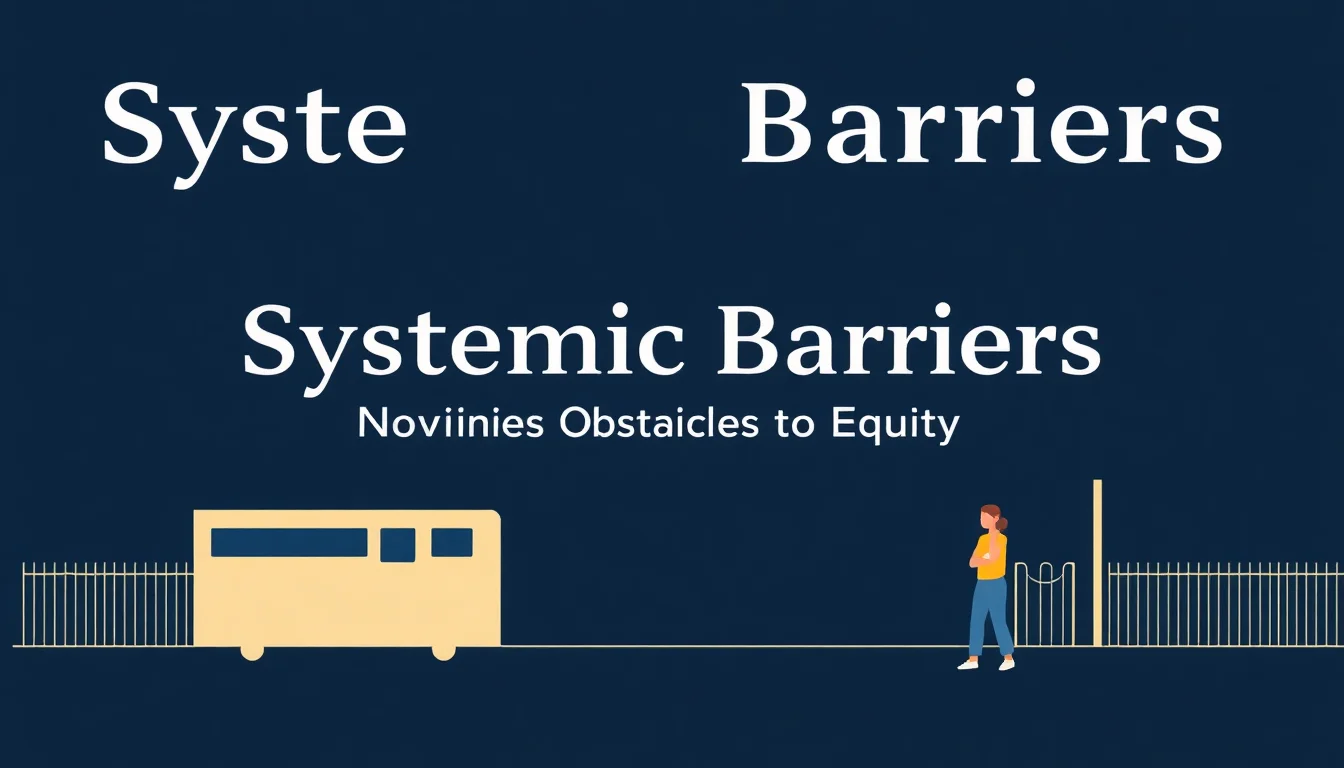
Systemic barriers are the entrenched, often invisible, obstacles embedded within the structures of society that prevent certain groups from achieving equitable outcomes. These aren't individual prejudices, but rather the cumulative effects of policies, practices, and cultural norms that create disadvantages. Think of them as the unwritten rules and ingrained systems that disproportionately hinder progress for marginalized communities, impacting everything from access to quality education to economic mobility. Understanding these barriers is the first step toward dismantling them and fostering a truly inclusive society.
💡 Key Types of Systemic Barriers
Systemic barriers manifest in various forms, often intersecting and compounding. Educational disparities can limit foundational knowledge and skills, while discriminatory housing practices can segregate communities and restrict access to resources and opportunities. Unequal access to healthcare leads to poorer health outcomes, and bias within the justice system can create cycles of incarceration and disenfranchisement. These are not isolated incidents but interconnected facets of a larger, inequitable system.
📈 The Impact of Systemic Barriers
The impact of systemic barriers is profound and far-reaching, creating significant disparities in wealth, health, education, and overall well-being. For instance, the racial wealth gap in the United States, where white households hold significantly more wealth than Black and Hispanic households, is a direct consequence of historical and ongoing systemic discrimination. These barriers limit potential, stifle innovation, and ultimately weaken the social fabric for everyone, not just those directly affected.
⚖️ Policy & Advocacy Levers
Policy and advocacy play a critical role in dismantling systemic barriers. This includes advocating for robust anti-discrimination legislation, pushing for equitable resource allocation in public services, and reforming regressive policies that perpetuate inequality. Examples include advocating for affordable housing initiatives or pushing for reforms to sentencing guidelines. Systemic change often requires legislative action and sustained political will.
🤝 Community & Collective Action
Community and collective action are powerful forces for challenging systemic barriers. Grassroots movements, mutual aid networks, and advocacy groups work to amplify marginalized voices and demand accountability from institutions. By organizing, sharing resources, and building solidarity, communities can create alternative systems and exert pressure for broader societal change. The power of collective action, as seen in the Civil Rights Movement, cannot be overstated.
📚 Resources for Deeper Understanding
To deepen your understanding of systemic barriers, explore resources like the NAACP LDF for insights into racial justice, or the NCD for information on disability rights. Academic research on intersectionality by scholars like Kimberlé Crenshaw provides a crucial framework for understanding overlapping forms of discrimination. Examining historical documents and contemporary reports from organizations like the Pew Research Center can illuminate the persistent nature of these challenges.
Key Facts
- Year
- 1960
- Origin
- The concept gained prominence in sociological and civil rights discourse, particularly from the mid-20th century onwards, as scholars and activists began to analyze the structural roots of inequality beyond individual bias. Key figures like Kenneth Clark's 'Dark Ghetto' (1965) and later work by critical race theorists and feminist scholars solidified its analytical framework.
- Category
- Social Justice & Equity
- Type
- Concept
Frequently Asked Questions
What's the difference between systemic barriers and individual prejudice?
Individual prejudice is a personal bias or discrimination held by one person against another. Systemic barriers, however, are embedded within the institutions, policies, and norms of society, creating disadvantages for entire groups. While individual prejudice can contribute to systemic issues, systemic barriers operate on a much larger, structural level, often without overt intent but with significant, predictable outcomes.
How can I identify systemic barriers in my own community or workplace?
Look for patterns of unequal outcomes. Are certain groups consistently underrepresented in leadership? Do specific communities have less access to quality education, healthcare, or housing? Examine policies and practices for unintended discriminatory effects. Data analysis, listening to affected communities, and conducting equity audits are crucial steps in identification.
Is it possible to completely eliminate systemic barriers?
Eliminating systemic barriers is an ongoing, complex process rather than a single endpoint. It requires continuous vigilance, adaptation, and a commitment to dismantling deeply ingrained structures. While complete eradication is aspirational, significant progress can be made through sustained effort in policy reform, cultural shifts, and community empowerment.
What is the role of data in understanding and addressing systemic barriers?
Data is fundamental. It provides objective evidence of disparities and helps to quantify the impact of systemic barriers. By disaggregating data by race, gender, socioeconomic status, and other relevant factors, we can pinpoint where inequities exist and track the effectiveness of interventions. Without data, efforts to address barriers can be based on assumptions rather than evidence.
How does intersectionality relate to systemic barriers?
Intersectionality, a term coined by Kimberlé Crenshaw, highlights how various social identities (like race, gender, class, sexual orientation) overlap and create unique experiences of discrimination and privilege. Systemic barriers often affect individuals differently based on their intersecting identities, meaning someone who is both a person of color and a woman may face distinct challenges not experienced by white women or men of color.