
Contents
Overview
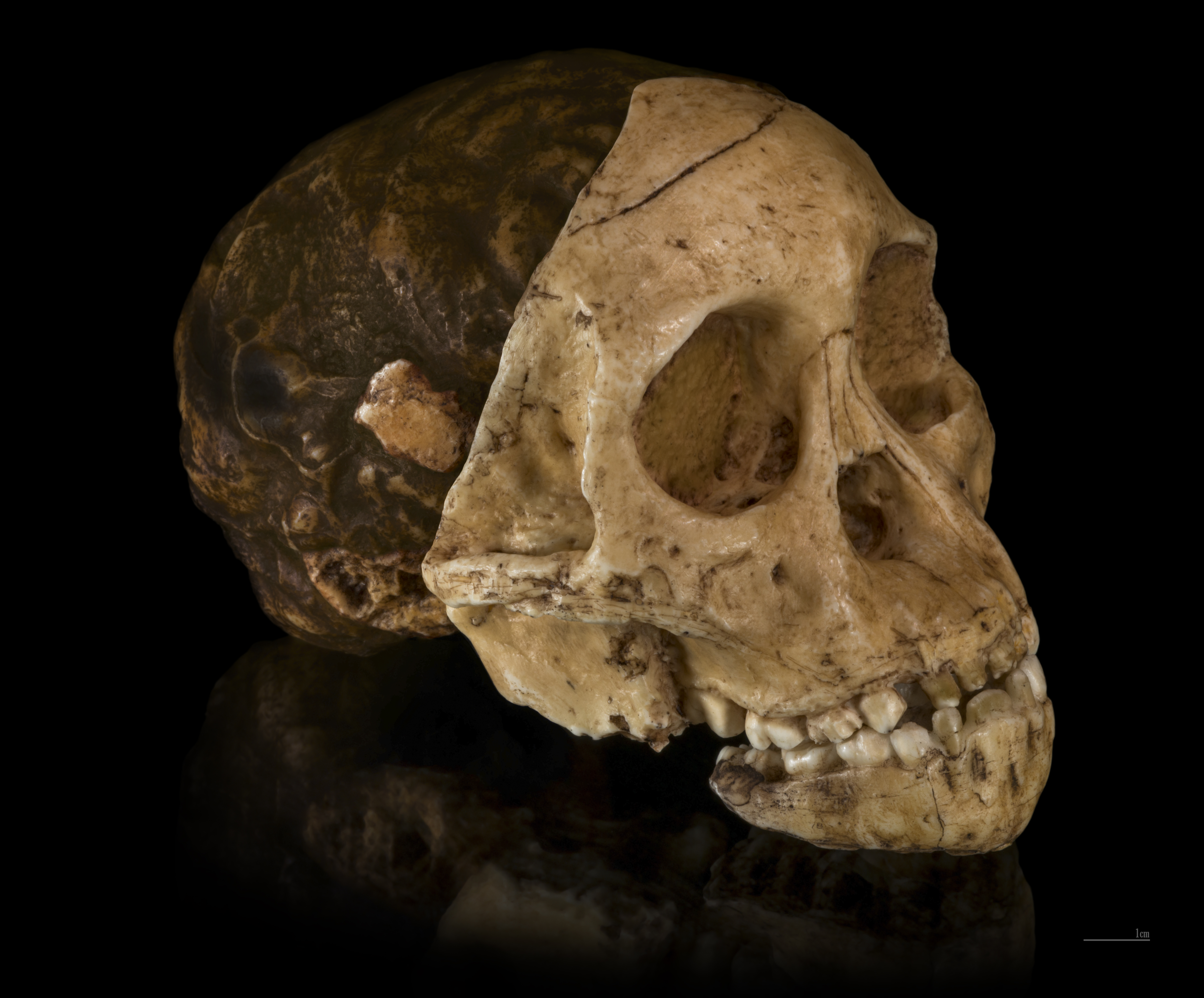
The story of the Taung Child begins in February 1924, when quarry workers at a limestone mine in Taung, South Africa, unearthed a fossilized skull. The remains were sent to Raymond Dart, a professor of anatomy at the University of the Witwatersrand in Johannesburg, who recognized its profound significance. Dart meticulously excavated the fossil, which included a near-complete skull and mandible of a juvenile hominin, along with the natural endocast of its brain. In 1925, Dart published his findings in the journal Nature, proposing the new genus and species Australopithecus africanus – meaning 'southern ape of Africa'. This was a radical departure from the prevailing scientific consensus, which favored Asia as the origin of humanity, largely due to the discovery of the Piltdown Man in England.
⚙️ How It Works
The Taung Child's significance lies not in its complex biological mechanisms, but in what its morphology reveals about early hominin development and locomotion. The skull's features, such as the position of the foramen magnum (the hole at the base of the skull where the spinal cord connects), strongly suggested bipedalism, or upright walking. This was a critical trait distinguishing early hominins from apes. Furthermore, the endocast provided insights into brain size and organization, indicating a brain size comparable to modern great apes but with a more human-like organization, particularly in the frontal lobe. The dental development also provided clues about its age at death, estimated to be around 3 to 4 years old, allowing for comparisons with modern human and ape developmental stages.
📊 Key Facts & Numbers
The Taung Child is from the Pliocene epoch. The discovery site in Taung, North West Province, South Africa, is part of the Cradle of Humankind UNESCO World Heritage Site. The Taung Child itself represents a single individual. The fossil was discovered in 1924, and its description was published in 1925, marking a critical turning point in paleoanthropology. The fossil is now housed at the University of the Witwatersrand in Johannesburg.
👥 Key People & Organizations
The primary figures associated with the Taung Child are Raymond Dart, the anatomist who discovered and described it, and the quarry workers who initially found the fossil. Dart's bold assertion of an African origin for humanity faced considerable opposition from the scientific establishment of the time, which was heavily influenced by the discovery of the Piltdown Man in England. Other key figures who later championed Dart's findings and contributed to the understanding of Australopithecus africanus include Robert Broom and Phillip Tobias. The University of the Witwatersrand remains the custodian of this invaluable specimen, and institutions like the Leakey Foundation have funded extensive research into early hominin sites across Africa.
🌍 Cultural Impact & Influence
The discovery of the Taung Child sent shockwaves through the scientific community and the public imagination, fundamentally shifting the narrative of human origins. It provided the first compelling evidence that Africa, not Europe or Asia, was the birthplace of humanity, a concept now widely accepted. This fossil became a symbol of the African continent's crucial role in human evolution, influencing subsequent generations of paleoanthropologists and sparking further exploration across Africa. Its impact extended beyond academia, appearing in countless textbooks, documentaries, and museum exhibits, solidifying its status as an icon of scientific discovery and a testament to the power of evidence-based reasoning, even when it challenges deeply held beliefs. The fossil's story is a prime example of how a single find can reshape an entire field of study.
⚡ Current State & Latest Developments
As of 2024, the Taung Child fossil remains a cornerstone of paleoanthropological research and a key exhibit at the University of the Witwatersrand. Ongoing research continues to refine its dating and analyze its morphology using advanced imaging techniques, such as CT scans, to glean further insights into its development and environment. While no new major discoveries directly related to the Taung Child have occurred recently, its significance is continually reinforced by new hominin fossil finds across Africa, such as those at Sterkfontein and Swartkrans, which further support the Australopithecus lineage and the African origin of hominins. The fossil's preservation and accessibility remain critical for comparative studies with newly discovered specimens.
🤔 Controversies & Debates
The most significant controversy surrounding the Taung Child was its initial reception by the scientific community. Raymond Dart's assertion of an African origin for humanity was met with skepticism and outright rejection by many prominent scientists, who were invested in the idea of human origins in Asia, partly due to the fraudulent Piltdown Man discovery. Critics questioned Dart's interpretation of the fossil's features, particularly its bipedalism and brain development. It took decades, and further discoveries like those made by Robert Broom at Sterkfontein, for the scientific consensus to shift and fully embrace the Taung Child's implications. Even today, debates persist regarding the precise phylogenetic placement of Australopithecus africanus within the hominin family tree and its relationship to other australopithecine species and the genus Homo.
🔮 Future Outlook & Predictions
The future of research involving the Taung Child will likely focus on leveraging cutting-edge technologies to extract even more data from this precious specimen. Advanced imaging techniques, such as synchrotron microtomography, could reveal finer details of its internal structure and developmental patterns without invasive procedures. Comparative genomics, if ancient DNA can be successfully extracted and sequenced (a significant challenge for fossils of this age), could offer unprecedented insights into its genetic makeup and evolutionary relationships. Furthermore, ongoing paleontological expeditions in South Africa and across the continent will continue to unearth new hominin fossils, providing a richer context for understanding the Taung Child's place in the complex mosaic of human evolution. The ongoing quest to pinpoint the exact timing and location of the emergence of the genus Homo will undoubtedly continue to reference the Taung Child as a critical early reference point.
💡 Practical Applications
While the Taung Child itself is a fossil and not a technology, its discovery and subsequent study have had profound practical applications in the fields of paleoanthropology, evolutionary biology, and paleontology. The methods developed by Raymond Dart and his successors for excavating, preserving, and analyzing hominin fossils are now standard practice worldwide. The study of the Taung Child's brain endocast pioneered techniques for inferring brain structure from fossilized skulls, contributing to our understanding of brain evolution. Furthermore, the fossil serves as an invaluable educational tool, illustrating key concepts of human evolution, adaptation, and the scientific process of hypothesis testing and revision, impacting curricula from primary school to university level.
Key Facts
- Category
- science
- Type
- topic