
Contents
Overview
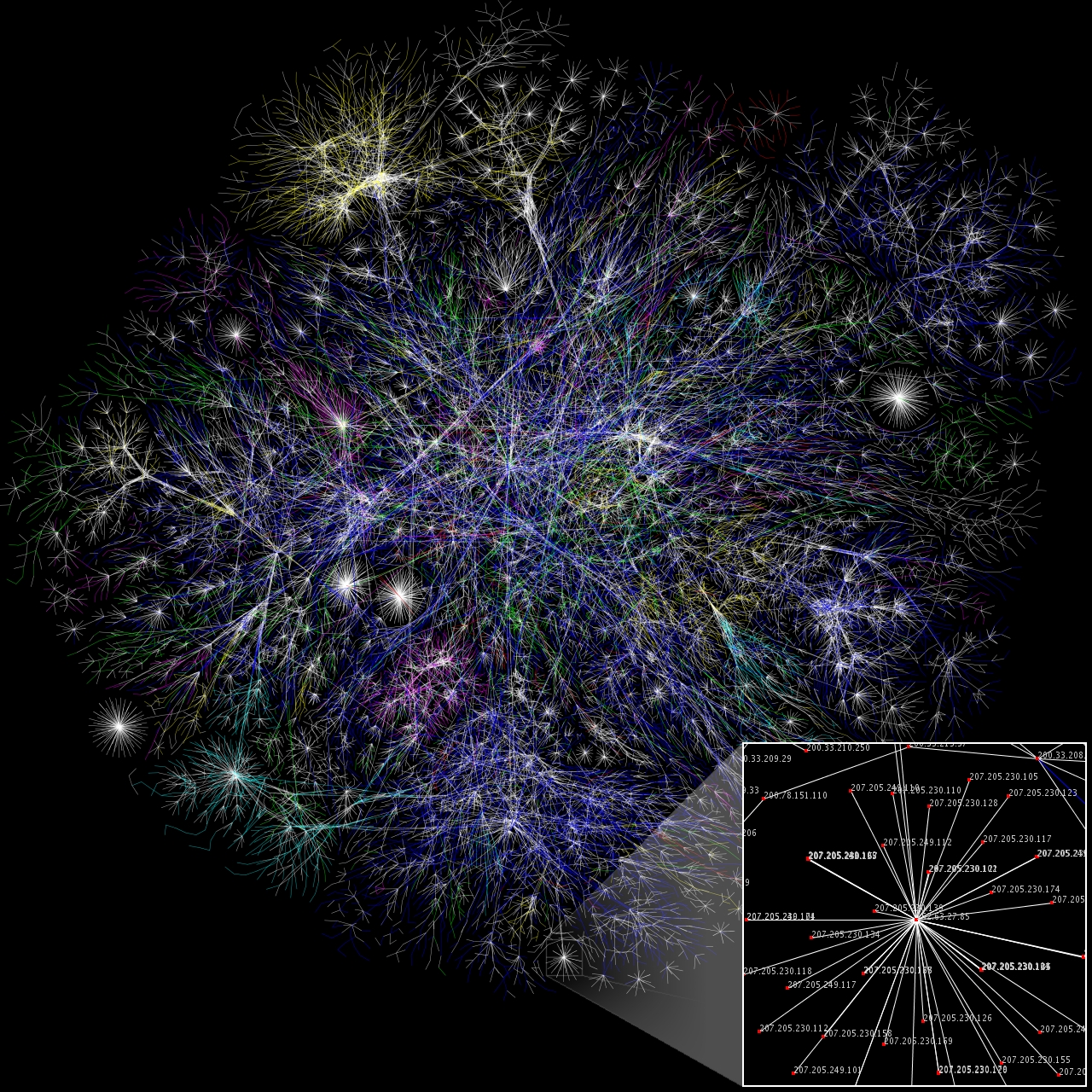
A telecommunication network is a complex system of interconnected nodes, facilitating the exchange of information through various transmission technologies like circuit, message, or packet switching. These networks, ranging from the ubiquitous Internet and PSTN to specialized satellite and 5G mobile systems, form the backbone of modern society, enabling everything from voice calls and data transfer to the Internet of Things. The scale is staggering: global internet traffic was estimated to reach over 1.5 zettabytes, a testament to the sheer volume of data traversing these digital highways. Understanding telecommunication networks involves delving into their historical evolution, the underlying engineering principles, the key players shaping their development, and the ongoing debates surrounding their future, including issues of access, security, and the relentless pursuit of faster, more efficient connectivity.
🎵 Origins & History
The genesis of telecommunication networks can be traced back to the mid-19th century with the invention of the telegraph, which allowed for near-instantaneous communication over long distances via electrical signals. This was rapidly followed by the patent for the telephone, laying the groundwork for the PSTN. Early networks were primarily point-to-point, relying on physical copper wires and manual switchboards. The mid-20th century saw the advent of digital technologies and the concept of packet switching, pioneered by figures like Paul Baran and Donald Knuth, which would prove foundational for the Internet. The subsequent development of fiber optic technology in the late 20th century dramatically increased bandwidth and speed, paving the way for the global, interconnected network we rely on today.
⚙️ How It Works
At its core, a telecommunication network functions by transmitting information, encoded as signals, between distinct points called nodes. These nodes can be anything from individual smartphones and computers to massive data centers and cell towers. The transmission occurs over various physical or wireless links, employing different switching methodologies. Circuit switching, used in traditional telephony, establishes a dedicated, continuous path for the duration of a communication. Message switching breaks data into discrete messages, which are stored and forwarded. Packet switching segments data into small packets, each containing destination and origin information, allowing them to travel independently and be reassembled at the destination. Network protocols, such as the TCP/IP suite, govern how these packets are addressed, routed, and delivered reliably across complex, multi-hop paths.
📊 Key Facts & Numbers
The sheer scale of telecommunication networks is almost incomprehensible. Global internet traffic was estimated to reach over 1.5 zettabytes. The Public Switched Telephone Network still handles billions of calls daily, though its dominance is challenged by Voice over IP services. Globally, there are over 5.3 billion internet users as of early 2024, representing approximately 66% of the world's population. The mobile telecommunications sector is even larger, with over 8.7 billion active mobile subscriptions worldwide, exceeding the global population. The infrastructure supporting these networks involves over 1.5 million miles of submarine communication cables crisscrossing the ocean floors, carrying the bulk of international data traffic.
👥 Key People & Organizations
Numerous individuals and organizations have shaped the telecommunication network landscape. Vint Cerf and Bob Kahn are widely credited as the 'fathers of the Internet' for their development of the TCP/IP protocols in the 1970s. Tim Berners-Lee invented the World Wide Web in 1989, fundamentally changing how information is accessed and shared over networks. Major telecommunication companies like AT&T, Verizon, Deutsche Telekom, and China Mobile operate vast national and international networks. Standards bodies such as the International Telecommunication Union (ITU) and the Internet Engineering Task Force (IETF) play crucial roles in developing and maintaining the protocols and standards that ensure interoperability across diverse networks.
🌍 Cultural Impact & Influence
Telecommunication networks have profoundly reshaped global society, culture, and commerce. The advent of the Internet and the World Wide Web democratized information access, enabling unprecedented global communication and collaboration. Platforms like Facebook, Twitter, and YouTube have become central to social interaction and news dissemination, creating new forms of cultural expression and community. The ability to conduct business globally via e-commerce platforms and remote work tools has transformed economies. Furthermore, telecommunication networks are critical infrastructure for emergency services, national security, and scientific research, facilitating rapid response and data sharing on a global scale. The digital divide, however, remains a significant cultural challenge, highlighting disparities in access and literacy.
⚡ Current State & Latest Developments
The telecommunication network landscape is in a constant state of flux, driven by relentless innovation. The rollout of 5G networks continues globally, promising higher speeds, lower latency, and the capacity to support a massive increase in connected devices for the Internet of Things. Research into 6G is already underway, with aspirations for even more transformative capabilities, potentially integrating AI and holographic communication. Cloud computing services from companies like AWS and Microsoft Azure are increasingly centralizing network functions and data storage. The rise of edge computing is also a significant trend, pushing processing power closer to the data source to reduce latency for applications like autonomous vehicles and real-time analytics. Cybersecurity remains a paramount concern, with ongoing efforts to defend against increasingly sophisticated threats.
🤔 Controversies & Debates
The development and deployment of telecommunication networks are fraught with debate. A major controversy revolves around the digital divide, with significant disparities in access to reliable and affordable broadband internet, particularly between urban and rural areas, and between developed and developing nations. Net neutrality, the principle that Internet service providers should treat all data equally, has been a contentious issue, with ongoing legal and regulatory battles in various countries. Concerns about data privacy and surveillance, amplified by the vast amounts of personal data traversing these networks, are also subjects of intense public and governmental scrutiny. The environmental impact of massive data centers and network infrastructure, particularly their energy consumption, is another growing area of concern.
🔮 Future Outlook & Predictions
The future of telecommunication networks points towards even greater integration and intelligence. Artificial intelligence is expected to play a pivotal role in network management, optimization, and security, enabling self-healing and self-configuring networks. The expansion of satellite internet constellations, such as Starlink, aims to provide global broadband coverage, potentially bridging the digital divide. Quantum communication, leveraging principles of quantum mechanics for secure data transmission, is an emerging frontier, promising unhackable networks. The convergence of telecommunications with other technologies, like virtual reality and augmented reality, will likely create new immersive experiences and applications. The ongoing evolution towards Software-Defined Networking (SDN) and Network Function Virtualization (NFV) will continue to make networks more flexible and programmable.
💡 Practical Applications
Telecommunication networks are the invisible infrastructure underpinning countless modern applications. They ena
Key Facts
- Category
- technology
- Type
- topic