
Contents
Overview
The spark for the Third Crusade ignited in 1187 with Saladin's decisive victory at the Battle of Hattin and his subsequent recapture of Jerusalem, an event that sent shockwaves through Christian Europe. This loss represented a catastrophic blow to the Crusader states, which had been established during the First Crusade nearly a century prior. The unified Ayyubid Sultanate, forged by Saladin from Egypt and Syria, posed an existential threat to the remaining Crusader territories. In response, Pope Gregory VIII issued the papal bull Audita tremendi, calling for a new crusade. This call resonated with the most powerful monarchs of the era: Emperor Frederick I of the Holy Roman Empire, King Philip II of France, and King Richard I of England, who each pledged to lead their own contingents, earning the crusade its moniker. The initial momentum was further bolstered by the capture of Acre in 1189 by local Crusader forces and Genoese/Pisan fleets, providing a crucial staging ground for the arriving royal armies.
⚙️ How It Worked: The Grand Strategy
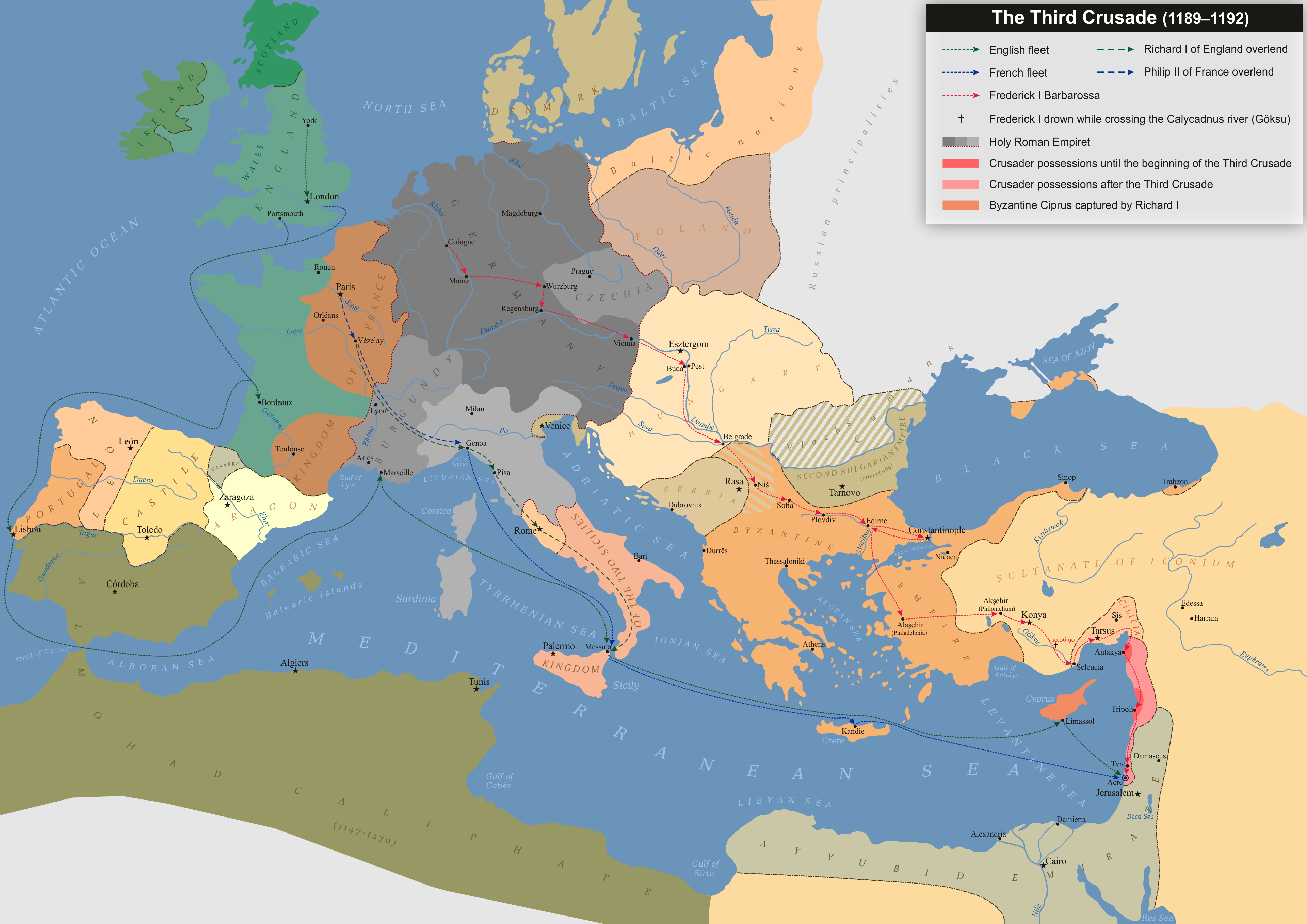
The operational strategy of the Third Crusade was ambitious, relying on the coordinated efforts of three massive, independently led European armies converging on the Holy Land. Emperor Frederick Barbarossa's massive German contingent aimed to march overland through the Byzantine Empire and Anatolia, a route fraught with peril. Kings Richard I and Philip II, meanwhile, sailed their forces directly to the Levant. The primary objective was the recapture of Jerusalem, but securing key coastal cities like Acre and Jaffa was deemed essential for maintaining supply lines and establishing a base of operations. The crusaders employed sophisticated siege warfare techniques, particularly at Acre, utilizing siege engines and naval blockades. After initial successes, the crusade devolved into a complex series of battles and negotiations, often hampered by the rivalries between the European leaders and the strategic brilliance of Saladin's forces.
📊 Key Facts & Numbers
The Third Crusade involved an estimated 100,000 to 200,000 combatants across all contingents, making it one of the largest military undertakings of the Middle Ages. The cost was astronomical, with England alone raising approximately £30,000 (around £10-15 billion in modern terms) through taxes and the sale of royal lands to fund Richard I's participation. The siege of Acre lasted for over two years, from August 1189 to July 1191, resulting in tens of thousands of casualties on both sides. Saladin's army, while smaller, was highly mobile and adept at hit-and-run tactics, often numbering around 20,000-30,000 men. The Treaty of Jaffa, signed in September 1192, allowed unarmed Christian pilgrims access to Jerusalem, a concession that represented a partial fulfillment of the crusade's aims, though Jerusalem itself remained under Ayyubid control. The crusade officially concluded with the departure of the last Crusader forces in late 1192.
👥 Key People & Organizations
The central figures of the Third Crusade were its royal leaders: Emperor Frederick I (who tragically drowned in the Saleph River in 1190, significantly weakening the German contingent), King Philip II of France (who returned to Europe early in 1191 due to illness and political concerns), and King Richard I of England, often called 'Richard the Lionheart' for his battlefield prowess. Opposing them was the brilliant Ayyubid sultan Saladin, whose unification of Muslim forces and strategic acumen were instrumental in his successes. Other key figures included Guy of Lusignan, the deposed King of Jerusalem, and various military orders like the Knights Templar and Knights Hospitaller, whose knights formed the backbone of the Crusader armies. The papacy, represented by Popes Gregory VIII and Clement III, played a crucial role in initiating and organizing the crusade.
🌍 Cultural Impact & Influence
The Third Crusade had a profound and lasting impact on the cultural and political landscape of both Europe and the Middle East. It cemented the legendary status of Richard I in European folklore as a chivalrous warrior, inspiring countless tales and ballads. Conversely, Saladin became a revered figure in the Islamic world, celebrated for his piety, justice, and successful defense against the invaders. The crusade also highlighted the growing power and ambition of European monarchs, who could now mobilize resources and manpower on an unprecedented scale. The failure to recapture Jerusalem, however, fueled a sense of disillusionment in some quarters while simultaneously spurring further crusading efforts in the centuries to come. The complex interactions between Christian and Muslim leaders during the crusade, particularly the negotiations between Richard and Saladin, also fostered a degree of mutual respect amidst the conflict, influencing diplomatic practices.
⚡ Current State & Latest Developments
While the Third Crusade concluded in 1192, its legacy continues to resonate. The strategic importance of the Levant and the ongoing religious and political tensions between Christian and Muslim powers remained a defining feature of medieval and early modern history. The military innovations and logistical challenges encountered during the crusade informed subsequent military campaigns. In contemporary times, the narrative of the Third Crusade is often invoked in discussions about interfaith relations, geopolitical conflicts in the Middle East, and the enduring power of historical memory. Modern archaeological efforts continue to shed light on the battle sites and fortifications from this era, offering tangible connections to the events of 1189-1192.
🤔 Controversies & Debates
The Third Crusade is fraught with controversy, primarily concerning the motivations and conduct of its leaders. The intense rivalry between Richard I and Philip II of France is well-documented, with Philip's early departure often viewed as a betrayal of the common cause. The decision by Richard I to execute thousands of Muslim prisoners at Acre after Saladin failed to meet ransom demands remains a particularly contentious point, highlighting the brutal realities of medieval warfare and raising ethical questions about proportionality and mercy. Furthermore, the extent to which religious zeal drove the crusade versus political and economic ambitions of the monarchs is a subject of ongoing historical debate. Some historians argue that the crusade was as much about asserting royal authority and securing prestige as it was about liberating holy sites.
🔮 Future Outlook & Predictions
The future outlook for the Third Crusade's historical narrative involves continued scholarly re-evaluation, particularly concerning the perspectives of non-European participants and the long-term consequences for the region. Future research may focus on the economic impacts of the crusade on participating kingdoms, the role of maritime powers like Venice and Genoa in supplying and transporting troops, and the cultural exchange that occurred between Crusaders and local populations. The enduring mythos of figures like Richard the Lionheart and Saladin ensures their continued presence in popular culture, suggesting that the fascination with this pivotal historical event will persist. The potential for new archaeological discoveries at sites like Acre and Arsuf also promises to refine our understanding of the military tactics and daily life during the crusade.
💡 Practical Applications
While the Third Crusade itself is a historical event, its principles and outcomes offer insights into broader strategic and diplomatic concepts. The importance of securing logistical bases, as demonstrated by the focus on Acre and Jaffa, remains a fundamental principle in military operations. The challenges of coordinating multinational forces with competing interests, a hallmark of the Third Crusade, continue to be relevant in modern coalition warfare. Furthermore, the treaty negotiations between Richard I and Saladin, though ultimately temporary, offer a case study in high-stakes diplomacy between adversaries, demonstrating the potential for pragmatic agreements even amidst profound conflict. The concept of 'just war' and the ethical considerations surrounding military actions, debated implicitly during the crusade, remain central to international relations and military ethics.
Key Facts
- Category
- history
- Type
- topic