
Contents
- 🎯 What is Total Cost of Ownership (TCO)?
- 🤔 Who Needs to Understand TCO?
- 📈 The Core Components of TCO
- 💡 Beyond the Sticker Price: Hidden Costs
- ⚖️ TCO vs. Initial Purchase Price
- 🛠️ TCO in Action: Practical Examples
- 📉 The Downsides and Criticisms of TCO
- 🚀 The Future of TCO Analysis
- 📚 Further Reading & Resources
- 📞 Get Started with TCO
- Frequently Asked Questions
- Related Topics
Overview
Total Cost of Ownership (TCO) is a rigorous financial methodology designed to unmask the hidden lifecycle costs of an asset, moving beyond the deceptive simplicity of the 'sticker price.' Originally popularized by Bill Kirwin at Gartner in 1987 to analyze the true burden of IT infrastructure, TCO forces a reckoning with maintenance, depreciation, training, and disposal costs that often dwarf the initial capital outlay. In the modern era, TCO has evolved from a corporate procurement tool into a weapon for consumer advocacy, particularly in the electric vehicle (EV) and SaaS sectors where operational overhead defines long-term viability. By quantifying the 'unseen'—such as the opportunity cost of downtime or the environmental tax of decommissioning—TCO transforms a simple purchase into a strategic commitment. It serves as the ultimate reality check for any entity attempting to balance short-term liquidity against long-term solvency.
🎯 What is Total Cost of Ownership (TCO)?
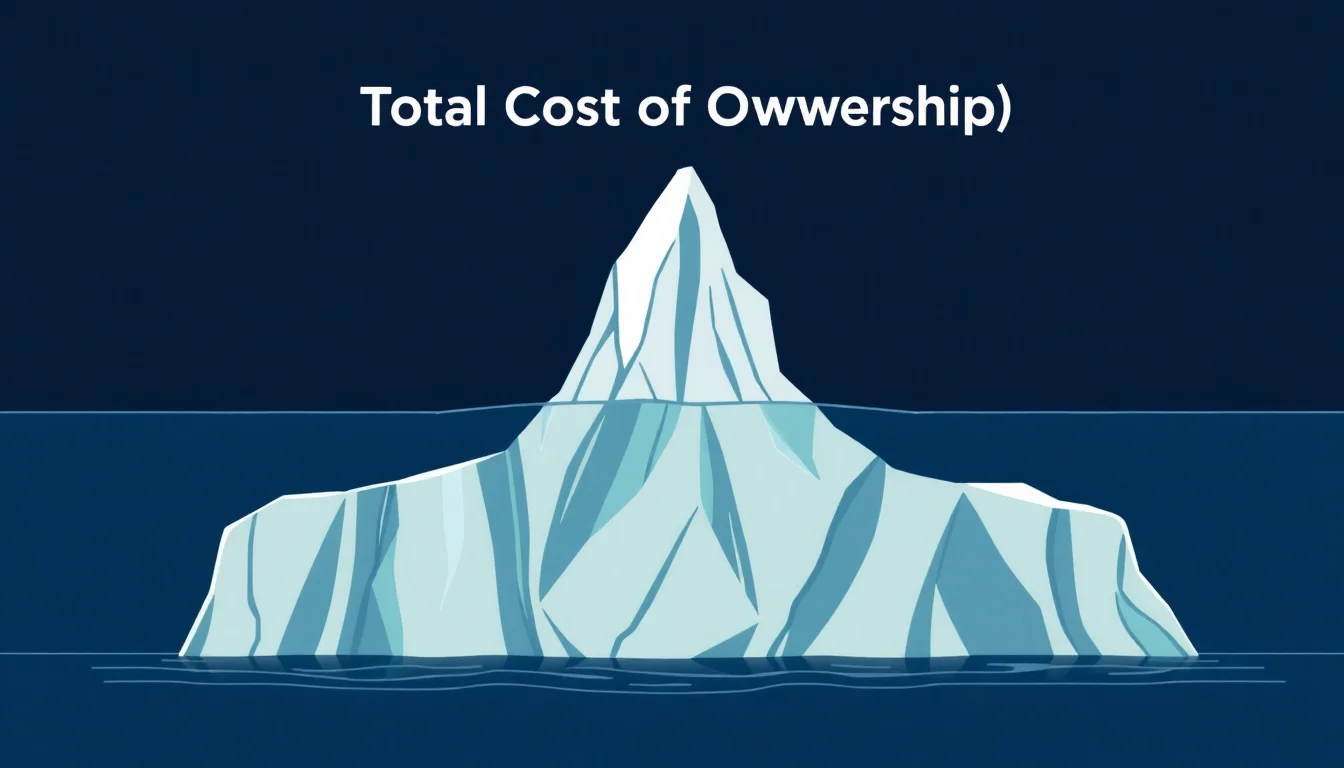
Total Cost of Ownership (TCO) is a financial framework that moves beyond the initial purchase price to encompass all direct and indirect costs associated with acquiring, using, and disposing of an asset or service over its entire lifecycle. Think of it as the true, long-term financial reality of owning something, not just the upfront transaction. This methodology is crucial for making informed decisions, whether you're a business procuring new equipment or an individual buying a car. It forces a comprehensive view, acknowledging that the acquisition cost is often just the tip of the iceberg in the overall financial commitment. Understanding TCO helps prevent costly surprises down the line and promotes more strategic asset management.
🤔 Who Needs to Understand TCO?
Anyone making a significant purchase or investment can benefit from TCO analysis, but it's particularly vital for business procurement and IT asset management. For businesses, TCO is indispensable when comparing vendors for software, hardware, or fleet vehicles, as it directly impacts operational budgets and profitability. For individuals, it's a powerful tool for major life purchases like real estate or automobiles. Essentially, if an item or service will incur ongoing expenses beyond its initial acquisition, TCO provides the clarity needed for sound financial planning and risk mitigation. It’s about understanding the full financial picture before committing.
📈 The Core Components of TCO
The core components of TCO typically include: acquisition costs (purchase price, taxes, shipping), operating costs (energy, consumables, labor), maintenance and repair costs (scheduled servicing, unexpected breakdowns), and disposal costs (decommissioning, recycling, resale value). Some advanced TCO models, particularly in sustainability accounting, also incorporate environmental externalities and social impact costs. The goal is to quantify every dollar spent, from the moment of acquisition through to the final exit from service. This granular approach is what distinguishes TCO from simpler cost-tracking methods.
⚖️ TCO vs. Initial Purchase Price
Comparing TCO to the initial purchase price is like comparing a single snapshot to a full documentary. The initial purchase price is a one-time outlay, a point-in-time cost. TCO, however, is a dynamic, multi-year calculation that accounts for the entire lifespan of an asset. A product with a higher initial price might have a lower TCO due to superior energy efficiency, durability, or lower maintenance requirements. Conversely, a cheaper initial purchase could lead to a much higher TCO through frequent repairs, high operating costs, and a shorter useful life. This distinction is fundamental for strategic sourcing and long-term financial planning.
🛠️ TCO in Action: Practical Examples
Consider a business evaluating two cloud computing providers. Provider A offers a lower upfront setup fee but higher monthly data transfer charges and less robust customer support. Provider B has a higher initial migration cost but offers predictable monthly fees, free data transfer within certain limits, and 24/7 premium support. A TCO analysis over three years would likely reveal Provider B as the more cost-effective choice, despite its higher initial outlay, by factoring in all operational and support expenses. Similarly, when buying a car, a slightly more expensive hybrid might have a lower TCO than a cheaper gasoline model due to significant savings on fuel costs and potentially lower maintenance bills.
📉 The Downsides and Criticisms of TCO
Despite its utility, TCO isn't without its critics. A primary concern is the difficulty in accurately predicting future costs, especially for maintenance and repair over long asset lifespans. Technological obsolescence can also render an asset's TCO calculation moot if it's replaced prematurely. Furthermore, the complexity of TCO analysis can be daunting, requiring significant data collection and analytical expertise. Some argue that the focus on quantifiable costs can overshadow qualitative benefits like brand reputation or employee morale, which are harder to price. The accuracy of TCO heavily relies on the quality and completeness of the data fed into the model.
🚀 The Future of TCO Analysis
The future of TCO analysis is increasingly intertwined with digital transformation and data analytics. We're seeing more sophisticated predictive modeling powered by AI and machine learning to forecast maintenance needs and operational costs with greater accuracy. The integration of Internet of Things (IoT) devices allows for real-time tracking of asset performance and consumption, feeding directly into TCO calculations. Furthermore, the growing emphasis on Environmental, Social, and Governance (ESG) factors means TCO models are expanding to include more comprehensive sustainability metrics, reflecting a broader understanding of true cost and value. This evolution promises more robust and insightful financial decision-making.
📚 Further Reading & Resources
For those looking to deepen their understanding of TCO, exploring resources on management accounting and financial modeling is essential. Academic journals often publish research on TCO applications in specific industries. For practical guidance, look for white papers and case studies from procurement software vendors and asset management consultancies. Understanding related concepts like lifecycle costing and return on investment (ROI) will also provide a more complete picture of strategic financial evaluation. Vibepedia's own knowledge graph offers extensive connections to these related fields.
📞 Get Started with TCO
To begin applying TCO principles, start by identifying the asset or service you're evaluating and its expected useful life. Gather data on all known costs associated with acquisition, operation, maintenance, and eventual disposal. For ongoing costs, use historical data or industry benchmarks. If you're a business, consider implementing procurement software that can help automate TCO calculations. For personal decisions, a detailed spreadsheet can be a powerful starting point. Don't hesitate to consult with financial analysts or industry experts if the complexity warrants it. The key is to start quantifying, even if initial estimates aren't perfect.
Key Facts
- Year
- 1987
- Origin
- Gartner Group / Bill Kirwin
- Category
- Economic Systems & Decision Science
- Type
- Analytical Framework
Frequently Asked Questions
What is the most common mistake people make when calculating TCO?
The most frequent error is underestimating or completely ignoring indirect and ongoing costs. People often fixate on the initial purchase price, neglecting expenses like energy consumption, routine maintenance, software subscriptions, training, and eventual disposal fees. This leads to a significantly skewed and inaccurate TCO figure, often resulting in budget overruns and financial surprises. A comprehensive TCO requires diligent tracking of every cost category throughout the asset's lifespan.
How does TCO differ from ROI?
Total Cost of Ownership (TCO) focuses on the total expenses incurred over an asset's life, aiming to understand the full financial burden. Return on Investment (ROI), on the other hand, measures the profitability of an investment by comparing the net profit generated to the cost of the investment. While TCO tells you 'how much it costs to own,' ROI tells you 'how much you gain relative to what you spent.' They are complementary metrics; a low TCO can contribute to a high ROI, but they measure different aspects of financial performance.
Can TCO be applied to services, not just physical assets?
Absolutely. TCO is highly applicable to services. For instance, when evaluating outsourcing options, TCO would include not just the vendor's quoted price but also costs related to vendor management, integration, training for internal staff interacting with the service, potential downtime or service interruptions, and contractual renewal fees. It helps compare different service providers or internal vs. external service delivery models by looking at the complete financial picture over time.
What role does depreciation play in TCO?
Depreciation is a significant factor, particularly when calculating TCO for tax purposes or when considering the resale value of an asset. While depreciation itself is an accounting concept representing the loss of value, it directly impacts the net cost of ownership. A rapidly depreciating asset might have a higher effective TCO if its resale value is low, meaning more of its initial cost is effectively 'lost' over its life. It's often factored into the disposal cost component or considered as an opportunity cost.
How can TCO help with sustainability initiatives?
TCO can be a powerful driver for sustainable procurement. By including costs like energy consumption, waste disposal, and emissions in the TCO calculation, more environmentally friendly options often emerge as more cost-effective over the long term. For example, an energy-efficient machine might have a higher upfront cost but a lower TCO due to reduced electricity bills and potentially lower carbon taxes or regulatory compliance costs. This aligns financial incentives with environmental goals.
Is TCO analysis only for large corporations?
Not at all. While large corporations often have dedicated teams for TCO analysis, the principles are accessible to individuals and small businesses. For personal finance, it's invaluable for major purchases like cars or homes. Small businesses can use TCO to compare software solutions, office equipment, or fleet vehicles. The complexity of the analysis scales with the size and nature of the purchase, but the core concept of looking beyond the sticker price is universally beneficial.