
Contents
Overview
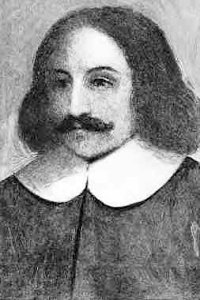
William Bradford (c. 19 March 1590 – 9 May 1657) was a pivotal figure in the early history of British North America, best known for his leadership in the Plymouth Colony. Born in Yorkshire, England, he was a devout Separatist who fled religious persecution, first to Leiden in the Dutch Republic, and then aboard the Mayflower in 1620 to establish a new life in the Plymouth Colony. As a signatory of the Mayflower Compact, he played a crucial role in shaping the colony's governance. Bradford served as Governor of Plymouth Colony for approximately 30 years, intermittently between 1621 and his death in 1657, navigating the immense challenges of survival, diplomacy with Native American tribes like the Wampanoag, and the internal development of the fledgling settlement. His enduring legacy is cemented by his detailed historical account, "Of Plymouth Plantation," which provides an invaluable first-hand perspective on the Pilgrims' journey and early colonial life.
🎵 Origins & History
William Bradford's story begins not in the New World, but in Yorkshire, England, around March 19, 1590. From a young age, he was drawn to the radical ideas of the Puritan separatists, who believed the Church of England was irredeemably corrupt and sought to worship independently. This conviction led him, as a teenager, to join a clandestine congregation that eventually fled to Leiden, Dutch Republic, around 1609 to escape the persecution under King James I. In Leiden, Bradford honed his skills as a wool merchant and married Dorothy May. The desire for religious freedom, coupled with concerns about their children assimilating into Dutch society, spurred the decision to join the Pilgrims on their voyage to establish a new colony. The departure from Delftshaven in 1620 aboard the Mayflower marked the beginning of a new chapter, one that would see Bradford become a central architect of the Plymouth Colony.
⚙️ How It Works
Bradford's role as governor was less about executive decree and more about consensus-building and pragmatic leadership in an environment where every decision carried life-or-death weight. His governance was characterized by a deep commitment to the Separatist faith and the principles of the Mayflower Compact, which established a form of self-government based on majority rule. He was instrumental in managing the colony's affairs, including the critical distribution of land and resources, the establishment of laws, and the often-delicate diplomacy with the indigenous Wampanoag tribe, notably with leaders like Massasoit. His leadership extended to overseeing the colony's economic activities, primarily agriculture and trade, and ensuring its spiritual well-being through the establishment of a church. The success of Plymouth, however precarious, was a testament to his steady hand and his ability to foster cooperation among a diverse group of settlers, often referred to as Pilgrims and 'Strangers'.
📊 Key Facts & Numbers
Bradford's tenure as governor, spanning roughly 30 years between 1621 and 1657, saw the Plymouth Colony grow from a mere 52 survivors of the initial Mayflower landing to a population estimated at around 2,000 by the time of his death. He was elected governor 13 times, serving almost continuously, with only brief intermissions. His seminal work, "Of Plymouth Plantation," meticulously documented the colony's history from 1620 to 1646, offering insights into daily life, governance, and significant events such as the first Thanksgiving in 1621. The colony's population grew at an average rate of approximately 5% per year during its formative decades. By 1650, Plymouth Colony was a recognized entity within the larger framework of New England, contributing to the formation of the United Colonies of New England in 1643, where Bradford also served as a commissioner.
👥 Key People & Organizations
William Bradford's life was deeply intertwined with several key individuals and organizations. His first wife, Dorothy May, tragically drowned shortly after the Mayflower's arrival in 1620. He later married Alice Carpenter, with whom he had several children, including John Bradford, who also played a role in colonial affairs. His religious convictions were shaped by figures like John Robinson, the pastor of the Leiden congregation. In Plymouth, he worked closely with fellow leaders such as William Brewster, the colony's elder, and Myles Standish, its military captain. The Plymouth Colony itself, and later the United Colonies of New England, were the primary organizational structures he navigated and led. His writings were also influenced by his reading of historical accounts, including those of Edward Winslow, another prominent Pilgrim leader.
🌍 Cultural Impact & Influence
Bradford's influence extends far beyond the geographical confines of Plymouth. His journal, "Of Plymouth Plantation," became a foundational text for understanding early American history, shaping national narratives about the Pilgrims and their quest for religious freedom. This narrative, though later subject to critical re-evaluation, established enduring images of the Pilgrims as hardy pioneers driven by faith. The principles of self-governance articulated in the Mayflower Compact, which Bradford helped draft and uphold, are seen as a precursor to later American democratic ideals. His writings have been studied by countless historians, including William Byrd II and Thomas Jefferson, influencing their understanding of colonial origins. The very concept of the "Pilgrim Fathers" as a distinct, foundational group owes much to Bradford's chronicling.
⚡ Current State & Latest Developments
While William Bradford himself is a figure of the 17th century, the legacy of his work and the Plymouth Colony continues to be a subject of historical and cultural interest. Modern scholarship, utilizing archaeological findings and re-examining primary sources, offers new perspectives on the colony's interactions with indigenous peoples and the complexities of its social structure. The Plimoth Patuxet Museums in Massachusetts actively works to interpret and present the history of the Plymouth Colony and the Wampanoag people, often drawing on the details found in Bradford's writings. Ongoing debates about the historical accuracy and biases within "Of Plymouth Plantation" reflect the evolving nature of historical interpretation in the 21st century, ensuring Bradford's work remains relevant to contemporary discussions about American identity and origins.
🤔 Controversies & Debates
The primary controversy surrounding William Bradford centers on the interpretation of his historical account, "Of Plymouth Plantation." While long revered as an objective record, modern historians increasingly scrutinize it for its colonial perspective and the often-unflattering portrayal of Native Americans. Critics point to instances where Bradford frames interactions with indigenous tribes primarily through the lens of perceived savagery or divine judgment, particularly in his accounts of conflicts like King Philip's War (though this occurred after his death, his writings laid groundwork for later attitudes). Furthermore, the narrative often emphasizes the Pilgrims' divine mission, potentially downplaying the violence, dispossession, and disease that accompanied European colonization. Debates also arise regarding the extent to which Bradford's personal biases and religious fervor shaped his historical narrative, making it a complex document rather than a simple factual report.
🔮 Future Outlook & Predictions
The future relevance of William Bradford lies in the continued scholarly and public engagement with "Of Plymouth Plantation" and the broader narrative of the Plymouth Colony. As historical methodologies evolve, new interpretations of Bradford's text will undoubtedly emerge, offering deeper insights into the social, political, and religious dynamics of 17th-century New England. The ongoing work of institutions like the Plimoth Patuxet Museums suggests a future where the history of Plymouth is presented with greater nuance, incorporating the perspectives of all peoples involved, including the Wampanoag. Furthermore, as discussions about religious freedom and the separation of church and state continue, Bradford's role as a leader of a separatist movement seeking refuge will likely remain a point of reference, albeit one viewed through a more critical historical lens.
💡 Practical Applications
The most significant 'practical application' of William Bradford's life and work is his historical documentation. "Of Plymouth Plantation" serves as an unparalleled primary source for understanding the motivations, challenges, and daily realities of the Mayflower passengers and the early years of the Plymouth Colony. Historians, genealogists, and educators utilize his writings to reconstruct the past, study ea
Key Facts
- Category
- history
- Type
- topic