
Contents
Overview
The Yoga Sutras of Patañjali is a seminal Sanskrit text, compiled in ancient India around the 2nd century CE, that serves as the bedrock of classical yoga philosophy. Attributed to the sage Patañjali, it comprises 195 aphorisms (sutras) that systematically outline the path to yogic liberation, known as kaivalya. Drawing from existing traditions like Samkhya and early Buddhist thought, Patañjali organized and synthesized existing knowledge on yoga, presenting a practical framework for mental discipline and spiritual realization. The text's enduring influence is evident in its widespread study and application across diverse yoga lineages worldwide, making it one of the most significant philosophical works originating from the Indian subcontinent.
🎵 Origins & History
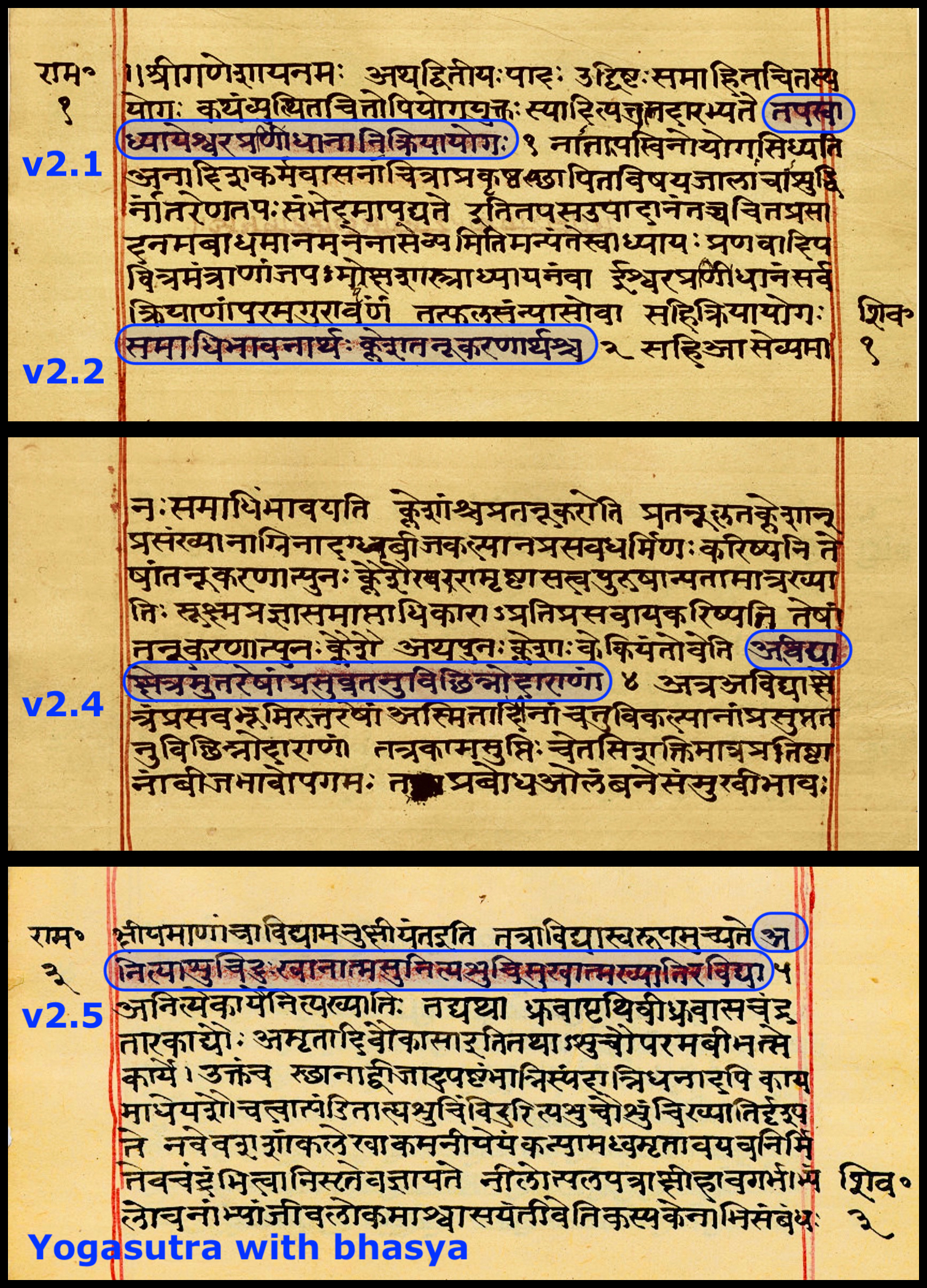
The Yoga Sutras may have undergone revisions or additions by later compilers, particularly the fourth chapter, Kaivalya Pada. The earliest known commentary, the Yogabhashya, is traditionally attributed to Vyasa, though its authorship is also debated. This foundational text emerged from a rich tapestry of Indian ascetic and speculative traditions, aiming to provide a coherent system for spiritual development.
⚙️ How It Works
The core of the practice is outlined in the Ashtanga Yoga (Eight Limbs of Yoga): Yama (ethical restraints), Niyama (observances), Asana (posture), Pranayama (breath control), Pratyahara (withdrawal of the senses), Dharana (concentration), Dhyana (meditation), and Samadhi (absorption). The text emphasizes the control of citta (consciousness) through abhyasa (practice) and vairagya (non-attachment) to overcome the fluctuations of the mind and achieve the state of kaivalya, or absolute freedom.
📊 Key Facts & Numbers
The Yoga Sutras consist of 195 aphorisms, though some traditions, like those following B.K.S. Iyengar, count 196. The text is primarily written in Sanskrit, an ancient Indo-Aryan language. The earliest manuscripts date to around the 14th century CE, but the text's oral transmission likely predates this by over a millennium. The Yogabhashya, the earliest commentary, is estimated to be from the 4th or 5th century CE. Hundreds of commentaries have been written, with estimates suggesting over 30 distinct commentaries exist, highlighting the text's enduring scholarly interest and practical relevance.
👥 Key People & Organizations
The primary figure associated with the Yoga Sutras is Patañjali, the sage credited with their compilation. However, the text's development is intertwined with other significant figures and traditions. Vyasa is traditionally credited with the Yogabhashya, a legendary sage in Hindu tradition. Early commentators and scholars who have significantly shaped the understanding and dissemination of the Yoga Sutras include Swami Vivekananda, whose lectures in the late 19th century introduced the text to a Western audience, and Paramahansa Yogananda, whose Autobiography of a Yogi further popularized its teachings. Modern interpreters like B.K.S. Iyengar and T. Krishnamacharya have also been instrumental in bringing Patañjali's system to contemporary practitioners.
🌍 Cultural Impact & Influence
The Yoga Sutras have exerted a profound and pervasive influence on global culture, shaping not only the practice of yoga but also influencing philosophical discourse, spiritual movements, and even psychological approaches to well-being. Swami Vivekananda's presentation at the 1893 Parliament of Religions in Chicago was a pivotal moment, introducing the philosophical depth of yoga to the West and sparking widespread interest. Today, millions of practitioners worldwide engage with Patañjali's teachings, often through the lens of modern yoga styles, making it one of the most widely studied philosophical texts originating from India. The concepts of the kleshas (afflictions) and the yamas and niyamas (ethical guidelines) continue to resonate in discussions on mindfulness, ethics, and personal development.
⚡ Current State & Latest Developments
In contemporary times, the Yoga Sutras remain a vibrant and actively studied text. While many modern yoga classes focus primarily on asana, there's a growing resurgence of interest in the philosophical and meditative aspects of Patañjali's system. Online platforms and academic institutions offer courses and discussions dedicated to the Sutras, fostering a deeper engagement with their original intent. The ongoing translation and reinterpretation of the text by scholars and practitioners alike ensure its continued relevance, adapting its ancient wisdom to the challenges and opportunities of the 21st century. The debate over the 'true' meaning and application of the Sutras continues to evolve with each new generation of interpreters.
🤔 Controversies & Debates
The interpretation of the Yoga Sutras is not without its controversies. A significant debate revolves around the historical authorship and dating of the text, with varying scholarly opinions on Patañjali's identity and the precise period of compilation. Another point of contention is the emphasis placed on the Ashtanga Yoga limbs; some argue that modern yoga has overemphasized asana at the expense of the other seven limbs, particularly meditation and ethical practices. Furthermore, the translation and adaptation of Sanskrit terms into Western languages often lead to semantic shifts and potential misunderstandings of Patañjali's nuanced concepts, sparking discussions about authenticity and cultural appropriation.
🔮 Future Outlook & Predictions
The future of the Yoga Sutras likely involves a continued push for deeper, more authentic engagement with their philosophical and psychological teachings, moving beyond purely physical interpretations. As global interest in mindfulness and contemplative practices grows, Patañjali's systematic approach to mental discipline is poised to gain even greater traction. We can anticipate further scholarly research into the text's historical context and its relationship with other Indian philosophical schools. Moreover, the integration of yogic principles into therapeutic and educational settings is expected to expand, solidifying the Sutras' role as a guide for holistic well-being in the coming decades.
💡 Practical Applications
The Yoga Sutras offer a comprehensive framework for practical application in daily life. The ethical guidelines of Yama and Niyama provide a moral compass for interpersonal relationships and self-discipline, applicable in any social or professional context. The principles of abhyasa (consistent practice) and vairagya (non-attachment) are powerful tools for personal growth, helping individuals navigate challenges with resilience and equanimity. Techniques like Pranayama and Dharana are directly applicable for stress reduction, improved focus, and enhanced mental clarity, benefiting individuals in fields ranging from business and education to sports and art.
Key Facts
- Category
- philosophy
- Type
- topic