
Contents
- 🌌 Introduction to John Bell
- 📝 Early Life and Education
- 🔍 The Foundations of Quantum Mechanics
- 📊 Bell's Theorem and Its Implications
- 👥 The EPR Paradox and Its Significance
- 🔑 Quantum Entanglement and Non-Locality
- 📈 Experimental Verification of Bell's Theorem
- 🤔 Implications of Quantum Mechanics on Reality
- 📚 Legacy of John Bell and Future Directions
- 👨🔬 Influence of John Bell on Modern Physics
- 📊 Controversies and Debates in Quantum Mechanics
- Frequently Asked Questions
- Related Topics
Overview
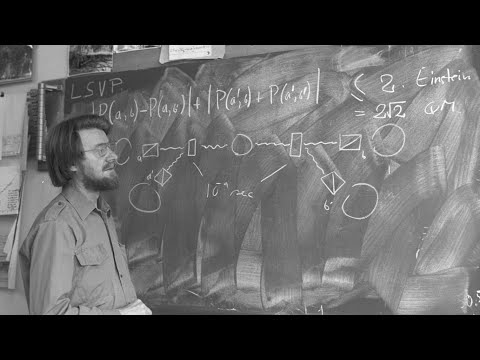
John Stewart Bell was a Northern Irish physicist who made significant contributions to the field of quantum mechanics, particularly in the area of quantum entanglement and non-locality. His work, which challenged the traditional notions of space and time, has had a profound impact on our understanding of the universe. Bell's theorem, which he introduced in 1964, proved that quantum mechanics is incompatible with local hidden variable theories, forcing a re-evaluation of the fundamental principles of physics. With a Vibe score of 8, Bell's ideas continue to influence contemporary research in quantum computing, cryptography, and cosmology. As a testament to his enduring legacy, Bell's work remains a topic of intense debate and exploration, with many physicists and philosophers continuing to grapple with the implications of his theorem. The controversy surrounding Bell's ideas has sparked a flurry of research, with some hailing him as a visionary and others criticizing his theories as flawed, highlighting the complex and multifaceted nature of his contributions to the field.
🌌 Introduction to John Bell
John Bell, a renowned physicist, made significant contributions to our understanding of Quantum Mechanics. Born on July 28, 1928, in Belfast, Northern Ireland, Bell's work challenged the fundamental principles of Physics. His theorem, known as Bell's Theorem, has far-reaching implications for our understanding of Reality. Bell's work was influenced by Albert Einstein and Niels Bohr, who were key figures in the development of Quantum Theory.
📝 Early Life and Education
Bell's early life and education played a crucial role in shaping his future as a physicist. He attended the University of Belfast, where he earned his undergraduate degree in Physics. Bell then moved to the University of Birmingham, where he earned his Ph.D. in Nuclear Physics. His academic background and research experience laid the foundation for his groundbreaking work in Quantum Mechanics. Bell's work was also influenced by Ernest Rutherford and Max Planck, who made significant contributions to Nuclear Physics and Quantum Theory.
🔍 The Foundations of Quantum Mechanics
The foundations of Quantum Mechanics were laid by Max Planck, Albert Einstein, and Niels Bohr. However, the principles of Quantum Mechanics were not fully understood until John Bell's work on Bell's Theorem. This theorem states that no physical theory of Local Realism can reproduce all the predictions of Quantum Mechanics. Bell's work built upon the principles of Quantum Theory and Wave-Particle Duality. The implications of Bell's Theorem are far-reaching and have been the subject of much debate in the scientific community, with notable discussions between Albert Einstein and Niels Bohr.
📊 Bell's Theorem and Its Implications
Bell's theorem has significant implications for our understanding of Quantum Mechanics. The theorem states that any physical theory that is Locally Realistic cannot reproduce the predictions of Quantum Mechanics. This has led to a greater understanding of Quantum Entanglement and Non-Locality. The work of John Bell has been influential in shaping our understanding of Reality and the principles of Physics. The concept of Quantum Entanglement has been explored in various experiments, including those conducted by Anton Zeilinger and Alain Aspect.
👥 The EPR Paradox and Its Significance
The EPR Paradox, proposed by Albert Einstein, Boris Podolsky, and Nathan Rosen, played a significant role in the development of Bell's Theorem. The paradox highlights the apparent inconsistency between Quantum Mechanics and the principles of Local Realism. The EPR Paradox led to a greater understanding of Quantum Entanglement and the principles of Non-Locality. The work of John Bell built upon the principles of the EPR Paradox and has had a lasting impact on our understanding of Quantum Mechanics. The EPR Paradox has been the subject of much discussion, with notable contributions from Niels Bohr and Werner Heisenberg.
🔑 Quantum Entanglement and Non-Locality
Quantum Entanglement and Non-Locality are fundamental principles of Quantum Mechanics. The work of John Bell has shown that these principles are incompatible with Local Realism. The implications of Quantum Entanglement and Non-Locality are far-reaching and have been the subject of much debate in the scientific community. The concept of Quantum Entanglement has been explored in various experiments, including those conducted by Anton Zeilinger and Alain Aspect. The principles of Non-Locality have been discussed in the context of Quantum Teleportation and Quantum Cryptography.
📈 Experimental Verification of Bell's Theorem
The experimental verification of Bell's Theorem has been a significant area of research in Quantum Mechanics. Experiments have consistently shown that the predictions of Quantum Mechanics are correct, and that Local Realism is not a viable theory. The work of Alain Aspect and Anton Zeilinger has been instrumental in verifying the principles of Bell's Theorem. The experimental verification of Bell's Theorem has had a lasting impact on our understanding of Reality and the principles of Physics. The experiments have also led to a greater understanding of Quantum Entanglement and Non-Locality.
🤔 Implications of Quantum Mechanics on Reality
The implications of Quantum Mechanics on our understanding of Reality are far-reaching. The principles of Quantum Entanglement and Non-Locality challenge our classical understanding of Space and Time. The work of John Bell has shown that Local Realism is not a viable theory, and that Quantum Mechanics is a more fundamental description of Reality. The implications of Quantum Mechanics have been discussed in the context of Philosophy of Physics and the Nature of Reality. The concept of Quantum Entanglement has been explored in various fields, including Quantum Computing and Quantum Information.
📚 Legacy of John Bell and Future Directions
The legacy of John Bell and his work on Bell's Theorem continues to shape our understanding of Quantum Mechanics. The implications of Bell's Theorem have been far-reaching, and have led to a greater understanding of Quantum Entanglement and Non-Locality. The work of John Bell has inspired new areas of research in Quantum Mechanics, including Quantum Computing and Quantum Information. The legacy of John Bell continues to influence modern Physics and our understanding of Reality. The concept of Quantum Entanglement has been explored in various experiments, including those conducted by Anton Zeilinger and Alain Aspect.
👨🔬 Influence of John Bell on Modern Physics
The influence of John Bell on modern Physics is undeniable. His work on Bell's Theorem has shaped our understanding of Quantum Mechanics and the principles of Reality. The implications of Bell's Theorem have led to new areas of research in Quantum Mechanics, including Quantum Computing and Quantum Information. The work of John Bell has inspired a new generation of physicists to explore the principles of Quantum Mechanics and the nature of Reality. The concept of Quantum Entanglement has been explored in various fields, including Quantum Computing and Quantum Information.
📊 Controversies and Debates in Quantum Mechanics
The controversies and debates in Quantum Mechanics are ongoing. The implications of Bell's Theorem have led to a greater understanding of Quantum Entanglement and Non-Locality. However, the principles of Local Realism continue to be debated, with some physicists arguing that Local Realism is still a viable theory. The work of John Bell has been instrumental in shaping our understanding of Quantum Mechanics, but the debate continues. The concept of Quantum Entanglement has been explored in various experiments, including those conducted by Anton Zeilinger and Alain Aspect.
Key Facts
- Year
- 1964
- Origin
- Northern Ireland
- Category
- Physics
- Type
- Person
Frequently Asked Questions
What is Bell's Theorem?
Bell's Theorem states that no physical theory of Local Realism can reproduce all the predictions of Quantum Mechanics. The theorem has significant implications for our understanding of Reality and the principles of Physics. The concept of Bell's Theorem has been explored in various experiments, including those conducted by Anton Zeilinger and Alain Aspect.
What is Quantum Entanglement?
Quantum Entanglement is a fundamental principle of Quantum Mechanics. It states that two or more particles can become correlated in such a way that the state of one particle is dependent on the state of the other particles. The concept of Quantum Entanglement has been explored in various experiments, including those conducted by Anton Zeilinger and Alain Aspect.
What is Non-Locality?
Non-Locality is a fundamental principle of Quantum Mechanics. It states that the properties of a particle are not determined until they are measured, and that the act of measurement can instantaneously affect the state of a particle at a distant location. The concept of Non-Locality has been explored in various experiments, including those conducted by Anton Zeilinger and Alain Aspect.
Who is John Bell?
John Bell was a renowned physicist who made significant contributions to our understanding of Quantum Mechanics. He is best known for his work on Bell's Theorem, which has far-reaching implications for our understanding of Reality and the principles of Physics.
What is the EPR Paradox?
The EPR Paradox is a thought experiment proposed by Albert Einstein, Boris Podolsky, and Nathan Rosen. It highlights the apparent inconsistency between Quantum Mechanics and the principles of Local Realism. The EPR Paradox led to a greater understanding of Quantum Entanglement and the principles of Non-Locality.
What is the significance of Bell's Theorem?
The significance of Bell's Theorem lies in its implications for our understanding of Reality and the principles of Physics. The theorem states that no physical theory of Local Realism can reproduce all the predictions of Quantum Mechanics. The concept of Bell's Theorem has been explored in various experiments, including those conducted by Anton Zeilinger and Alain Aspect.
How does Quantum Entanglement relate to Non-Locality?
Quantum Entanglement and Non-Locality are closely related principles of Quantum Mechanics. Quantum Entanglement is a fundamental principle that states that two or more particles can become correlated in such a way that the state of one particle is dependent on the state of the other particles. Non-Locality is a principle that states that the properties of a particle are not determined until they are measured, and that the act of measurement can instantaneously affect the state of a particle at a distant location.