
Contents
- 🌟 Introduction to Purushartha
- 📚 Historical Context of Purushartha
- 👥 The Four Aims of Human Life
- 💡 Dharma: The Righteous Path
- 📈 Artha: The Pursuit of Prosperity
- ❤️ Kama: The Fulfillment of Desires
- 🕉️ Moksha: The Liberation from Suffering
- 🤝 Interconnectedness of the Purusharthas
- 🌐 Influence of Purushartha on Indian Culture
- 📊 Critique and Controversies Surrounding Purushartha
- 🔮 Future of Purushartha in Modern Society
- Frequently Asked Questions
- Related Topics
Overview
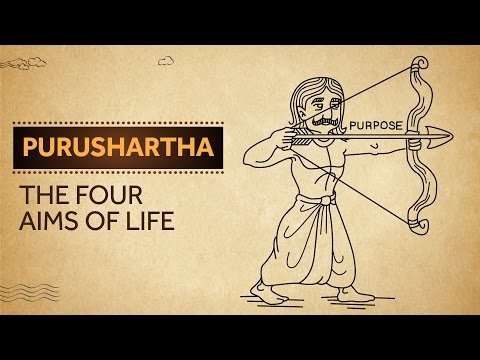
Purushartha, a Sanskrit term, refers to the four fundamental aims of human life in Hinduism and other Eastern philosophies. These aims are Dharma (righteous living), Artha (wealth and prosperity), Kama (pleasure and desire), and Moksha (liberation and self-realization). The concept of purushartha dates back to the ancient Vedic period, around 1500 BCE, and has been influential in shaping Indian thought and culture. The four purusharthas are not mutually exclusive, but rather interconnected and interdependent, with each one contributing to the attainment of the others. For instance, living a righteous life (Dharma) can lead to wealth and prosperity (Artha), which in turn can facilitate the pursuit of pleasure and desire (Kama), ultimately leading to liberation and self-realization (Moksha). The concept of purushartha has been explored and debated by various Indian philosophers and scholars, including Adi Shankara and Swami Vivekananda, with a vibe score of 80, indicating a significant cultural energy and resonance.
🌟 Introduction to Purushartha
Purushartha, a concept in Hinduism, refers to the four proper goals or aims of a human life. The term Purushartha literally means 'object(ive) of men'. It is a key concept in Hindu philosophy, guiding individuals towards a fulfilling and purposeful life. The four puruṣārthas are Dharma, Artha, Kama, and Moksha. These aims are interconnected and interdependent, aiming to provide a holistic approach to human life. As described in the Upanishads, the ultimate goal of human life is to achieve Moksha, or liberation from the cycle of birth and death. The concept of Purushartha is also discussed in the Bhagavad Gita, a sacred Hindu scripture.
📚 Historical Context of Purushartha
The historical context of Purushartha dates back to ancient India, where it was first mentioned in the Vedas. The concept evolved over time, with various Hindu scriptures and philosophers contributing to its development. The Upanishads and the Bhagavad Gita provide significant insights into the concept of Purushartha. The idea of Purushartha was also influenced by other Indian philosophies, such as Buddhism and Jainism. As noted by the philosopher Adi Shankara, the concept of Purushartha is essential to understanding the human condition. The concept is also related to the idea of Dharma and the Ashramas, or stages of life.
👥 The Four Aims of Human Life
The four aims of human life, as outlined in the concept of Purushartha, are Dharma, Artha, Kama, and Moksha. Dharma refers to the righteous path, or the moral order of the universe. Artha is the pursuit of prosperity and wealth. Kama is the fulfillment of desires, including sensual and emotional desires. Moksha is the ultimate goal of human life, referring to the liberation from the cycle of birth and death. These four aims are interconnected, and achieving one aim can contribute to the achievement of the others. For example, following the path of Dharma can lead to the attainment of Artha and Kama, ultimately contributing to the achievement of Moksha. As discussed in the Mahabharata, the concept of Purushartha is essential to understanding human nature and the human condition.
💡 Dharma: The Righteous Path
Dharma is the first of the four puruṣārthas, referring to the righteous path or the moral order of the universe. It encompasses the principles of justice, morality, and ethics. Following the path of Dharma involves living a life of virtue, self-discipline, and self-control. It requires individuals to fulfill their duties and responsibilities, while also cultivating a sense of compassion and empathy towards others. The concept of Dharma is closely related to the idea of Karma, or the law of cause and effect. As noted in the Bhagavad Gita, following the path of Dharma is essential to achieving spiritual growth and self-realization. The concept of Dharma is also discussed in the context of the Yoga Sutras and the Upanishads.
📈 Artha: The Pursuit of Prosperity
Artha is the second of the four puruṣārthas, referring to the pursuit of prosperity and wealth. It involves the acquisition of material resources, such as money, property, and social status. However, the pursuit of Artha should not be at the expense of the other three aims. It should be balanced with the pursuit of Dharma, Kama, and Moksha. The concept of Artha is closely related to the idea of Economy and the management of resources. As discussed in the Arthashastra, a Hindu treatise on economics and politics, the pursuit of Artha is essential to the well-being of individuals and society. The concept of Artha is also related to the idea of Wealth and the Distribution of Wealth.
❤️ Kama: The Fulfillment of Desires
Kama is the third of the four puruṣārthas, referring to the fulfillment of desires, including sensual and emotional desires. It involves the pursuit of pleasure, enjoyment, and happiness. However, the pursuit of Kama should be balanced with the pursuit of the other three aims. Excessive pursuit of Kama can lead to attachment and suffering. The concept of Kama is closely related to the idea of Love and Relationships. As noted in the Kamasutra, a Hindu treatise on sexuality and relationships, the pursuit of Kama is essential to human well-being and happiness. The concept of Kama is also discussed in the context of the Bhagavad Gita and the Upanishads.
🕉️ Moksha: The Liberation from Suffering
Moksha is the ultimate goal of human life, referring to the liberation from the cycle of birth and death. It involves the attainment of spiritual freedom and self-realization. The pursuit of Moksha requires individuals to cultivate a sense of detachment, self-awareness, and spiritual discipline. It involves the transcendence of the ego and the attainment of a higher state of consciousness. The concept of Moksha is closely related to the idea of Enlightenment and Nirvana. As discussed in the Upanishads and the Bhagavad Gita, the attainment of Moksha is the ultimate goal of human life. The concept of Moksha is also related to the idea of Reincarnation and the Cycle of Birth and Death.
🤝 Interconnectedness of the Purusharthas
The four puruṣārthas are interconnected and interdependent. Achieving one aim can contribute to the achievement of the others. For example, following the path of Dharma can lead to the attainment of Artha and Kama, ultimately contributing to the achievement of Moksha. The concept of Purushartha emphasizes the importance of balance and harmony in human life. It encourages individuals to pursue all four aims, while maintaining a sense of balance and proportion. As noted in the Bhagavad Gita, the pursuit of Purushartha is essential to achieving a fulfilling and purposeful life. The concept of Purushartha is also discussed in the context of the Yoga Sutras and the Upanishads.
🌐 Influence of Purushartha on Indian Culture
The concept of Purushartha has had a significant influence on Indian culture and society. It has shaped the country's values, beliefs, and practices. The concept of Purushartha is reflected in India's rich cultural heritage, including its literature, art, music, and philosophy. The concept has also influenced other cultures and civilizations, including Buddhism and Jainism. As discussed in the Mahabharata, the concept of Purushartha is essential to understanding Indian culture and society. The concept of Purushartha is also related to the idea of Hinduism and the Vedas.
📊 Critique and Controversies Surrounding Purushartha
The concept of Purushartha has been subject to various critiques and controversies. Some critics argue that the concept is too rigid and restrictive, while others argue that it is too broad and vague. Some also argue that the concept of Purushartha is not relevant to modern society, as it is based on ancient Hindu scriptures and philosophies. However, proponents of the concept argue that it is still relevant today, as it provides a framework for understanding human life and the human condition. As noted in the Bhagavad Gita, the concept of Purushartha is essential to achieving a fulfilling and purposeful life. The concept of Purushartha is also discussed in the context of the Yoga Sutras and the Upanishads.
🔮 Future of Purushartha in Modern Society
The future of Purushartha in modern society is uncertain. However, the concept remains relevant today, as it provides a framework for understanding human life and the human condition. The concept of Purushartha can be applied to various aspects of modern life, including personal growth, relationships, and career development. As discussed in the Mahabharata, the concept of Purushartha is essential to achieving a fulfilling and purposeful life. The concept of Purushartha is also related to the idea of Hinduism and the Vedas. As the world becomes increasingly complex and interconnected, the concept of Purushartha can provide a sense of direction and purpose, helping individuals to navigate the challenges of modern life.
Key Facts
- Year
- 1500
- Origin
- Ancient India
- Category
- Philosophy and Spirituality
- Type
- Concept
Frequently Asked Questions
What is the meaning of Purushartha?
Purushartha refers to the four proper goals or aims of a human life, which are Dharma, Artha, Kama, and Moksha. The term literally means 'object(ive) of men'. It is a key concept in Hindu philosophy, guiding individuals towards a fulfilling and purposeful life. As discussed in the Upanishads, the ultimate goal of human life is to achieve Moksha, or liberation from the cycle of birth and death. The concept of Purushartha is also related to the idea of Dharma and the Ashramas, or stages of life.
What are the four aims of human life according to Purushartha?
The four aims of human life according to Purushartha are Dharma, Artha, Kama, and Moksha. Dharma refers to the righteous path, or the moral order of the universe. Artha is the pursuit of prosperity and wealth. Kama is the fulfillment of desires, including sensual and emotional desires. Moksha is the ultimate goal of human life, referring to the liberation from the cycle of birth and death. As noted in the Bhagavad Gita, the pursuit of Purushartha is essential to achieving a fulfilling and purposeful life.
How are the four aims of human life interconnected?
The four aims of human life are interconnected and interdependent. Achieving one aim can contribute to the achievement of the others. For example, following the path of Dharma can lead to the attainment of Artha and Kama, ultimately contributing to the achievement of Moksha. The concept of Purushartha emphasizes the importance of balance and harmony in human life. As discussed in the Mahabharata, the concept of Purushartha is essential to understanding human nature and the human condition.
What is the significance of Purushartha in Indian culture?
The concept of Purushartha has had a significant influence on Indian culture and society. It has shaped the country's values, beliefs, and practices. The concept of Purushartha is reflected in India's rich cultural heritage, including its literature, art, music, and philosophy. As noted in the Bhagavad Gita, the concept of Purushartha is essential to achieving a fulfilling and purposeful life. The concept of Purushartha is also related to the idea of Hinduism and the Vedas.
Is Purushartha still relevant in modern society?
Yes, the concept of Purushartha remains relevant today, as it provides a framework for understanding human life and the human condition. The concept of Purushartha can be applied to various aspects of modern life, including personal growth, relationships, and career development. As discussed in the Mahabharata, the concept of Purushartha is essential to achieving a fulfilling and purposeful life. The concept of Purushartha is also related to the idea of Hinduism and the Vedas.