
Contents
- 🎵 Origins & History
- ⚙️ How It Works
- 📊 Key Facts & Numbers
- 👥 Key People & Organizations
- 🌍 Cultural Impact & Influence
- ⚡ Current State & Latest Developments
- 🤔 Controversies & Debates
- 🔮 Future Outlook & Predictions
- 💡 Practical Applications
- 📚 Related Topics & Deeper Reading
- Frequently Asked Questions
- References
- Related Topics
Overview
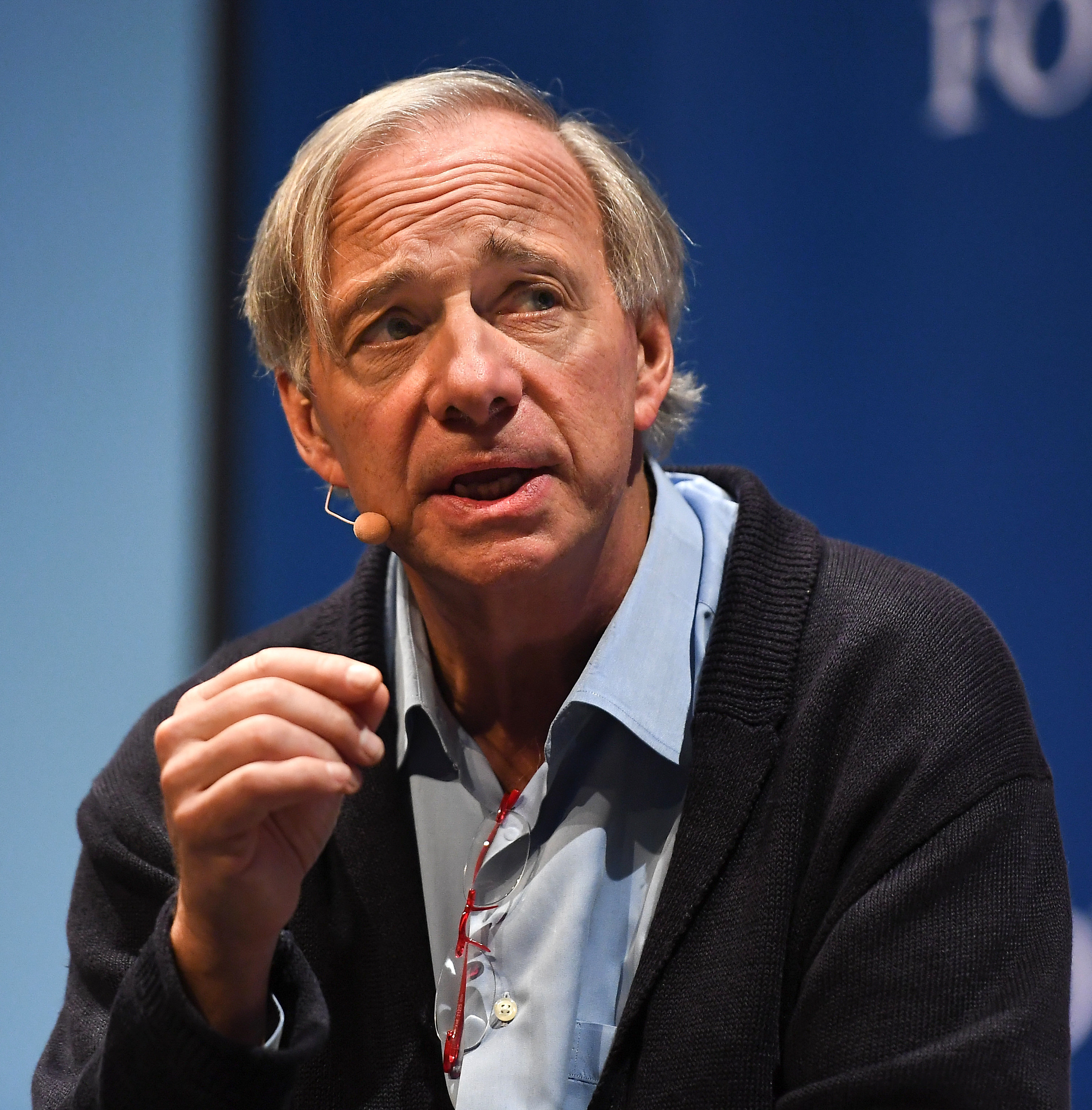
Ray Dalio, born August 8, 1949, is an American billionaire investor and hedge fund manager, most famous for founding Bridgewater Associates in 1975. He transformed his small investment firm into one of the world's largest and most successful hedge funds, managing over $120 billion in assets at its peak. Dalio is renowned for his unconventional management philosophy, emphasizing "radical truth" and "radical transparency," principles detailed in his best-selling books, 'Principles: Life & Work' and 'The Changing World Order.' His work has profoundly influenced investment strategies and corporate culture, making him a significant figure in both finance and management theory. As of early 2026, his net worth is estimated at $20 billion, solidifying his status as a titan of industry.
🎵 Origins & History
Raymond Thomas Dalio's journey began in Jackson Heights, Queens, New York, on August 8, 1949. His early fascination with the stock market, sparked by a childhood investment in Canna Lily fertilizer, led him to pursue finance. He graduated from Long Island University Post in 1971 with a degree in finance and later earned an MBA from Harvard Business School in 1973. After a brief stint at Merrill Lynch and Shearson Hayden Stone, Dalio founded Bridgewater Associates in his New York City apartment in 1975. Initially operating as a commodity-diving firm, Bridgewater evolved, and by the early 1980s, Dalio had shifted its focus to global macro investing, laying the groundwork for its future success.
⚙️ How It Works
Dalio's operational framework at Bridgewater is famously built on "radical truth" and "radical transparency." This involves a system of "issue resolution" where employees are encouraged to openly challenge each other, often with the aid of "Belief Systems" software that tracks the accuracy of their predictions. Decisions are meant to be made based on a meritocracy of ideas, where the most intelligent and well-argued points prevail, regardless of hierarchy. This philosophy extends to investment strategies, where Bridgewater employs sophisticated algorithms and deep dives into historical economic cycles, as outlined in Dalio's "Principles," to navigate market volatility and identify long-term trends.
📊 Key Facts & Numbers
As of February 2026, Ray Dalio's net worth is estimated at $20 billion, ranking him 128th on the Bloomberg Billionaire Index. Bridgewater Associates, at its zenith, managed over $160 billion in assets, making it one of the largest hedge funds globally. Dalio's 2017 book, 'Principles: Life & Work,' has sold over 2 million copies worldwide. His follow-up, 'The Changing World Order,' published in 2021, delves into the rise and fall of global powers, drawing on centuries of economic history. Bridgewater's flagship fund, Pure Alpha, has historically delivered strong returns, though its performance can fluctuate significantly with market conditions.
👥 Key People & Organizations
The central figure in this narrative is, of course, Ray Dalio himself, the founder and former CEO of Bridgewater Associates. His sons, Paul Dalio and Matt Dalio, have also been involved with the firm and its associated philanthropic ventures. Key figures who helped shape Bridgewater's culture and investment strategies include former co-CIO Bob Prince and former COO Jonathon Goldman. The firm itself, Bridgewater Associates, stands as a testament to Dalio's vision, employing thousands of people and influencing global financial markets. Harvey J. Burstein, Dalio's former mentor at Long Island University Post, also played a role in his early development.
🌍 Cultural Impact & Influence
Dalio's philosophy of "radical truth" and "radical transparency" has permeated not only the financial industry but also broader discussions on corporate management and organizational psychology. His book 'Principles' has become a staple in business schools and executive training programs, influencing how leaders approach decision-making, feedback, and team dynamics. The concept of a "meritocracy of ideas" has been both lauded and debated, inspiring some companies to adopt similar open communication policies while drawing criticism for its potential to create a harsh or overly confrontational work environment. His analysis of historical economic cycles in 'The Changing World Order' has also informed geopolitical and economic forecasting.
⚡ Current State & Latest Developments
In recent years, Dalio has transitioned from day-to-day management at Bridgewater, stepping down as co-CIO in 2021 and handing over leadership to a new generation. He remains a significant voice, however, actively engaging in public discourse on global economic trends, geopolitical shifts, and the future of capitalism. Bridgewater Associates continues to operate, though it has faced some performance challenges and leadership transitions. Dalio has also been increasingly vocal about the need for systemic change in areas like wealth inequality and the global financial system, often drawing parallels to historical precedents.
🤔 Controversies & Debates
The "radical truth" and "radical transparency" ethos at Bridgewater has been a lightning rod for controversy. Critics argue that the intense, unfiltered feedback culture can be psychologically damaging, leading to high employee turnover and a potentially toxic work environment. Some former employees have described the experience as akin to "walking through a psychological minefield." The effectiveness of Dalio's "Principles" as a universal management model is also debated, with some suggesting it is only applicable in specific contexts or to individuals with a particular disposition. Furthermore, the firm's investment performance has seen periods of underperformance, leading to scrutiny of its core strategies.
🔮 Future Outlook & Predictions
Looking ahead, Dalio continues to advocate for a deeper understanding of historical economic cycles as a means to navigate the future. He predicts significant global economic shifts, potentially including a major reset of the global reserve currency system and a rise in geopolitical tensions. His focus remains on educating the public about these macro trends and the principles that govern the success and failure of nations and economies. The future of Bridgewater Associates under its new leadership will be closely watched, as will Dalio's continued influence as a public intellectual and commentator on global affairs.
💡 Practical Applications
Dalio's "Principles" have found practical application far beyond Bridgewater. Corporations worldwide have adopted elements of his radical transparency and meritocracy of ideas to foster more open communication and data-driven decision-making. His investment frameworks, which emphasize understanding historical economic cycles and systemic risks, are utilized by institutional investors and financial analysts seeking to build more resilient portfolios. Furthermore, his work on 'The Changing World Order' provides a framework for policymakers and academics analyzing geopolitical shifts and the dynamics of global power.
Key Facts
- Year
- 1949 (birth)
- Origin
- United States
- Category
- people
- Type
- person
Frequently Asked Questions
What is Ray Dalio most famous for?
Ray Dalio is most famous for founding and leading Bridgewater Associates, one of the world's largest hedge funds. He is also widely recognized for his management philosophy of "radical truth" and "radical transparency," detailed in his book 'Principles: Life & Work,' which has influenced countless organizations and leaders in finance and beyond.
What are Ray Dalio's 'Principles'?
Dalio's 'Principles' are a set of rules and guidelines for life and work, developed over decades at Bridgewater Associates. They emphasize radical truth, radical transparency, and a "meritocracy of ideas" where decisions are made based on the best thinking, not hierarchy. These principles cover everything from how to handle disagreements and make decisions to how to build effective teams and navigate economic cycles, as detailed in his 2017 book of the same name.
How did Ray Dalio build Bridgewater Associates?
Dalio founded Bridgewater Associates in 1975, initially focusing on commodity trading before shifting to global macro investing. He built the firm by developing a unique, highly analytical culture centered on "radical truth" and "radical transparency," using sophisticated systems to track employee predictions and decision-making. This approach, combined with a deep understanding of economic history and cycles, allowed Bridgewater to grow into one of the largest and most successful hedge funds globally, managing over $100 billion in assets at its peak.
What is Ray Dalio's view on economic cycles?
Dalio is a strong proponent of understanding historical economic cycles to predict future economic and market behavior. In his book 'The Changing World Order,' he outlines a framework for analyzing the rise and fall of empires and reserve currencies, suggesting that nations and economies move through predictable cycles of boom and bust, debt and deleveraging, and shifts in global power. He believes that by studying these patterns, one can better anticipate major economic shifts and prepare for them.
What are the criticisms of Ray Dalio's management style?
The primary criticism of Dalio's management style, particularly the "radical transparency" at Bridgewater Associates, centers on its potential to create a harsh and psychologically taxing work environment. Critics argue that the constant, unfiltered feedback and intense scrutiny can lead to high employee turnover and burnout. Some former employees have described the culture as overly confrontational and lacking in empathy, questioning whether such an environment is sustainable or truly conducive to long-term well-being and productivity for everyone.
How can I apply Ray Dalio's principles?
To apply Dalio's principles, start by embracing "radical truth" and "radical transparency" in your own life and work, encouraging honest feedback and open communication. Practice "issue resolution" by systematically identifying and addressing problems. Develop your own "Principles" document, outlining your core beliefs and decision-making rules, and use it to guide your actions. Analyze historical patterns and cycles in your field to make more informed predictions, and strive for a "meritocracy of ideas" by valuing good thinking over rank.
What is Ray Dalio's current focus?
While he has stepped back from day-to-day management at Bridgewater Associates, Ray Dalio remains actively engaged in public discourse. His current focus includes educating the public on global economic trends, geopolitical shifts, and the cyclical nature of history, as explored in 'The Changing World Order.' He continues to advocate for systemic changes in areas like wealth inequality and the global financial system, drawing on his extensive experience and historical analysis.